
ABOUT
Hanhai Opto-electronic is a major scientific research achievement transformation institution of the Hefei Institute of Physical Science, Chinese Academy of Sciences.


Hanhai Opto-electronic is a major scientific research achievement transformation institution of the Hefei Institute of Physical Science, Chinese Academy of Sciences.

Hanhai Optoelectronics centers on laser absorption spectroscopy-based gas detection (TDLAS)technology, developing and manufacturing a full range of products to deliver comprehensive gas detection solutions for cross-field and multi-industry customers.

Hanhai Optoelectronics' laser gas detection products focus on the monitoring of flammable, explosive, toxic and harmful gases as well as greenhouse gases. Leveraging mature technical solutions and flexible product adaptability, these products can be widel

With over a decade of technical accumulation and recognition from nearly a hundred customers, Hanhai Optoelectronics' laser gas detection products have delivered successful cases covering core scenarios across petrochemicals, urban gas, environmental moni

The company's core technology has been jointly recommended by the Ministry of Emergency Management, the Ministry of Science and Technology, and the Ministry of Industry and Information Technology.

Laser "Guards" the Station
Hefei Chaohu LNG Filling Station
With passive laser monitoring technology as the core, Hanhai Technology has created a "zero-spark, high-precision" system.
At the bustling Sinopec Hefei Chaohu LNG Filling Station, every LNG refueling operation is related to the efficiency and safety of energy supply. As a key node for clean energy transportation, the station's gas storage tanks and gas transmission pipelines face potential risks of methane leakage at all times. Guoke Hanhai Laser Technology, with passive laser monitoring technology as the core, has tailored a "zero-spark, high-precision" safety protection system for this filling station, ensuring every refueling process is carried out safely under technological guardianship.
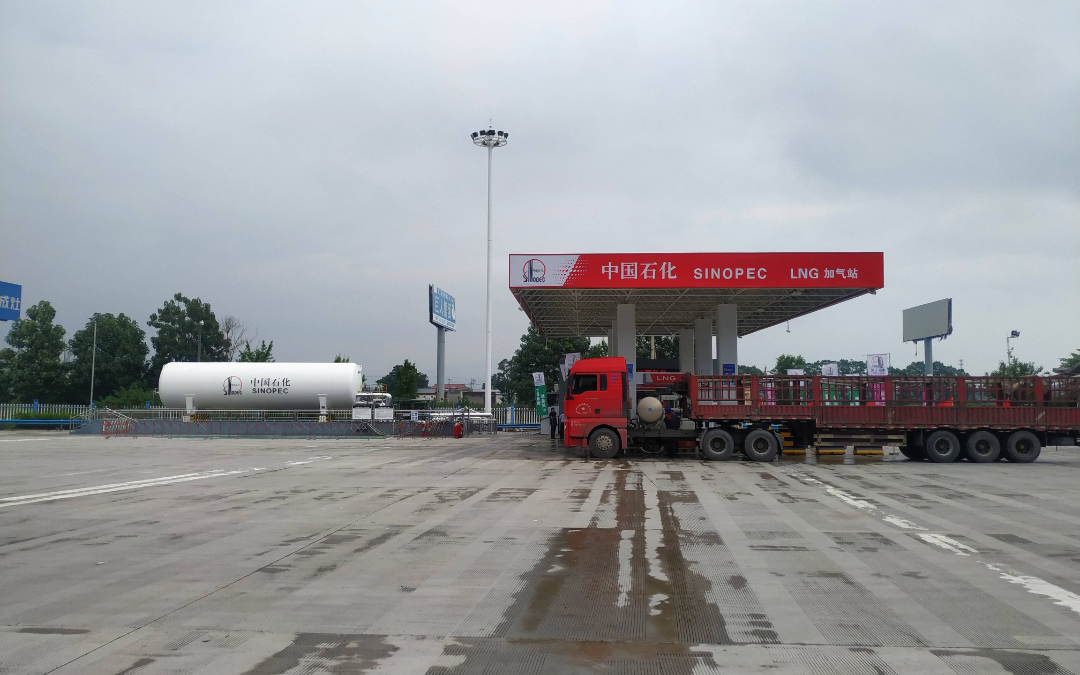
With the surge in the number of LNG filling stations, safety monitoring standards are constantly improving. GB/T50493-2019 clearly requires accurate monitoring of methane leakage, while traditional active detectors are gradually struggling—they not only have high maintenance costs and lagging response but may also become potential safety hazards due to electric sparks.
As an important regional energy supply point, Sinopec Hefei Chaohu LNG Filling Station prioritizes methane leakage monitoring in key areas such as gas storage tanks, transmission pipelines, and refueling machines for safety management. Traditional equipment is prone to interference in complex electromagnetic environments, and frequent false alarms exhaust staff. Sensors requiring regular calibration further increase maintenance costs and missed detection risks. Therefore, Guoke Hanhai's wall-mounted passive laser monitoring system has become the preferred upgrade solution.
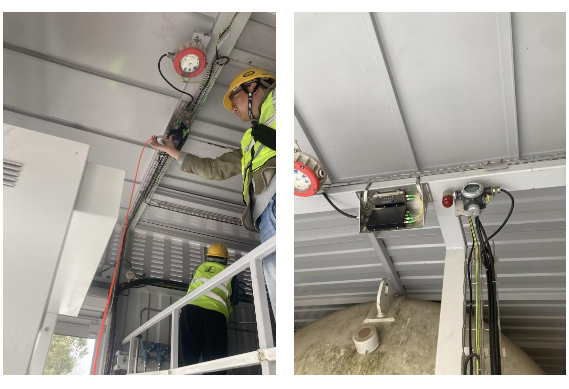
According to the layout characteristics of the filling station, Guoke Hanhai has deployed a set of wall-mounted passive laser monitoring systems, equipped with 6 optical sensing terminals that cover all risk points like "invisible sentinels":
Gas storage tank area: One optical sensing terminal is installed at the front, rear, and outer side of each storage tank to closely monitor leakage-prone parts such as valves and interfaces of low-temperature storage tanks.
Pipe trenches and pipelines: Two terminals are installed in underground pipe trenches to monitor potential leakage of buried pipelines and prevent gas accumulation in confined spaces.
Above refueling machines: One terminal real-time monitors gas concentration during refueling operations to ensure the safety of vehicle refueling.
These optical sensing terminals require no power supply and transmit laser signals through optical fibers, essentially eliminating the risk of explosion caused by electric sparks—this is the core advantage of "passive intrinsic safety". The main unit is wall-mounted at the operation desk of the business hall, displaying real-time monitoring data of each terminal. Once ppm-level micro-leakage is detected, an alarm will be issued within 10 seconds.
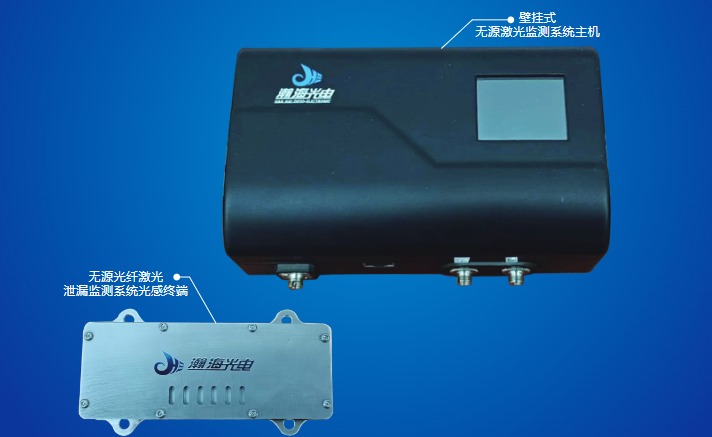
The "outstanding features" of this system lie in every technical detail:
Exceptional precision: It can capture ppm-level methane concentration changes, ensuring even the tiniest leaks cannot escape its "sight".
Zero interference, no false alarms: The stable laser wavelength is not affected by humidity, dust, or electromagnetic signals, maintaining "clarity of mind" in the complex environment of the filling station.
Maintenance-free, long service life: Optical components have strong stability, requiring no calibration after installation and commissioning, with a service life of over 10 years, significantly reducing operation and maintenance costs.
Easy installation: Optical sensing terminals adopt bracket-type installation without hot work throughout the process. Optical fibers laid for buried pipelines avoid electromagnetic interference and do not affect the normal operation of the filling station.
During project acceptance, the system's response speed to simulated leaks and concentration detection accuracy exceeded expectations, perfectly meeting Sinopec's safety management standards.

This passive laser monitoring system has brought comprehensive safety upgrades to Chaohu Filling Station:
Leap in safety level: The passive design eliminates electrical hazards from the source, making the flammable and explosive environment safer.
Improved management efficiency: Real-time data is centrally displayed, and abnormal conditions trigger millisecond-level alarms. Staff no longer need frequent inspections and can focus more on services.
Significant cost advantage: The maintenance-free and long-life characteristics reduce long-term operating costs by more than 60%.
Compliance guarantee: It fully meets GB/T50493-2019 standards, providing solid support for the safety rating of the filling station.
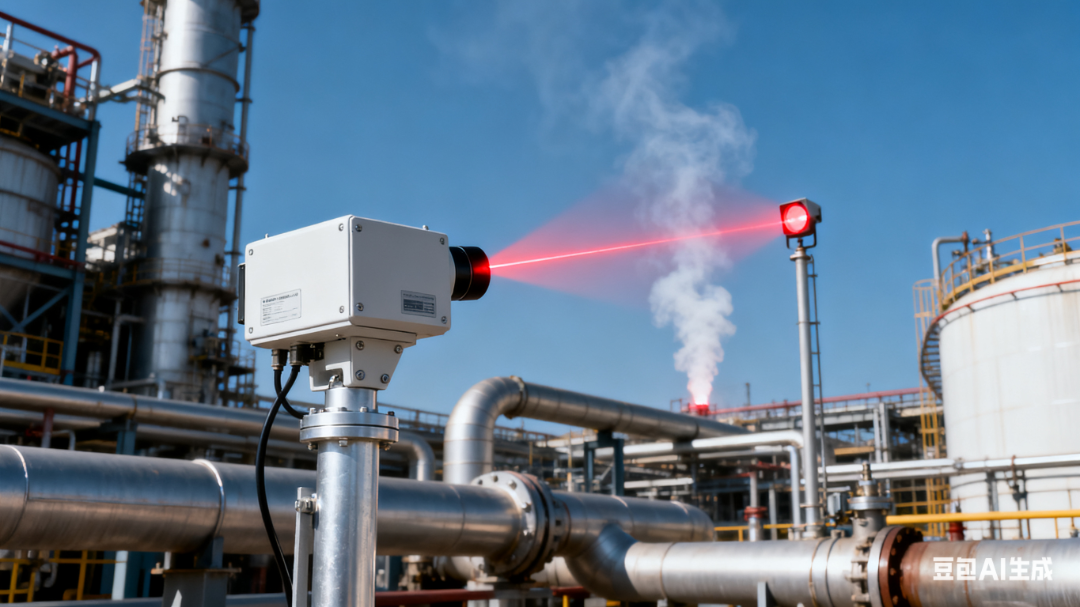
The project practice of Sinopec Hefei Chaohu LNG Filling Station has provided a replicable "laser monitoring model" for the industry. Guoke Hanhai's passive laser technology is not only applicable to filling stations but also can be promoted to urban gas pipelines, chemical parks, and other scenarios.
In the future, we will continue to deepen cooperation with enterprises such as Sinopec, meeting the monitoring needs of different scenarios through customized solutions. We aim to make the "passive, precise, maintenance-free" laser monitoring technology a safety standard for more energy nodes.
Because we believe that the ultimate goal of technology is "invisible guardianship"—to make every energy supply reassuring and every station safe. This is the "safety commitment" that Guoke Hanhai writes with laser technology.
TEL:400-055-1239 (9:00~17:00)
MAIL:lisghanhai@gkhhlaser.com
ADDR:302 Floor, Building 5, No. 18, Kechuang 13th Street, Beijing Economic and Technological Development Zone