
ABOUT
Hanhai Opto-electronic is a major scientific research achievement transformation institution of the Hefei Institute of Physical Science, Chinese Academy of Sciences.


Hanhai Opto-electronic is a major scientific research achievement transformation institution of the Hefei Institute of Physical Science, Chinese Academy of Sciences.

Hanhai Optoelectronics centers on laser absorption spectroscopy-based gas detection (TDLAS)technology, developing and manufacturing a full range of products to deliver comprehensive gas detection solutions for cross-field and multi-industry customers.

Hanhai Optoelectronics' laser gas detection products focus on the monitoring of flammable, explosive, toxic and harmful gases as well as greenhouse gases. Leveraging mature technical solutions and flexible product adaptability, these products can be widel

With over a decade of technical accumulation and recognition from nearly a hundred customers, Hanhai Optoelectronics' laser gas detection products have delivered successful cases covering core scenarios across petrochemicals, urban gas, environmental moni

The company's core technology has been jointly recommended by the Ministry of Emergency Management, the Ministry of Science and Technology, and the Ministry of Industry and Information Technology.
As the "lifeline" of national energy transportation, oil and gas pipelines shoulder the crucial mission of ensuring energy supply and supporting economic development. However, persistent challenges have long plagued pipeline safety management: detection blind spots caused by long buried networks and numerous uninhabited areas, inaccurate positioning issues with coexisting false and missed alarms, lack of real-time data leading to delayed emergency responses, and full-lifecycle pressures from corrosion and frequent third-party damage. Driven by the dual national requirements of the "Urban Lifeline Engineering" and the "Dual Carbon Goals," Guoke Hanhai has developed an innovative passive laser online monitoring system. This system delivers an end-to-end solution featuring "high sensitivity, real-time monitoring, precise positioning, and proactive early warning" for oil and gas pipeline integrity management. Validated on multiple key pipelines, it ushers in a new era of "proactive empowerment" for pipeline safety management.
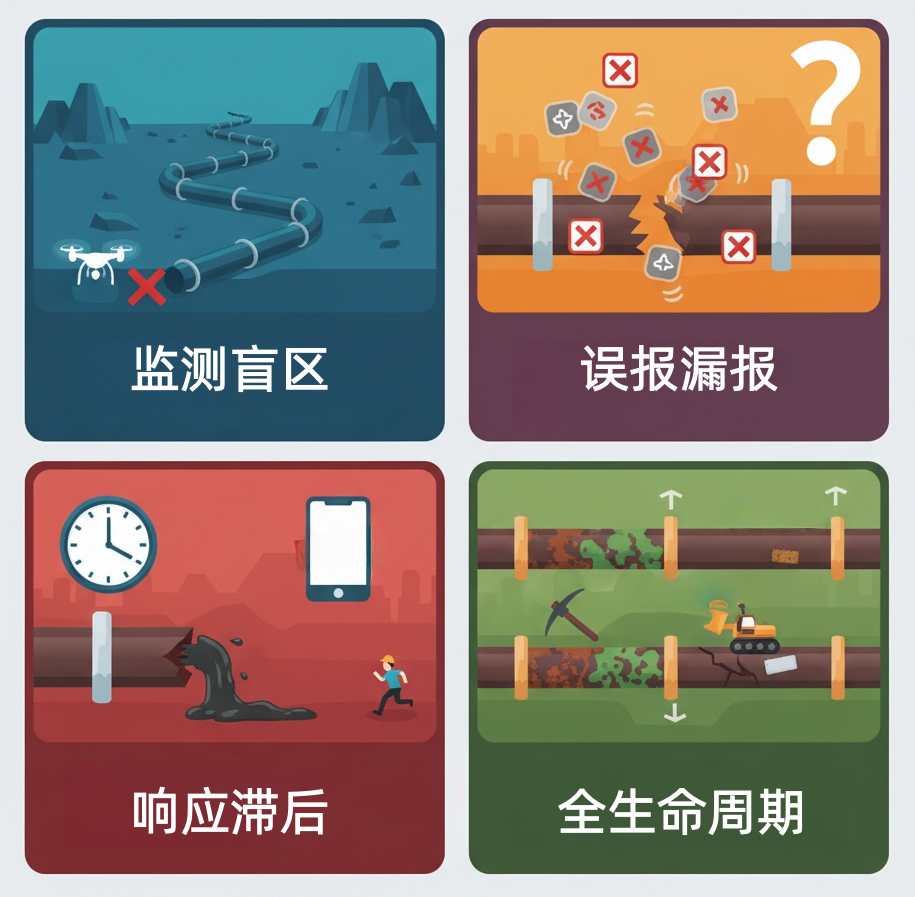
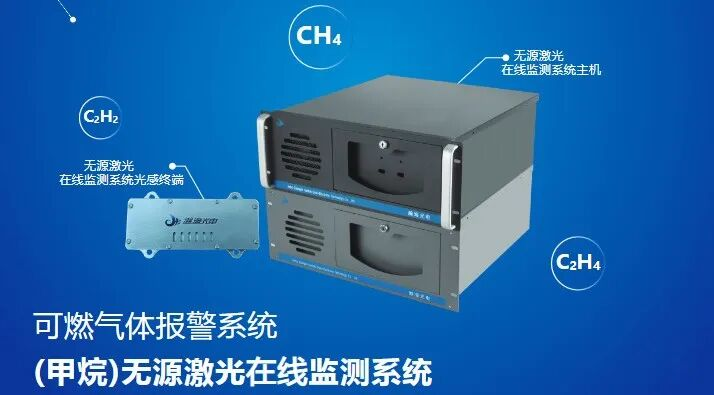
Traditional oil and gas pipeline monitoring methods either rely on manual inspections, suffering from low efficiency, high costs, and incomplete coverage, or use conventional sensors, which inevitably face frequent false alarms, missed detections, and poor adaptability. Guoke Hanhai's passive laser online monitoring system, based on Tunable Diode Laser Absorption Spectroscopy (TDLAS) technology, fundamentally addresses these challenges:
Leveraging laser's high monochromaticity and energy density, the system achieves gas concentration detection at ppm/ppb levels (parts per million/parts per billion). Even trace gases from minor pipeline leaks are accurately captured, eliminating the risk of missed alarms entirely.
The absorption reaction between laser and gas molecules takes as little as 0.1 seconds, with monitoring data transmitted to the control center in real time. Compared to the inefficiency of manual inspections—requiring 20 personnel per day for 100 kilometers—it truly realizes "detection upon leakage, early warning upon triggering."
The core optical sensing terminals require no on-site power supply and transmit data via optical fibers. This not only avoids electrical safety hazards in flammable and explosive environments but also ensures stable operation in extreme temperatures (-40℃ to +70℃), uninhabited areas, buried blind spots, and other complex conditions, achieving "full-coverage monitoring."
Guoke Hanhai's passive laser online monitoring system has been successfully applied in multiple key domestic oil and gas pipeline projects, proving its reliability through tangible results:
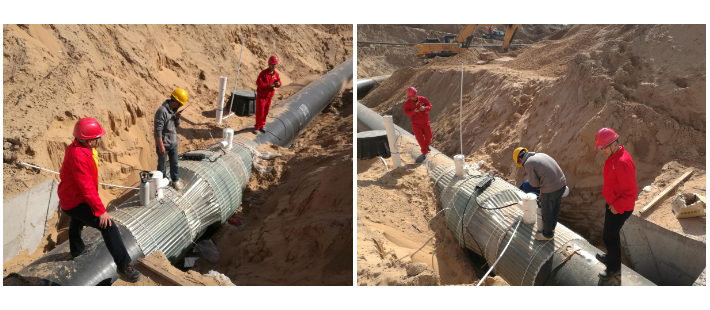
Deployed in 2017, the system built a 24/7 online monitoring network for buried pipelines and insulated joints. Previously, buried sections of long-distance pipelines were safety management "blind spots" due to the lack of effective monitoring. Guoke Hanhai's technology achieved "real-time monitoring of leaks in enclosed spaces without power supply" for the first time, completely resolving safety hazards in buried sections of long-distance pipelines and setting a benchmark for subsequent pipeline integrity management.
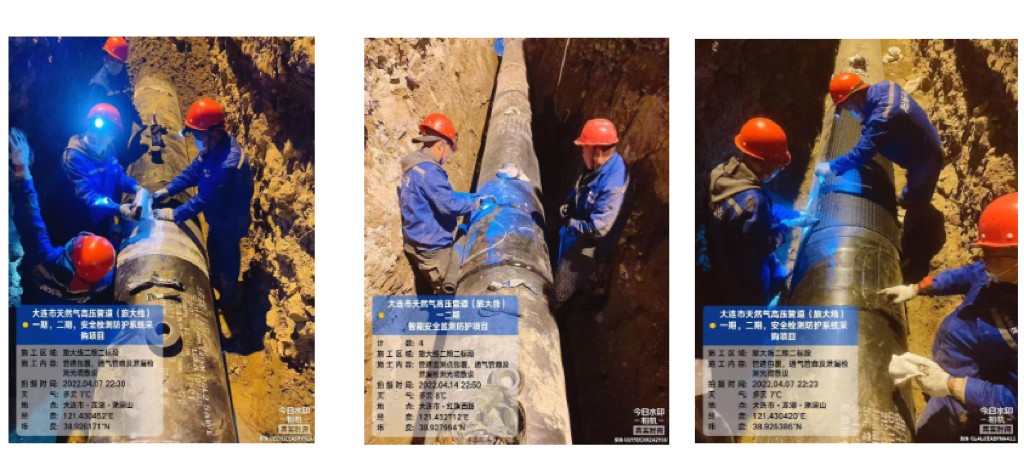
In the second phase of Dalian's natural gas pipeline (Lüda Line) project, the system covers the entire 36.75km buried pipeline, from Muchengyi High-Medium Pressure Regulating Station to Longtouzhen High-Medium Pressure Regulating Station. Through the combination of optical sensing terminals and optical fiber transmission, the project achieves real-time leak detection and precise positioning, effectively controlling risks in high-consequence areas and ensuring stable natural gas supply in Dalian.
Tailored to the characteristics of urban gas ring networks—complex working conditions, dense population, and high safety requirements—the system links with the city's gas pipeline GIS system. Beyond real-time leak monitoring, it analyzes pipeline operation trends through data accumulation to predict potential issues such as corrosion and aging, providing "intelligent support" for Wuhan's urban gas supply safety and pipeline network planning.
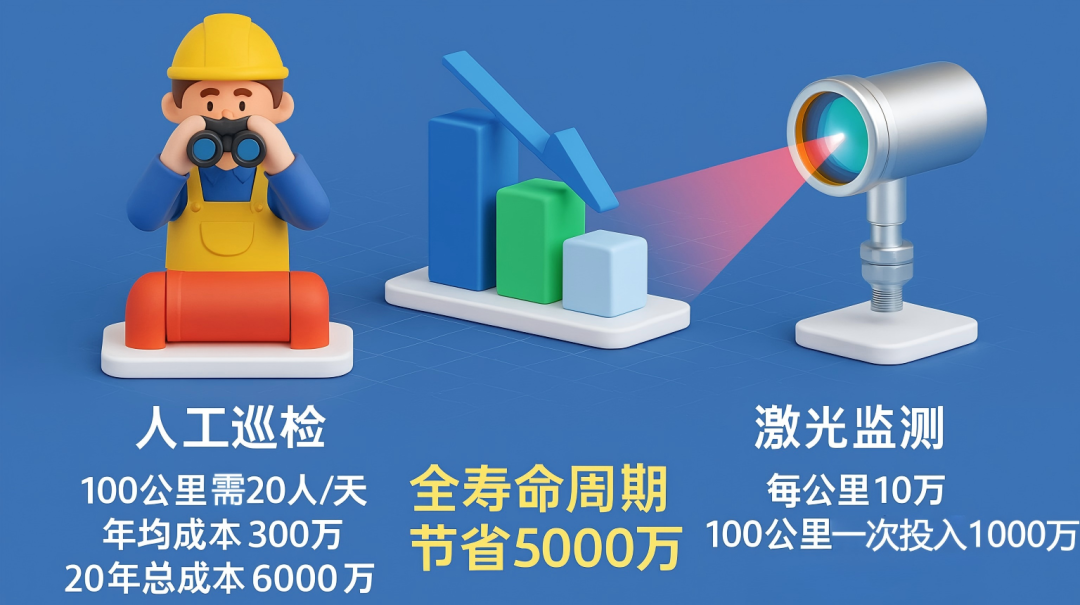
For oil and gas enterprises, balancing safety and costs is a key management focus. Guoke Hanhai's technology not only ensures safety but also drastically reduces full-lifecycle costs:
Taking a 100km pipeline as an example:
Traditional manual inspection requires 20 personnel per day for one round of inspection, with an annual cost of up to 3 million RMB and a total full-lifecycle cost (20 years) of 60 million RMB.
Guoke Hanhai's laser monitoring system requires a one-time investment of only 100,000 RMB per kilometer, totaling 10 million RMB for 100km. With a lifespan matching the pipeline (no frequent replacement or maintenance), it saves 50 million RMB in full-lifecycle costs, demonstrating significant cost-effectiveness.
In addition to direct cost savings, the system's "proactive early warning" function prevents accidents such as explosions and environmental pollution caused by leaks. A single oil and gas pipeline leak accident can incur hundreds of millions of RMB in handling costs (including compensation, repairs, and production suspension losses). Guoke Hanhai's technology mitigates such risks at the source, delivering immeasurable indirect value for enterprises.
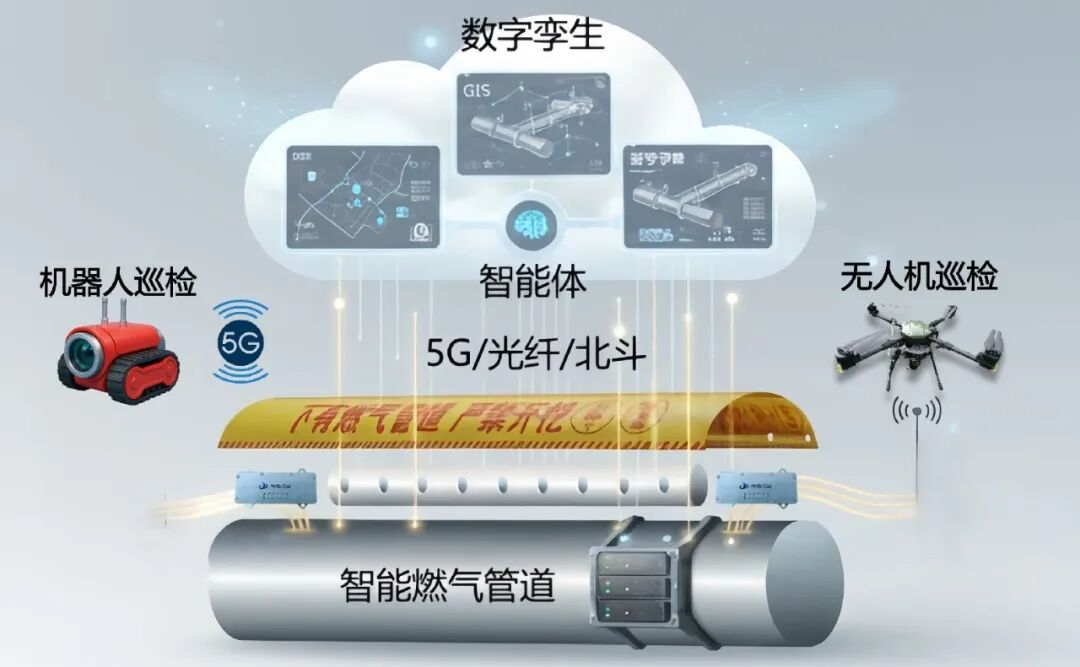
With the advancement of the "Dual Carbon Goals" and "Intelligent Pipeline Network" construction, Guoke Hanhai is not limited to "leak monitoring." Instead, it is building an integrated "terminal-edge-network-cloud" solution centered on passive laser technology:
Terminal: Integrating sensors, inspection robots, and UAVs to achieve "multi-dimensional perception."
Edge: Realizing real-time data processing through edge computing to reduce cloud pressure.
Network: Ensuring "high-speed and stable" data transmission relying on 5G, optical fibers, and the Beidou Navigation Satellite System.
Cloud: Creating an "intelligent pipeline management platform" by combining GIS, AI, and digital twin technologies, upgrading from "single-point monitoring" to "global collaboration" and from "safety assurance" to "green low-carbon."
In the future, Guoke Hanhai will continue to empower the oil and gas pipeline industry with laser technology, helping enterprises achieve the development goals of "safety, efficiency, and low carbon" and contributing more technological strength to national energy security and the "Dual Carbon" cause.
TEL:400-055-1239 (9:00~17:00)
MAIL:lisghanhai@gkhhlaser.com
ADDR:302 Floor, Building 5, No. 18, Kechuang 13th Street, Beijing Economic and Technological Development Zone