
ABOUT
Hanhai Opto-electronic is a major scientific research achievement transformation institution of the Hefei Institute of Physical Science, Chinese Academy of Sciences.


Hanhai Opto-electronic is a major scientific research achievement transformation institution of the Hefei Institute of Physical Science, Chinese Academy of Sciences.

Hanhai Optoelectronics centers on laser absorption spectroscopy-based gas detection (TDLAS)technology, developing and manufacturing a full range of products to deliver comprehensive gas detection solutions for cross-field and multi-industry customers.

Hanhai Optoelectronics' laser gas detection products focus on the monitoring of flammable, explosive, toxic and harmful gases as well as greenhouse gases. Leveraging mature technical solutions and flexible product adaptability, these products can be widel

With over a decade of technical accumulation and recognition from nearly a hundred customers, Hanhai Optoelectronics' laser gas detection products have delivered successful cases covering core scenarios across petrochemicals, urban gas, environmental moni

The company's core technology has been jointly recommended by the Ministry of Emergency Management, the Ministry of Science and Technology, and the Ministry of Industry and Information Technology.

Guoke Hanhai has created a tailored "laser toxin capture system" based on TDLAS technology, making invisible toxic gases detectable.
In petrochemical production sites, hydrogen sulfide and ammonia are like hidden "invisible killers" — the former can be fatal at concentrations of just a few parts per million, while the latter's strong irritancy can instantly burn the respiratory tract. At Sinopec Jingmen Branch's refining unit area, the leakage risk of these highly toxic gases has always been a top priority for safe production. Guoke Hanhai Laser Technology has developed a customized "laser toxin capture system" centered on TDLAS technology, ensuring no invisible toxic gas goes undetected.
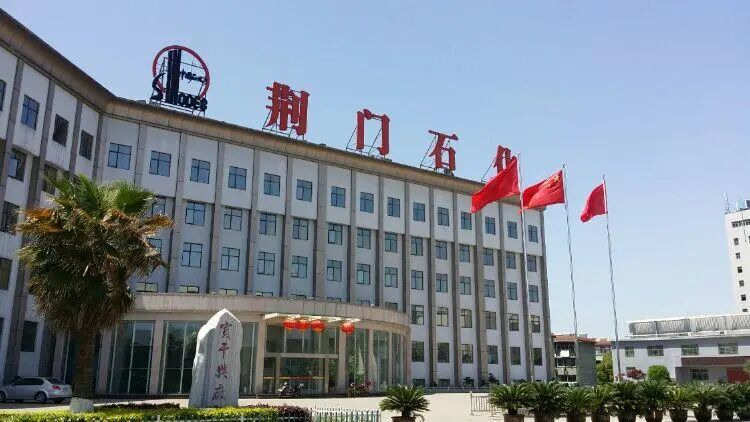
The desulfurization pump area of the delayed coking unit in the Second Refining Department of Jingmen Petrochemical is a high-risk zone for hydrogen sulfide. This colorless and odorless gas has strong neurotoxicity, and short-term exposure to high concentrations can cause suffocation. Meanwhile, ammonia leakage is another major hazard in the 1#-4# machine cooling chambers of the paraffin molding unit in the Special Oil Department — behind its pungent odor lies a serious threat of severe corrosion to the skin and mucous membranes.
According to the national standard GB/T50493-2019, these areas must be equipped with high-precision monitoring equipment. However, traditional point-type detectors have limitations such as limited coverage and delayed response, making it difficult to address leakage risks in complex unit areas. During the full-plant shutdown maintenance in 2022, Jingmen Petrochemical resolved to upgrade its monitoring system. Guoke Hanhai's fixed reflective laser gas telemetry instrument emerged as the solution — functioning like "laser radar," it scans a 100-meter range with an invisible light beam, capturing ppm-level gas leaks in milliseconds.
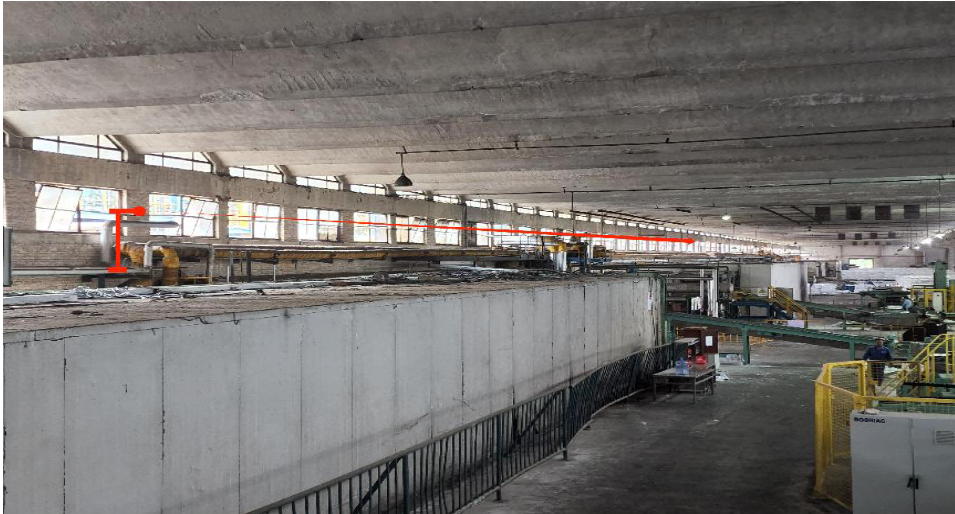
Targeting Jingmen Petrochemical's pain points, Guoke Hanhai deployed 3 sets of fixed reflective laser gas telemetry instruments to form a "point-to-point" precise monitoring network:
In the solvent regeneration area and fractionation area of the residue hydrotreating unit, one laser device is set up to form a 100-meter-long monitoring channel. Installed at a height of 0.8 meters, the device works with a corner cube reflector installed at the same height on the opposite side to reflect the laser beam back along the original path, creating an "gas sensing line" spanning the unit area. When hydrogen sulfide leakage passes through the beam, the laser's specific wavelength is absorbed, and the system immediately calculates the concentration and triggers an alarm.
In the desulfurization pump area of the delayed coking unit in the Second Refining Department, a second device is installed at a height of 1 meter, covering a 100-meter channel above the pump area. With dense pipelines and frequent operations here, the laser beam is not affected by equipment obstruction, enabling 24/7 monitoring of potential leakage points.
In the machine cooling chambers of the paraffin molding unit in the Special Oil Department, the third device is dedicated to ammonia monitoring. Installed 50 centimeters higher than the tallest pipeline, it ensures the laser beam can scan all possible pipeline interfaces prone to leakage.
All optical fibers and cables of the equipment are laid through cable trays, with the parts outside the trays protected by galvanized steel pipes. Explosion-proof boxes are directly mounted on vertical poles — this "armor" ensures stable operation of the equipment in the high-temperature, high-humidity, and dusty chemical environment.
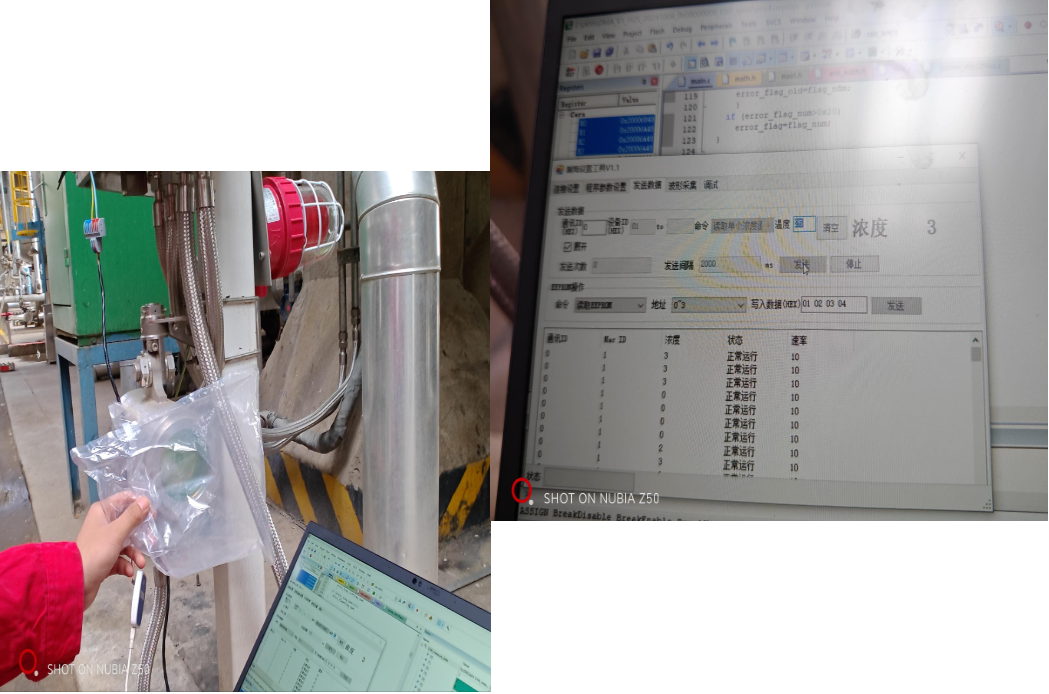
During project acceptance, engineers used 10-centimeter airbags to simulate gas leakage. When tested in front of the equipment lens in the hydrotreating area, the system immediately displayed a hydrogen sulfide concentration of 2-3 ppm; when tested 100 meters away near the corner cube reflector, the signal was also accurately captured. After adjustment via the 4-20mA signal in the central control room, the DCS system finally showed 0.75 ppm, fully meeting the sensitivity requirements.
In the commissioning of the coking area, the system maintained slight fluctuations between -0.3~0.5 ppm without leakage; in the ammonia test of the paraffin area, the software displayed 4-5 ppm when the airbag was close to the lens, and the central control room reading stabilized at 0.5 ppm after adjustment. All three sets of equipment passed acceptance at one go and officially went into service.
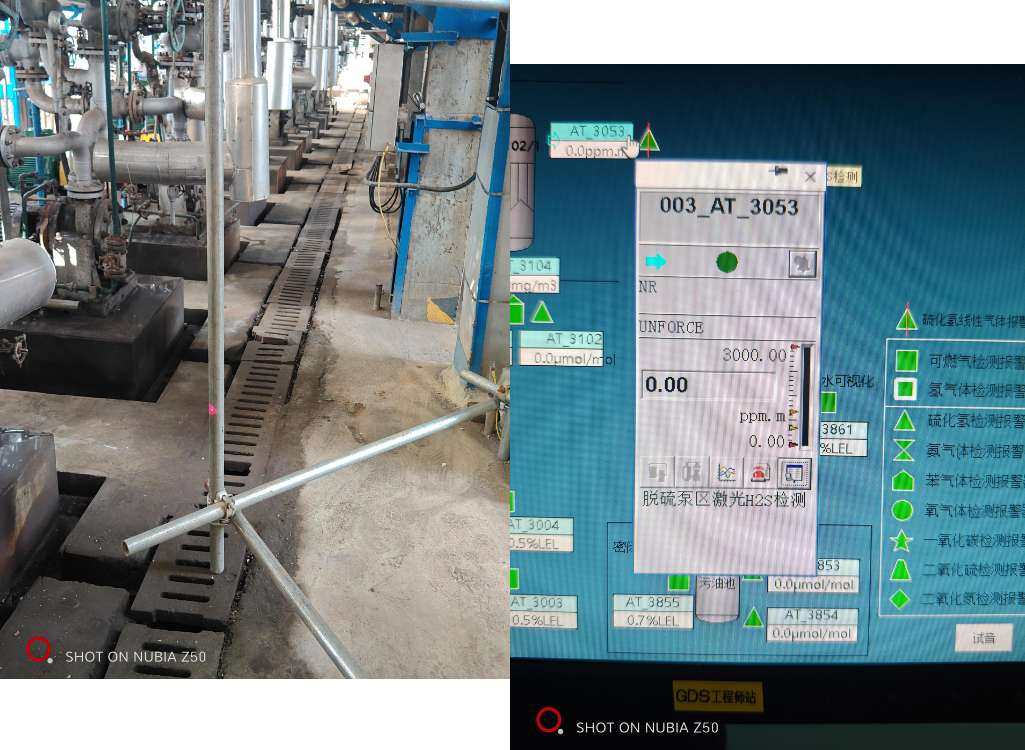
This laser monitoring system has brought qualitative changes to Jingmen Petrochemical: the monitoring range has expanded more than 3 times, no longer limited by single-point deployment; the emergency response efficiency has increased by 70%, with millisecond-level alarm speed gaining crucial time for disposal; personnel no longer need to conduct close-range inspections in high-risk areas, significantly reducing occupational health risks.
More importantly, it has promoted the transformation of safety management models — from the previous passive response of "handling after leakage" to active prevention and control of "real-time monitoring and early warning." Today, safety officers at Jingmen Petrochemical can grasp the gas status of all high-risk areas in the central control room. Once the concentration exceeds the standard, an acousto-optic alarm will sound immediately, and the leakage location can be accurately positioned.
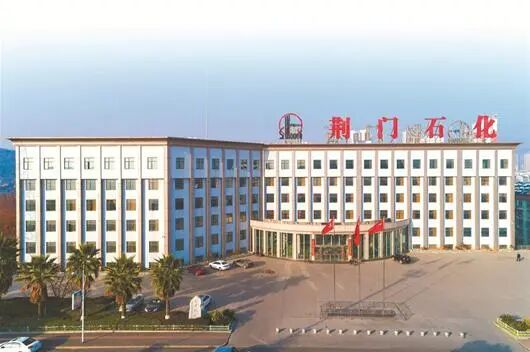
The monitoring of hydrogen sulfide and ammonia has long been a common challenge in the petrochemical industry. Guoke Hanhai has provided an answer with laser technology: the high sensitivity and selectivity of TDLAS technology leave toxic gases nowhere to hide; the fixed reflective design breaks through the limitations of traditional point-type monitoring.
This project not only builds a solid safety line for Jingmen Petrochemical but also serves as a model for toxic gas monitoring in the petrochemical industry. In the future, with the in-depth integration of the system and the production management platform, more intelligent risk prediction will be realized here — when there are slight fluctuations in gas concentration, the system can analyze trends and prompt inspections, making the safe production goal of "zero leakage" possible.
On the front line of chemical production, every technological progress is the most powerful protection for life. Guoke Hanhai's laser "toxin capture" technology is keeping more industrial sites away from the threat of toxic gases.
TEL:400-055-1239 (9:00~17:00)
MAIL:lisghanhai@gkhhlaser.com
ADDR:302 Floor, Building 5, No. 18, Kechuang 13th Street, Beijing Economic and Technological Development Zone