
ABOUT
Hanhai Opto-electronic is a major scientific research achievement transformation institution of the Hefei Institute of Physical Science, Chinese Academy of Sciences.


Hanhai Opto-electronic is a major scientific research achievement transformation institution of the Hefei Institute of Physical Science, Chinese Academy of Sciences.

Hanhai Optoelectronics centers on laser absorption spectroscopy-based gas detection (TDLAS)technology, developing and manufacturing a full range of products to deliver comprehensive gas detection solutions for cross-field and multi-industry customers.

Hanhai Optoelectronics' laser gas detection products focus on the monitoring of flammable, explosive, toxic and harmful gases as well as greenhouse gases. Leveraging mature technical solutions and flexible product adaptability, these products can be widel

With over a decade of technical accumulation and recognition from nearly a hundred customers, Hanhai Optoelectronics' laser gas detection products have delivered successful cases covering core scenarios across petrochemicals, urban gas, environmental moni

The company's core technology has been jointly recommended by the Ministry of Emergency Management, the Ministry of Science and Technology, and the Ministry of Industry and Information Technology.
The Ecological Environment Code
Effective August 15
Challenges & Opportunities
Basic Requirements
Pathways for In‑depth Implementation
Top‑level Reform under the Code: Monitoring Is No Longer an Optional Add‑on
DEVELOPMENT
01
Manufacturing · Environmental Protection & Safety · CITY
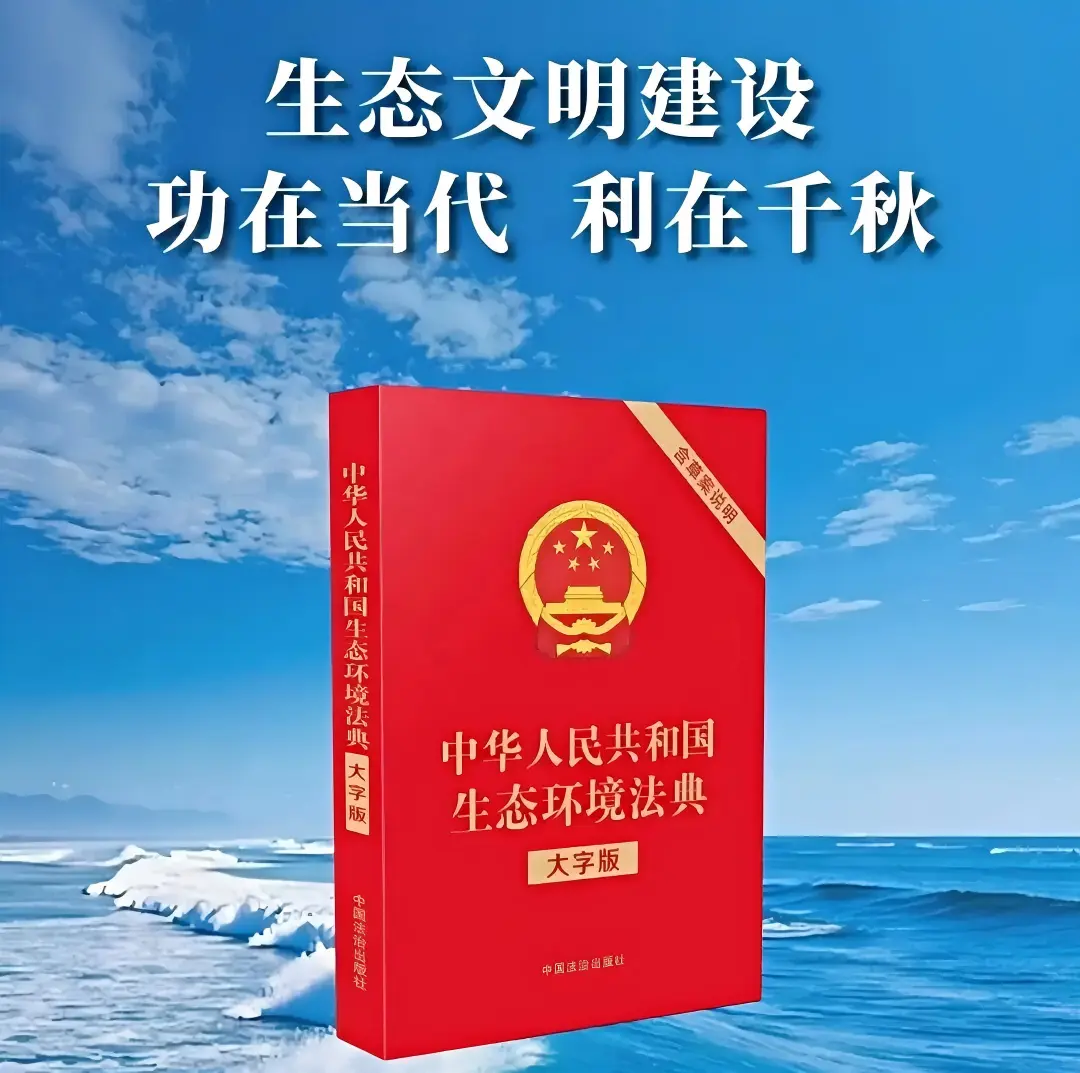
Breaking the historical fragmentation of separate statutes governing air, water, marine and carbon‑emission controls, the Code establishes a unified, closed‑loop and heavily penalized regulatory system. It imposes four binding mandatory constraints across all industry sectors:
Unified mandatory monitoring system covering all industries
Articles 183 and 184 of the Code stipulate that all entities under pollutant‑discharge permit administration must conduct routine self‑monitoring. Key pollutant‑emitting enterprises are mandated to install automatic monitoring devices connected in real‑time to regulatory platforms. Raw monitoring records shall be retained for no less than five years, with full public disclosure of data. Equipment failure, data gaps or missing records will trigger substantial penalties.
Collaborative control over multiple pollutant media, expanding full‑domain monitoring scenarios
The Pollution Prevention and Control Book covers air pollutants, methane, industrial wastewater, marine discharge, ship exhaust, soil volatiles, hazardous‑chemical waste gas, malodorous and toxic gases. It adds special provisions for emerging pollutants and chemical‑leakage investigations. Production plants, storage tanks, pipelines, ship holds, underground wells and discharge outlets are all included in routine monitoring scope. Single‑point devices can no longer satisfy full‑coverage inspection requirements.
Independent chapter for green‑low‑carbon development, rigid methane‑control requirements put into effect
Dedicated chapters address climate change response. Leakage of methane, ammonia, methanol and other greenhouse gases from oil‑gas, shipping, chemical and energy‑storage facilities are brought under statutory regulation. Enterprises are required to implement LDAR (Leak Detection and Repair) and MRV (Measurement, Reporting and Verification) for carbon‑data verification. Quantified evidence for trace fugitive emissions becomes a hard compliance assessment metric.
Significantly upgraded legal liabilities, personal accountability for data fraud
Graduated heavy penalties apply to distorted monitoring readings, equipment malfunctions and tampered records. Enterprises may face fines up to millions of RMB; responsible individuals are held personally liable. Severe violations may result in production suspension orders or criminal prosecution. Reliable monitoring equipment forms the baseline for corporate compliance.
In short: the new Code realizes integrated closed‑loop regulation for air, water, marine, soil and greenhouse‑gas pollution. Governance extends from end‑of‑pipe discharge control to proactive full‑domain leakage inspection. Stable, credible and blind‑spot‑free monitoring equipment has become an industrial necessity.
Traditional Sensors Under Pressure: Compliance Gaps across Multiple Industries
DEVELOPMENT
02

Manufacturing · Environmental Protection & Safety · CITY
Chemical, oil‑gas, shipping and mining facilities widely adopt electrochemical, conventional infrared and catalytic sensors. Under the stringent Code requirements, these technologies have inherent drawbacks that expose operators to penalty risks:
Susceptible to poisoning and drift, failing statutory continuous‑monitoring obligations
Electrochemical and catalytic sensors suffer irreversible corrosion from salt spray, oil‑gas, sulfides and fumes. Sensitivity degrades rapidly with persistent baseline drift. 7×24‑hour stable readings cannot be guaranteed, leading to frequent data gaps and distorted values. Records cannot meet the 5‑year retention requirement for official audits.
Limited trace‑leak detection creates compliance loopholes
Conventional instruments only capture high‑concentration burst leaks. They cannot identify ppb‑level trace methane or ammonia escaping from flanges, storage tanks, ship holds or underground wells. They fail to satisfy Code‑mandated routine hazard screening and full‑process LDAR evidence collection.
Poor operating‑condition adaptability leaves monitoring blind spots
Readings degrade severely under high humidity, dust, vibration and in confined compact spaces. Most only support short‑range point sampling. Tank tops, pipe‑gallery interlayers, abandoned wells and equipment dead zones remain uncovered, preventing comprehensive risk screening.
Weak data traceability cannot support carbon verification and third‑party audits
Devices lack standardized time‑series and spatial‑data storage. They cannot bind leak‑point coordinates, leaving no credible raw datasets for MRV carbon accounting, environmental inspections or port‑state control verification.
Guokehanhai TDLAS Tunable Diode Laser Absorption Spectroscopy: Code‑compliant Solution
DEVELOPMENT
03
Manufacturing · Environmental Protection & Safety · CITY
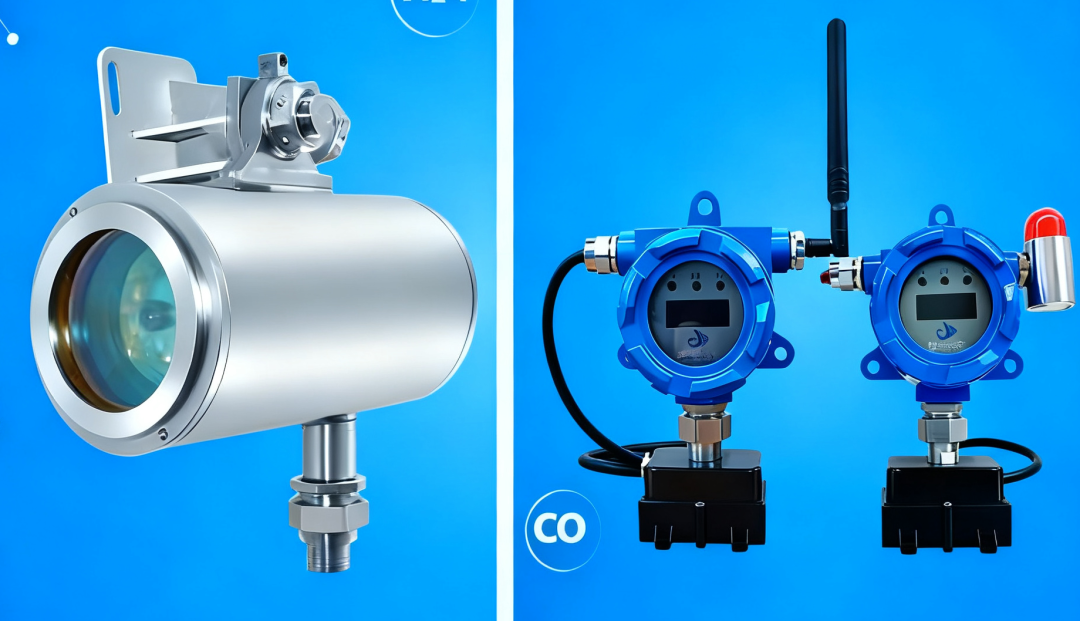
Built on self‑developed TDLAS (Tunable Diode Laser Absorption Spectroscopy) core technology, this purely physical molecular‑fingerprint detection principle eliminates fundamental defects of conventional sensors. It delivers generational technical advantages and comprehensively satisfies Code provisions governing air, water, marine and low‑carbon monitoring for industry, oil‑gas, shipping, mining and industrial parks.
Round‑the‑clock stable performance fulfilling statutory continuous‑monitoring requirements
Free of catalytic or electrochemical consumables, it resists interference from water vapor, dust, salt spray and miscellaneous gases with zero risk of poisoning. It delivers accurate concentration readings 7×24 hours a year. Time‑stamped and geo‑tagged raw records are auto‑stored for over five years and can be directly interfaced with environmental‑regulatory platforms, fully meeting ledger retention and real‑time connectivity mandates.
ppb‑level ultra‑high sensitivity capturing full‑domain trace fugitive emissions
Accurately measures methane, ammonia, methanol, hydrogen sulfide, CO₂ and dozens of other Code‑regulated pollutants, detecting faint fugitive releases from pipelines, tanks, discharge outlets, ship engine rooms and underground wells. A multi‑layer monitoring portfolio comprising fixed scanning remote sensors, pump‑sampling analyzers, portable instruments and quadruped inspection robots combines long‑range wide‑area scanning with close‑range precision sampling, eliminating blind spots across plants, ship holds and pipe galleries. It supports complete LDAR workflow evidence collection.
Covers all Code‑regulated business segments for diversified environmental‑scenario adaptability
‑ Chemical & industrial parks: Fixed laser pan‑tilt units perform 360° full‑area scanning for fugitive waste gas from tanks and process units; robots autonomously inspect sealing points.
‑ Oil‑gas & coal‑bed‑methane stations: End‑to‑end methane monitoring supports mandatory methane abatement and MRV carbon accounting.
‑ Inland & ocean‑going new‑energy vessels: Suited for LNG, green‑ammonia and green‑methanol‑fueled engine‑room monitoring; concurrently controls ship exhaust and fuel leaks to comply with marine‑pollution‑prevention clauses.
‑ Mines, tunnels & waste‑to‑energy plants: Long‑term online monitoring for toxic‑hazardous gases in underground and enclosed workshops, implementing investigation requirements for soil and groundwater volatile hazards.
‑ Discharge outlets & hazardous‑waste warehouses: Fixed‑point online monitoring for water‑phase volatiles, malodorous and toxic pollutants to realize coordinated water‑gas governance.
Fully traceable data supporting dual verification for carbon‑neutrality and environmental compliance
All monitoring data carries 3‑D spatial coordinates and time‑series concentration curves, with tamper‑proof raw records. Data supports routine pollutant‑emission public disclosure and law‑enforcement inspections, while precisely quantifying greenhouse‑gas emissions such as methane. It delivers legally admissible datasets for corporate carbon ledgers and third‑party MRV audits, satisfying compliance obligations under both the Pollution Prevention and Control Book and the Green‑Low‑Carbon Book.
Seize the Code‑implementation Window: Build a Long‑term Compliant Monitoring System
03

Manufacturing · Environmental Protection & Safety · CITY
Less than half a month remains before the Ecological Environment Code takes effect on August 15. Chemical, energy, shipping, mining and hazardous‑waste enterprises should complete compliance retrofits of monitoring equipment promptly to avoid heavy fines and production‑suspension rectification post‑enforcement.
Guokehanhai delivers integrated compliance solutions for environmental‑protection clients across industries: from long‑range laser‑scanning equipment, fixed‑point online analyzers and portable inspection gear, to intelligent autonomous‑inspection systems based on quadruped robots. Complemented by standardized data‑interfacing and ledger‑management services, our domestically‑developed TDLAS laser‑sensing technology addresses three core compliance challenges: pollution control, greenhouse‑gas abatement and leak early‑warning, achieving parallel progress in safe production and pollution‑carbon reduction.
Conclusion
The Ecological Environment Code marks a new era of precise, law‑based and systematic environmental governance in China. Monitoring equipment is no longer auxiliary facility, but a core legal‑compliance asset.
Guokehanhai devotes itself to TDLAS laser‑gas‑sensing technology. We develop full‑domain monitoring solutions covering air, water, marine and low‑carbon sectors. With high‑reliability, blind‑spot‑free and traceable monitoring capabilities, we help enterprises across industries complete compliance upgrades in advance. Leveraging domestic innovation, we safeguard blue skies and clear waters and underpin high‑quality green‑low‑carbon development.
TEL:400-055-1239 (9:00~17:00)
MAIL:lisghanhai@gkhhlaser.com
ADDR:302 Floor, Building 5, No. 18, Kechuang 13th Street, Beijing Economic and Technological Development Zone