
ABOUT
Hanhai Opto-electronic is a major scientific research achievement transformation institution of the Hefei Institute of Physical Science, Chinese Academy of Sciences.


Hanhai Opto-electronic is a major scientific research achievement transformation institution of the Hefei Institute of Physical Science, Chinese Academy of Sciences.

Hanhai Optoelectronics centers on laser absorption spectroscopy-based gas detection (TDLAS)technology, developing and manufacturing a full range of products to deliver comprehensive gas detection solutions for cross-field and multi-industry customers.

Hanhai Optoelectronics' laser gas detection products focus on the monitoring of flammable, explosive, toxic and harmful gases as well as greenhouse gases. Leveraging mature technical solutions and flexible product adaptability, these products can be widel

With over a decade of technical accumulation and recognition from nearly a hundred customers, Hanhai Optoelectronics' laser gas detection products have delivered successful cases covering core scenarios across petrochemicals, urban gas, environmental moni

The company's core technology has been jointly recommended by the Ministry of Emergency Management, the Ministry of Science and Technology, and the Ministry of Industry and Information Technology.
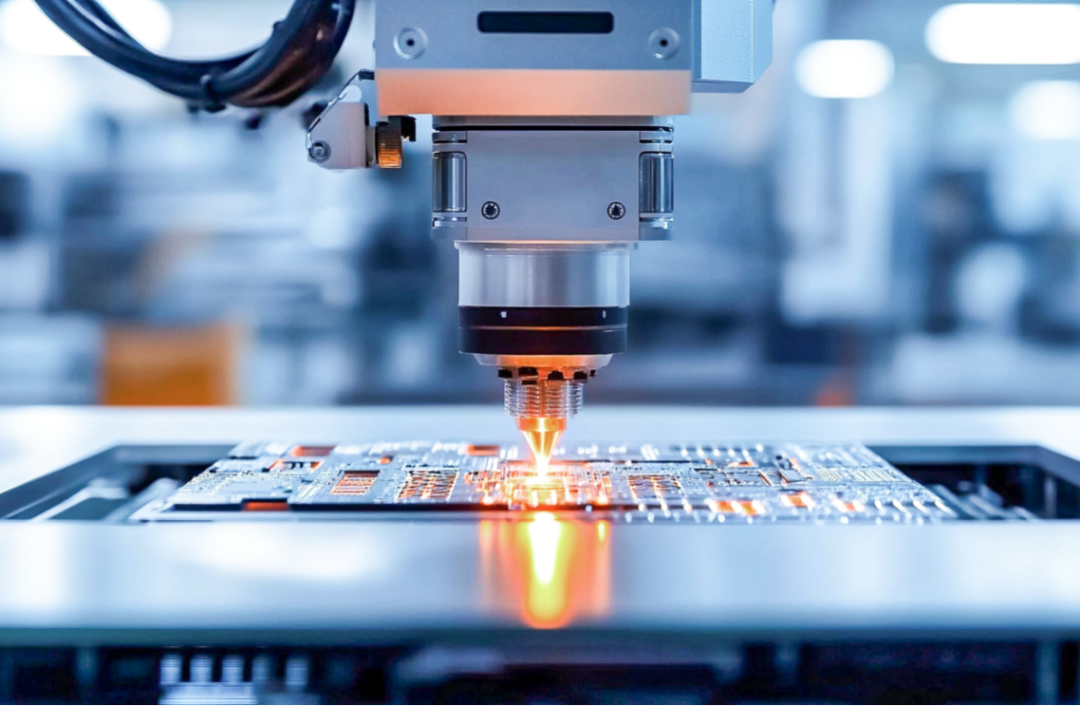
In an era of intensifying global technological competition, "import substitution" has become a buzzword of great concern. For Hanhai Optoelectronics, a leader in the laser detection field, promoting import substitution is not only an inevitable choice for the company's own development but also crucial to the long-term future of the country and the industry. Today, we delve into the necessity behind it.
Laser detection technology is widely used in core sectors such as chemical engineering, energy, and urban security. The stable operation of these fields is directly related to national economy and people's livelihood. For a long time, China has been highly dependent on imported products in this area, hiding significant supply chain risks.
The international situation changes rapidly, and trade frictions occur from time to time. If import channels are interrupted for any reason, the consequences could be disastrous. Take gas detection as an example: if urban gas pipelines and chemical park safety monitoring rely entirely on laser detectors from European and American manufacturers, technical blockades or supply restrictions could paralyze the entire monitoring system, posing severe challenges to public safety.
Through relentless technological breakthroughs, Hanhai Optoelectronics has achieved import substitution, building an independently controllable industrial chain. This means reducing reliance on external supplies and fundamentally safeguarding the safe operation of the country's key infrastructure.
High-priced imported laser detection equipment has long been a pain point for domestic enterprises. Due to technological monopolies and cross-border circulation factors, the cost of imported equipment remains persistently high, significantly increasing the operational burden on domestic companies.
For instance, early TDLAS laser methane telemetry instruments imported from overseas were 3-5 times more expensive than domestic counterparts. This put them out of reach for many small and medium-sized chemical enterprises and local gas companies, restricting their equipment upgrading needs.
Through localized production, Hanhai Optoelectronics has successfully reduced product prices to 1/3-1/2 of imported equipment. This not only lowers the entry threshold for the domestic industry, allowing more enterprises to access advanced laser detection technology but also promotes the application of this technology in broader scenarios, such as catering gas safety and rural biogas monitoring.
Lower costs have expanded the market, stimulating collaborative innovation in the domestic industrial chain. A virtuous cycle of "technological breakthroughs → cost reduction → market expansion → further innovation" has formed, greatly enhancing China's overall competitiveness in the global gas detection field.
Import substitution is by no means a simple "copying"; it is a process of achieving technological transcendence through independent R&D. When breaking the European and American monopolies, Hanhai Optoelectronics did not take the shortcut of replicating existing technologies. Instead, it focused on developing laser detection algorithms with stronger adaptability to China's special environments, such as high humidity and high dust levels.
Today, Hanhai Optoelectronics' equipment has surpassed some imported products in indicators like anti-interference performance and response speed. This continuous accumulation of technological innovation has enabled China to gradually grasp core patents and standard-setting authority in the laser absorption spectroscopy detection field.
For example, the "Technical Requirements for Laser Gas Detectors," which Hanhai Optoelectronics participated in formulating, has become a national industry standard, breaking the long-term dominance of European and American enterprises in international standards. As technological influence grows, China's voice in global sensor standards is increasingly strengthened, laying a solid regulatory foundation for industrial upgrading.
Import substitution of laser detection technology is like a stone thrown into a lake, creating ripples of development in the domestic upstream and downstream industrial chains. From laser chips and optical modules to data processing algorithms, Hanhai Optoelectronics' domestic demand has spawned a number of supporting enterprises, forming large-scale laser sensor industrial clusters in cities like Hefei and Shenzhen.
According to estimates, every 100 million yuan of output value of domestic laser detection equipment can drive a 230 million yuan increase in output value of upstream and downstream supporting industries, while creating a large number of technical and employment opportunities.
Furthermore, the popularization of domestic equipment has promoted the intelligent upgrading of traditional industries such as chemical engineering and gas. Advanced models like remote monitoring and IoT linkage have been widely applied, significantly improving industrial safety levels and production efficiency. This effectively promotes positive interaction between "supply-side upgrading" and "demand-side release" in the domestic economic cycle.
In special fields such as national defense and aerospace, the independent control of laser detection technology is directly related to national security. In gas safety monitoring of these classified sites, imported equipment may carry risks of data backdoors or remote control, posing hidden dangers to national security.
Domestic equipment, however, can achieve "zero data leakage" design through customized development. Hanhai Optoelectronics has developed special laser detectors for military-industrial units, which have been successfully applied in gas monitoring of space launch sites and nuclear facilities, with their safety and reliability fully verified.
Promoting import substitution in strategic fields is an inevitable requirement for safeguarding national technological and national defense security, as well as a core link in achieving technological self-reliance. Hanhai Optoelectronics takes this responsibility without hesitation.
The road to import substitution is long and arduous. Hanhai Optoelectronics will continue to uphold its original aspiration, deepen its efforts in the laser detection field, and contribute more to the development of the country and the industry!
TEL:400-055-1239 (9:00~17:00)
MAIL:lisghanhai@gkhhlaser.com
ADDR:302 Floor, Building 5, No. 18, Kechuang 13th Street, Beijing Economic and Technological Development Zone