
ABOUT
Hanhai Opto-electronic is a major scientific research achievement transformation institution of the Hefei Institute of Physical Science, Chinese Academy of Sciences.


Hanhai Opto-electronic is a major scientific research achievement transformation institution of the Hefei Institute of Physical Science, Chinese Academy of Sciences.

Hanhai Optoelectronics centers on laser absorption spectroscopy-based gas detection (TDLAS)technology, developing and manufacturing a full range of products to deliver comprehensive gas detection solutions for cross-field and multi-industry customers.

Hanhai Optoelectronics' laser gas detection products focus on the monitoring of flammable, explosive, toxic and harmful gases as well as greenhouse gases. Leveraging mature technical solutions and flexible product adaptability, these products can be widel

With over a decade of technical accumulation and recognition from nearly a hundred customers, Hanhai Optoelectronics' laser gas detection products have delivered successful cases covering core scenarios across petrochemicals, urban gas, environmental moni

The company's core technology has been jointly recommended by the Ministry of Emergency Management, the Ministry of Science and Technology, and the Ministry of Industry and Information Technology.
In September 2025, news about an LNG storage tank at Australia’s Darwin Port sent shockwaves through the global energy industry. Built in 2006 and once hailed as the "world’s largest LNG storage tank," this core facility had been secretly leaking methane for 18 years. More outrageously, operators and regulators covered up the truth for years, allowing this potent greenhouse gas—86 times more effective than carbon dioxide at warming the planet over a 20-year period—to continue emitting unchecked. It not only threatens the lives of residents in Darwin, just 7 kilometers away, but also acts as an "invisible killer" for climate governance.
While "post-incident cover-ups" have become a fig leaf for industry scandals, China’s Tianjin LNG Terminal has adopted a starkly different safety philosophy, achieving over 1,133 days of operation without major leakage accidents. As a key hub ensuring energy supply in North China, it handles massive volumes of LNG reception, storage, and transportation daily. The cornerstone of this safety record is the TDLAS laser monitoring "pre-warning" system developed by Guoke Hanhai.
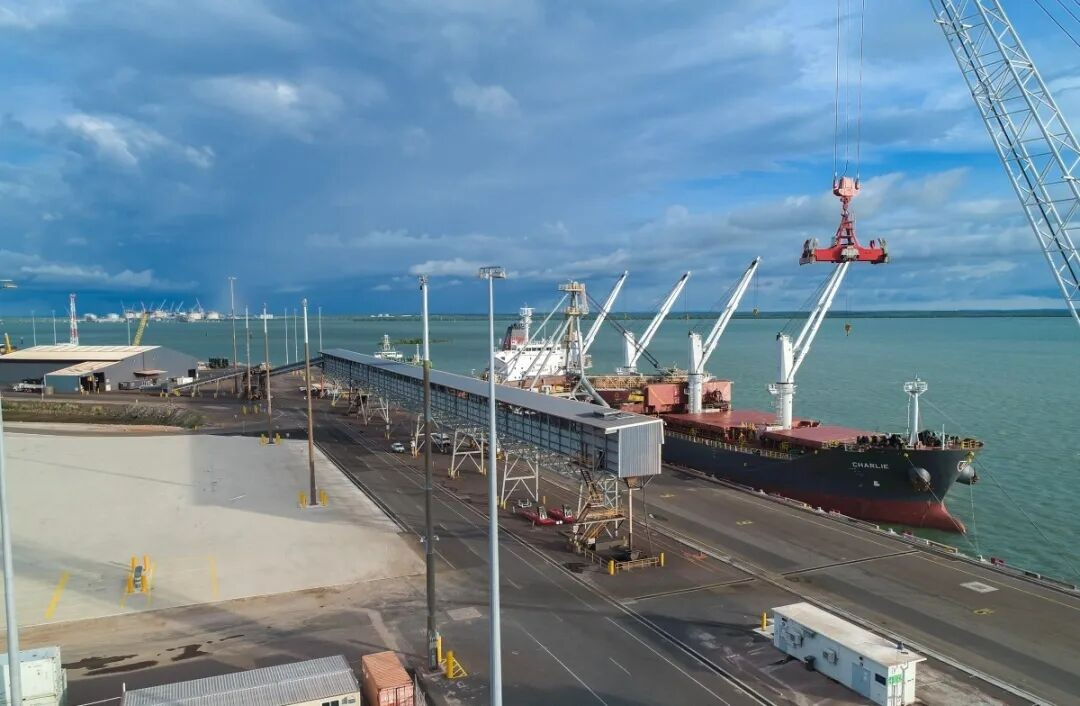
The tragedy at Darwin Port stems essentially from a reactive safety mindset—covering up leaks instead of addressing them proactively. In contrast, Tianjin LNG Terminal established a "proactive defense" logic from the outset: using technology to move the safety line forward to the "incipient stage of leaks."
Guoke Hanhai’s TDLAS laser monitoring system is like equipping the terminal with "clairvoyance" and "clairaudience." At key risk points such as storage tank areas, metering and transportation zones, and tank truck loading/unloading bays, fixed scanning laser telemeters provide 360° full coverage. Even tiny leaks with methane concentrations as low as 382 ppm can be accurately located within 0.1 seconds. Reflective laser detectors keep a close watch on leak-prone parts like flanges and valves, with a monitoring range of up to 1,000 meters ensuring no blind spots in long-distance pipelines. Solar-powered IoT monitoring terminals solve the problem of monitoring in outdoor areas without power supply, achieving true "full-area coverage with no gaps."
During a night inspection in February 2024, the system suddenly detected abnormal data from a flange joint on the top of Tank 5, triggering a hierarchical alert in the background immediately. Staff rushed to the scene with portable laser detectors and completed leak disposal within 15 minutes. "If we had waited until the leak was visible to the naked eye or detectable by smell, the leakage volume might have expanded dozens of times," noted the safety director of Tianjin LNG Terminal. This highlights the fundamental gap between the two safety logics: Darwin Port gambled that "leaks wouldn’t cause accidents," while Tianjin LNG relies on "detecting all hazards in advance."
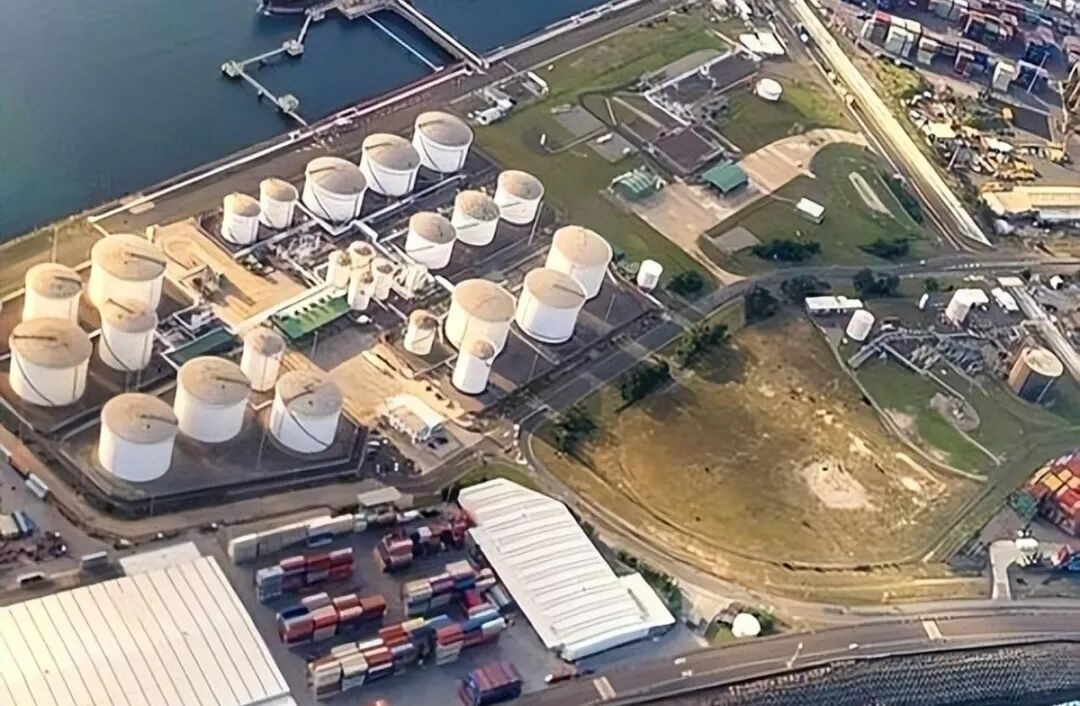
Beyond corporate negligence, the core cause of Darwin Port’s scandal lies in the absence of effective regulation, leading to a cycle of "no monitoring, no repairs, no accountability." The tank was approved for use until 2050 without requiring leak repairs or monitoring. This "turning a blind eye" approach to regulation ultimately resulted in an 18-year environmental disaster.
Tianjin LNG Terminal’s practice proves that technology-enabled precise regulation is the key to safety. Guoke Hanhai’s monitoring system not only provides real-time alerts but also enables full-process data traceability. Methane concentration data, leak alert records, and disposal process logs are uploaded to a cloud-based management platform in real time, supporting remote monitoring by managers and providing verifiable objective evidence for regulatory authorities. As of August 2025, the platform has stored over 10 million valid data points with no missing or abnormal records, completely eliminating the possibility of "black-box operations."
More importantly, the system seamlessly integrates with the terminal’s emergency response system. Once a leak concentration reaches a preset threshold, the system automatically triggers a series of emergency measures—including audio-visual alarms, emergency valve shutdowns, and ventilation activation—reducing response time by over 90% compared to traditional manual operations. This closed loop of "monitoring-alert-disposal" ensures safety no longer depends on "human responsibility" but on "the hard logic of technology."
As a high-tech enterprise specializing in laser gas monitoring for 15 years, Guoke Hanhai’s technology is far from theoretical. Its equipment has operated safely for 8 consecutive years on PetroChina’s Shanjing Line 4 and achieved 10 years of zero major failures in a Beijing Gas project. The over 1,133 days of safe operation at Tianjin LNG Terminal is just another testament to its technical strength.
Targeting the special working conditions of the LNG industry—low temperature, high pressure, and high humidity—Guoke Hanhai has specifically optimized its equipment for anti-interference performance and environmental adaptability. It operates stably in extreme temperatures ranging from -40℃ to 60℃, with an IP68 protection rating to withstand coastal salt spray corrosion. Even in severe weather such as typhoons and heavy rains, monitoring accuracy remains unaffected. This "localized" technical optimization reflects Chinese enterprises’ core capability to solve practical problems.
Darwin Port’s 18-year leak scandal serves as a wake-up call for the entire industry: energy security is never a "game of chance," nor can it be swept under the rug with "post-incident cover-ups." The pre-warning system built by Guoke Hanhai using TDLAS laser technology not only provides "zero-leakage" safety guarantees for Tianjin LNG Terminal but also proves to the world that technological innovation enabling "precision monitoring, real-time alerts, and data traceability" is the fundamental way to safeguard energy security.
Today, driven by the dual demands of the "dual carbon" goals and safe development, the LNG industry is facing an urgent need for safety upgrades. Guoke Hanhai’s technology has been applied in numerous LNG terminals, oil and gas pipelines, and offshore wind farms across China, building an "invisible line of defense" for national energy security with hard technology.
In your opinion, which other scenarios in the energy security field require "pre-warning" technology to protect? Share your thoughts in the comments section! We will select 3 readers to receive the electronic version of Industrial Gas Safety Monitoring Guide!
TEL:400-055-1239 (9:00~17:00)
MAIL:lisghanhai@gkhhlaser.com
ADDR:302 Floor, Building 5, No. 18, Kechuang 13th Street, Beijing Economic and Technological Development Zone