
ABOUT
Hanhai Opto-electronic is a major scientific research achievement transformation institution of the Hefei Institute of Physical Science, Chinese Academy of Sciences.


Hanhai Opto-electronic is a major scientific research achievement transformation institution of the Hefei Institute of Physical Science, Chinese Academy of Sciences.

Hanhai Optoelectronics centers on laser absorption spectroscopy-based gas detection (TDLAS)technology, developing and manufacturing a full range of products to deliver comprehensive gas detection solutions for cross-field and multi-industry customers.

Hanhai Optoelectronics' laser gas detection products focus on the monitoring of flammable, explosive, toxic and harmful gases as well as greenhouse gases. Leveraging mature technical solutions and flexible product adaptability, these products can be widel

With over a decade of technical accumulation and recognition from nearly a hundred customers, Hanhai Optoelectronics' laser gas detection products have delivered successful cases covering core scenarios across petrochemicals, urban gas, environmental moni

The company's core technology has been jointly recommended by the Ministry of Emergency Management, the Ministry of Science and Technology, and the Ministry of Industry and Information Technology.
Li You'an, Guoke Hanhai Laser Technology (Beijing) Co., Ltd.
Chemical detectors and optical detectors are two distinct types of gas detection devices. Chemical detectors are basically point detectors, while optical detectors are mostly telemetry-based. Optical (laser) telemetry gas detectors utilize Tunable Diode Laser Absorption Spectroscopy (TDLAS) technology, which measures target gases using specific wavelengths emitted by semiconductor lasers. Telemetry systems detect the overall concentration of gas plumes formed by leaks, whereas point detectors measure gas concentration at the exact location where the device is installed. Under the same leak conditions, laser telemetry gas detectors offer significantly higher detection efficiency, greater sensitivity in measurement values, earlier leak detection, and a higher overall leak detection rate compared to point detectors.
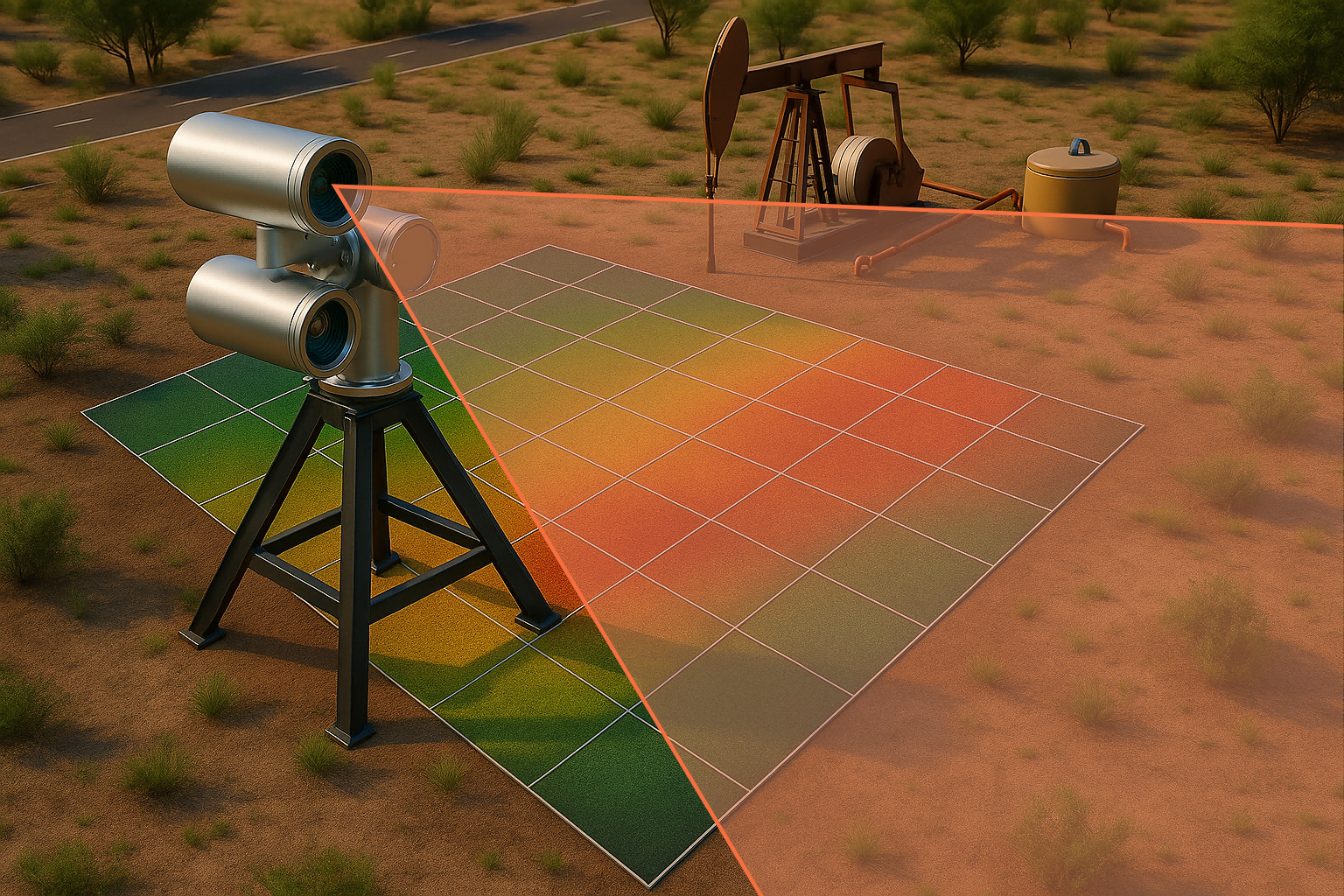
Detection efficiency is a fundamental performance indicator for gas detectors. It is generally evaluated based on three key aspects: detection distance, response time, and stability of measured gas concentration values. This indicator determines the ability to detect gas leaks when they occur.
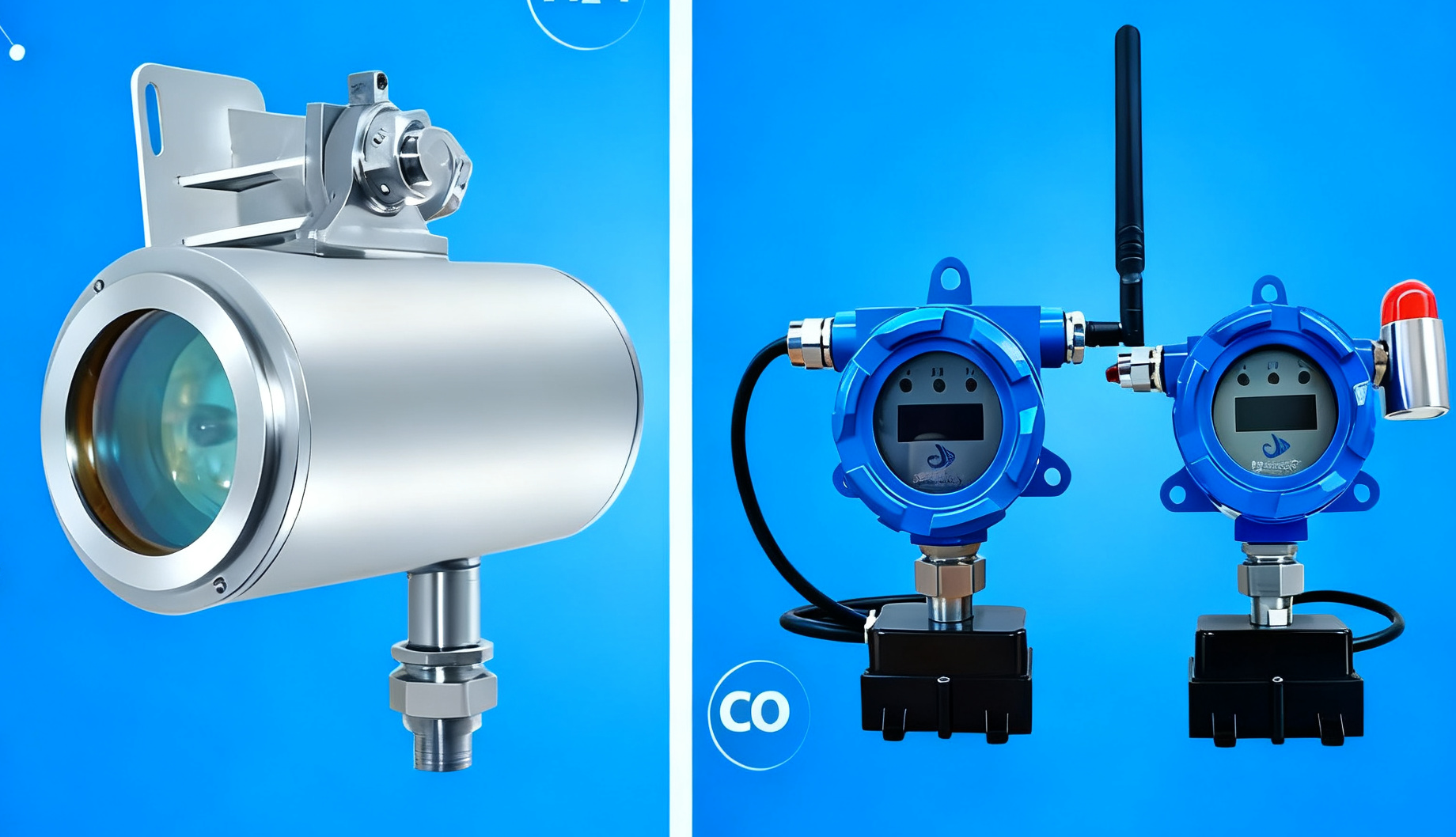
Laser telemetry systems can detect gas leaks at distances ranging from tens to hundreds of meters, focusing on the overall concentration of the leaking gas plume. Their performance is unaffected by the distance between the device and the leak source. In contrast, point detectors only measure gas concentration at their installation location, making them highly sensitive to the distance between the leak point and the detector. For leaks far from the installation site, point detectors are often ineffective or even unable to detect the leak.
Since laser telemetry measures the concentration of the entire gas plume, it is not affected by the gas diffusion speed or plume size. Leaks can be detected immediately once they occur, with the total concentration value measured directly. Point detectors, however, have response times influenced by gas diffusion speed, distance from the leak point, wind direction, and wind speed. These external factors make their detection time, stability, and overall performance uncontrollable.
Telemetry devices measure the integral concentration of the entire gas plume, with readings only related to the leak concentration and plume size. They can quickly detect diffusing gas plumes, resulting in extremely high detection rates. Point detectors, by contrast, only measure concentration at a single point and cannot reflect the actual leak volume. For accurate detection, leaking gas must diffuse to the detector's location and remain there continuously for a certain period (typically 30 seconds) to ensure stable gas entry into the device.
Experimental simulations using 100% methane (simulating natural gas leaks) showed that point detectors initially read 0.02%, which increased to 0.57% after 30 seconds as gas accumulated. When the gas release point was moved 35 cm horizontally away, the readings dropped sharply—even to zero in some cases. This experiment confirms that minor changes in external conditions can destabilize point detector readings, making stable alarms difficult to achieve.
|
Calibration Gas Concentration |
Flow Rate |
Horizontal Distance Between Point Detector and Gas Source |
Height Between Point Detector and Gas Source |
Time for Point Detector to Reach Peak Reading |
Telemetry Device Position |
Time for Telemetry Device to Reach Peak Reading |
|
100% |
1L/min |
Directly below the point detector |
1.4m |
55 seconds |
4m horizontal, 1.4m height |
14 seconds |
|
100% |
1L/min |
50cm horizontal offset |
1.4m |
4 minutes 49 seconds |
4m horizontal, 1.4m height |
11 seconds |
|
100% |
1L/min |
100cm horizontal offset |
1.4m |
>10 minutes |
4m horizontal, 1.4m height |
15 seconds |
|
100% |
500ml/min |
Directly below the point detector |
1.4m |
1 minute 39 seconds |
4m horizontal, 1.4m height |
32 seconds |
|
100% |
500ml/min |
50cm horizontal offset |
1.4m |
>5 minutes |
4m horizontal, 1.4m height |
25 seconds |
|
100% |
500ml/min |
100cm horizontal offset |
1.4m |
>10 minutes |
4m horizontal, 1.4m height |
11 seconds |
|
Calibration Gas Concentration |
Flow Rate |
Point Detector Position |
Height Between Point Detector and Gas Source |
Gas Release Duration |
Point Detector Readings |
Telemetry Device Position |
Telemetry Device Readings |
|
100% |
1L/min |
Directly above gas source |
1.4m |
30 minutes |
Fluctuates between 0-0.56 (occasionally returns to 0) |
4m horizontal, 1.4m height |
Continuous stable value |
|
100% |
500ml/min |
Directly above gas source |
1.4m |
30 minutes |
Fluctuates between 0-0.39 (occasionally returns to 0) |
4m horizontal, 1.4m height |
Continuous stable value |
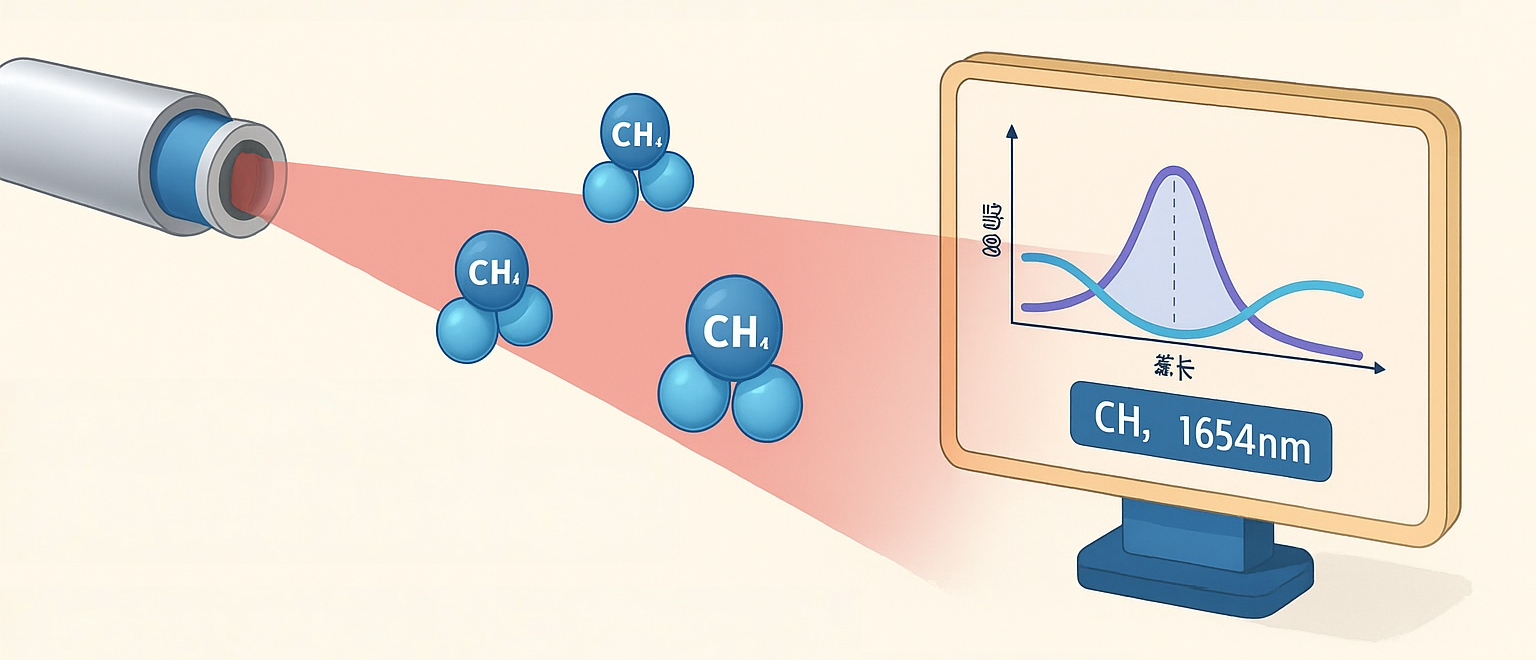
1.By measuring the integral concentration of gas plumes, telemetry gas detectors can detect leaks within long distances (e.g., 100 meters). As long as a gas plume exists within this range, the telemetry device can quickly detect it with stable readings. These devices monitor concentration changes across the entire surveillance area, offering high sensitivity.
2.Point flammable gas detectors measure concentration only at their installation location. In real leak scenarios, their detection time and concentration readings are easily affected by external factors such as distance from the leak, leak volume, and meteorological conditions. This leads to unstable readings or even failure to detect leaks, resulting in lower sensitivity. In practical applications, point detectors are suitable for short-distance, multi-point installation. Achieving stable alarm concentrations requires increasing detector density and ensuring prolonged gas leaks, making them more suitable for indoor enclosed spaces rather than outdoor open areas.
3.Experimental results confirm that in outdoor environments, laser telemetry gas detectors do not experience significant reading fluctuations due to environmental complexity. Point detectors, however, may show sharp signal attenuation or complete failure to detect leaks. Under the same conditions, laser telemetry gas detectors outperform point detectors in overall detection efficiency.
TEL:400-055-1239 (9:00~17:00)
MAIL:lisghanhai@gkhhlaser.com
ADDR:302 Floor, Building 5, No. 18, Kechuang 13th Street, Beijing Economic and Technological Development Zone