
ABOUT
Hanhai Opto-electronic is a major scientific research achievement transformation institution of the Hefei Institute of Physical Science, Chinese Academy of Sciences.


Hanhai Opto-electronic is a major scientific research achievement transformation institution of the Hefei Institute of Physical Science, Chinese Academy of Sciences.

Hanhai Optoelectronics centers on laser absorption spectroscopy-based gas detection (TDLAS)technology, developing and manufacturing a full range of products to deliver comprehensive gas detection solutions for cross-field and multi-industry customers.

Hanhai Optoelectronics' laser gas detection products focus on the monitoring of flammable, explosive, toxic and harmful gases as well as greenhouse gases. Leveraging mature technical solutions and flexible product adaptability, these products can be widel

With over a decade of technical accumulation and recognition from nearly a hundred customers, Hanhai Optoelectronics' laser gas detection products have delivered successful cases covering core scenarios across petrochemicals, urban gas, environmental moni

The company's core technology has been jointly recommended by the Ministry of Emergency Management, the Ministry of Science and Technology, and the Ministry of Industry and Information Technology.
Recently, the Ministry of Emergency Management announced another batch of typical cases of illegal chemical production — from the explosion accident in Wanrong, Shanxi, to the illegal den in Fengqiu, Henan. These 4 cases resulted in 2 deaths, 1 injury, 16 people being subject to criminal compulsory measures, and the involved enterprises either banned or severely fined. These shocking cases not only expose the serious threat of illegal production to life and property, but also reveal two core hidden dangers: the lack of compliant production and the absence of risk monitoring.
As a technological pioneer in the field of laser monitoring, Guoke Hanhai is building a "technological line of defense" for safe production in the chemical industry with its full-chain solution of "precision perception + intelligent early warning".
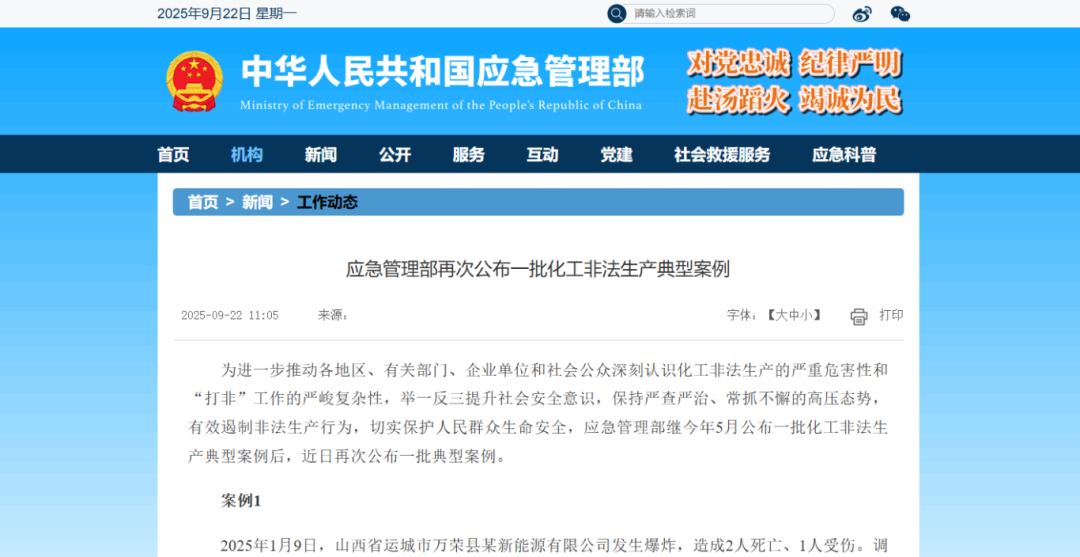
The 4 cases released by the Ministry of Emergency Management almost cover the typical risk points of illegal chemical production, and these risks are precisely the "must-prevent items" for compliant production:
A new energy company in Wanrong, Shanxi, produced malononitrile with equipment that had not undergone formal design and failed to implement the "three simultaneities" for safety facilities (simultaneous design, simultaneous construction, and simultaneous commissioning into production and use), equivalent to "bare-run" production. It had neither compliant reaction equipment nor supporting hazardous gas monitoring systems. Eventually, an explosion occurred due to equipment failure during the trial production phase, causing 2 deaths.
An illegal den in Fengqiu, Henan, concealed 10 liquid chlorine cylinders and 1 ton of acrylonitrile in an abandoned glass factory. The storage and use of these highly toxic and flammable materials were not monitored throughout the process. Once leaked, 1 ton of acrylonitrile (with an explosion limit of 2.8%-17%) could trigger a large-scale explosion, with unimaginable consequences.
A technology company in Shandong illegally produced trichloroacetyl chloride (highly corrosive and toxic) without approval. Although it had a DCS system to record parameters, it lacked real-time monitoring for "reactor leakage" and "excessive exhaust gas". If trichloroacetyl chloride leaks, it releases irritating gases that can cause respiratory tract damage with long-term exposure, and traditional monitoring methods cannot detect trace leaks at all.
The essence of these loopholes is the passive mode of replacing "technological prevention" with "human prevention". Illegal production enterprises either omit monitoring equipment or rely on backward "manual inspections + traditional sensors", which can neither perceive risks in real time nor provide early warnings. Eventually, they fall into a vicious cycle of "accident occurrence - post-event accountability".
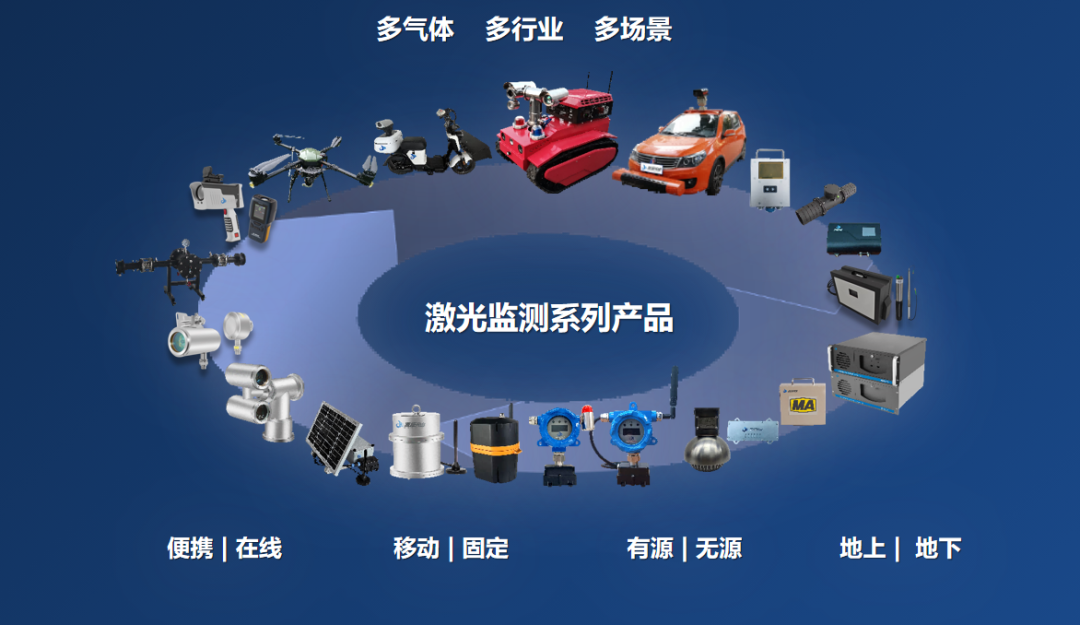
Targeting the three core needs of "equipment compliance, material monitoring, and process early warning" in chemical production, Guoke Hanhai, with laser spectroscopy technology as the core, has created a full-scenario solution from "front-end perception" to "back-end disposal" to accurately address the safety loopholes in the cases:
In the Wanrong, Shanxi case, the illegal equipment caused an explosion due to the lack of safety monitoring facilities. Hanhai's matrix of laser monitoring equipment for compliant enterprises covers all production links:
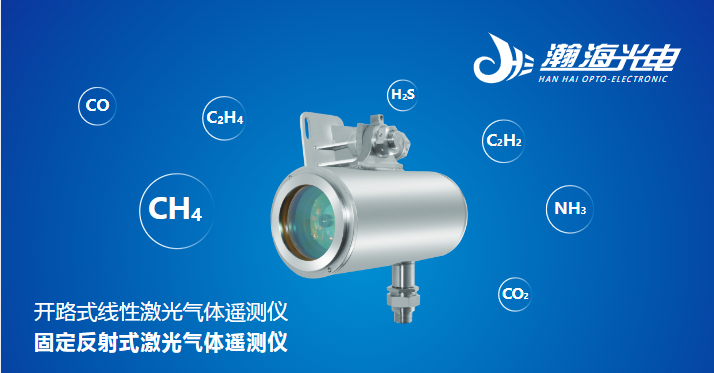
Fixed laser telemetry devices: Installed in reactors and storage tank areas, they real-time monitor the leakage concentration of trace process gases such as hydrogen cyanide, ammonia, and hydrogen chloride during the production of malononitrile and trichloroacetyl chloride. The detection sensitivity reaches ppm level (one part per million), equivalent to capturing "1 milliliter of material leakage in 1 cubic meter of air", far exceeding the detection limit of traditional sensors.
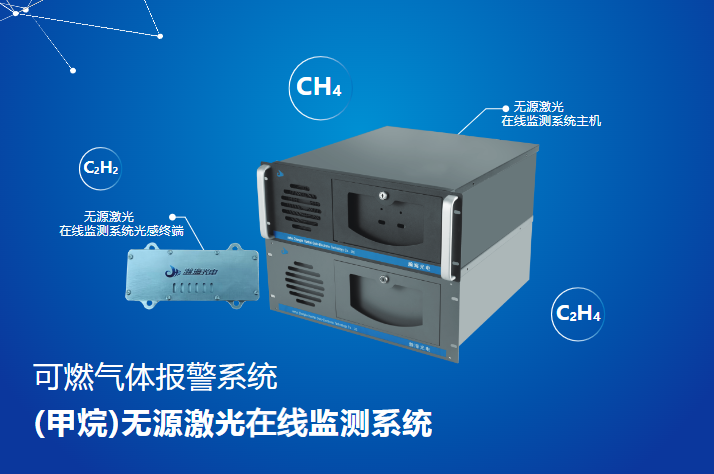
Passive optical fiber laser monitoring system: Complies with the "three simultaneities" requirement for safety facilities. It does not require on-site power supply (avoiding the risk of electrical sparks) and can be laid in "traditional monitoring blind spots" such as buried pipelines and closed workshops. It perceives trace leaks like "nerve endings" with a service life of up to 10 years, reducing long-term maintenance costs.
These equipment not only meet the requirements of the "Regulations on the Safety Administration of Hazardous Chemicals" for "monitoring of key locations" but also provide enterprises with "hardware proof" for compliant production, avoiding the risk of "non-compliant equipment" from the source.
The liquid chlorine, acrylonitrile, and other materials in the Fengqiu, Henan den posed "invisible risks" due to the lack of monitoring. Hanhai provides portable monitoring solutions for the storage and transportation of hazardous materials:
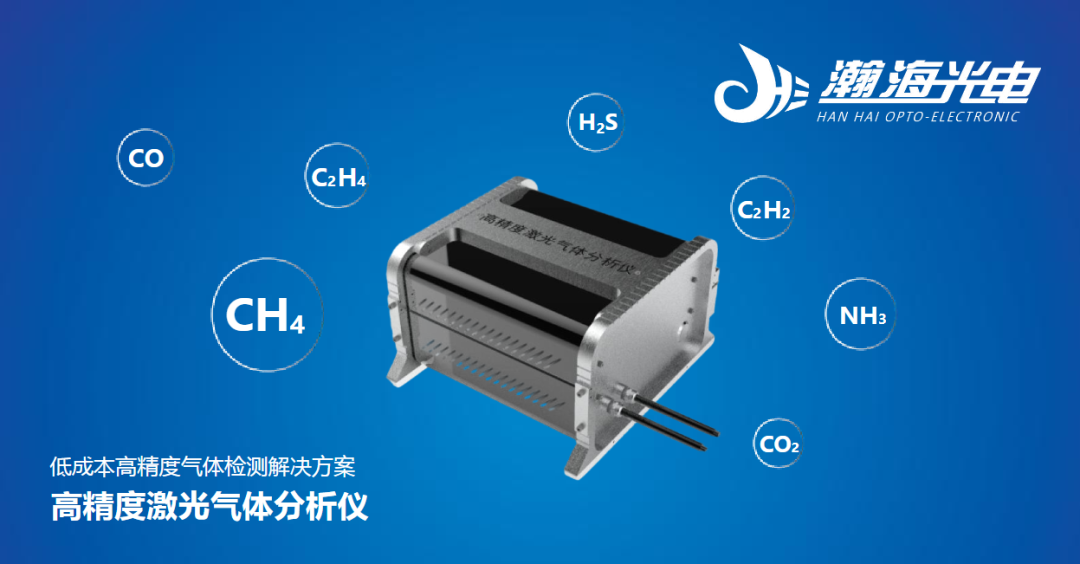
High-precision laser gas detectors: Placed in storage spaces, they conduct real-time trace detection of hydrogen cyanide (HCN) that may be generated during the storage of acrylonitrile tanks, enabling "on-demand testing". Concentration data is displayed within milliseconds, and an alarm is triggered immediately if the concentration exceeds the standard, avoiding leakage risks caused by "concealed materials".

Vehicle-mounted laser inspection system: For chemical parks or large-scale factories, vehicles are equipped with laser monitoring modules to cruise at a speed of 50 kilometers per hour. They can real-time scan for suspected gas leaks within a range of 500 meters and locate leak points with high-definition video, making "mobile risks" nowhere to hide.
This solution is being applied in the material storage and transportation links of large petrochemical enterprises, realizing full-chain concentration tracking of "storage - transportation - use" and eliminating the hidden danger of "uncontrolled materials".
Although the Shandong company had a DCS system to record parameters, it lacked early warning for process abnormalities. Hanhai's AI intelligent analysis platform can connect "monitoring data + process parameters" to achieve an upgrade from "recording" to "early warning":
When the temperature and pressure of the trichloroacetyl chloride reactor are abnormal, the platform will automatically trigger an early warning by combining the "hydrogen chloride concentration in the exhaust gas" monitored by lasers (a direct signal of abnormal reaction), prompting a "process out-of-control risk" 5-10 minutes in advance. Compared with the traditional DCS mode that only records parameters, it adds a key step of "risk prediction".
The platform can also generate a "Compliant Production Monitoring Report", which automatically records the gas concentration and equipment operation status of each link, meeting the requirements of the Ministry of Emergency Management for "traceability of compliant production" and avoiding compliance risks due to "lack of monitoring records".
The continuous release of cases by the Ministry of Emergency Management conveys a clear signal of "strictly investigating illegal activities and safeguarding compliance". For compliant enterprises, Hanhai's solution is not only a "safety barrier" but also an "efficiency engine":
Cost reduction: Passive laser equipment requires no maintenance for 10 years, saving 60% of operation and maintenance costs compared with traditional sensors (which need to be replaced twice a year on average).
Efficiency improvement: The AI platform automatically generates reports, reducing manual recording time. At the same time, early warning information is directly sent to the central control, increasing disposal efficiency by 3 times.
Compliance: The complete set of equipment complies with national standards such as GB50493-2019 and GB12358-2022, helping enterprises pass safety acceptance.
From the explosion in Shanxi to the fines in Shandong, the 4 cases have long sounded the alarm: chemical safety is not a "choice question" but a "survival question". Guoke Hanhai will continue to use laser technology as a pen and intelligent early warning as ink to draw a "safe production map" for more compliant enterprises, ensuring that "illegal production has no room and compliant production is protected", and truly guarding every bit of safety in the chemical industry.
TEL:400-055-1239 (9:00~17:00)
MAIL:lisghanhai@gkhhlaser.com
ADDR:302 Floor, Building 5, No. 18, Kechuang 13th Street, Beijing Economic and Technological Development Zone