
ABOUT
Hanhai Opto-electronic is a major scientific research achievement transformation institution of the Hefei Institute of Physical Science, Chinese Academy of Sciences.


Hanhai Opto-electronic is a major scientific research achievement transformation institution of the Hefei Institute of Physical Science, Chinese Academy of Sciences.

Hanhai Optoelectronics centers on laser absorption spectroscopy-based gas detection (TDLAS)technology, developing and manufacturing a full range of products to deliver comprehensive gas detection solutions for cross-field and multi-industry customers.

Hanhai Optoelectronics' laser gas detection products focus on the monitoring of flammable, explosive, toxic and harmful gases as well as greenhouse gases. Leveraging mature technical solutions and flexible product adaptability, these products can be widel

With over a decade of technical accumulation and recognition from nearly a hundred customers, Hanhai Optoelectronics' laser gas detection products have delivered successful cases covering core scenarios across petrochemicals, urban gas, environmental moni

The company's core technology has been jointly recommended by the Ministry of Emergency Management, the Ministry of Science and Technology, and the Ministry of Industry and Information Technology.
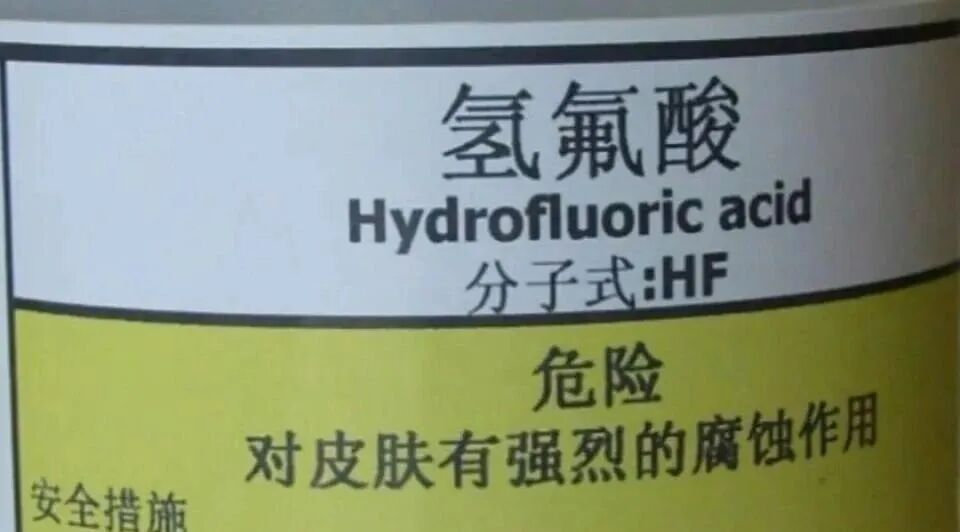
On September 15th, a distressing abandoned hydrofluoric acid poisoning incident occurred in Hangzhou, once again bringing the safety management of hazardous chemicals to the forefront of public attention. It is understood that the involved waste hydrofluoric acid was randomly discarded in a non-professional disposal area. Nearby residents came into contact with it unknowingly, and many developed varying degrees of poisoning symptoms. After being admitted to the hospital, they were diagnosed with toxic reactions caused by hydrofluoric acid burns. This incident immediately touched the hearts of countless people and made us deeply aware that the monitoring and management of hazardous chemicals, especially highly toxic and corrosive substances like hydrofluoric acid, admit of no delay.
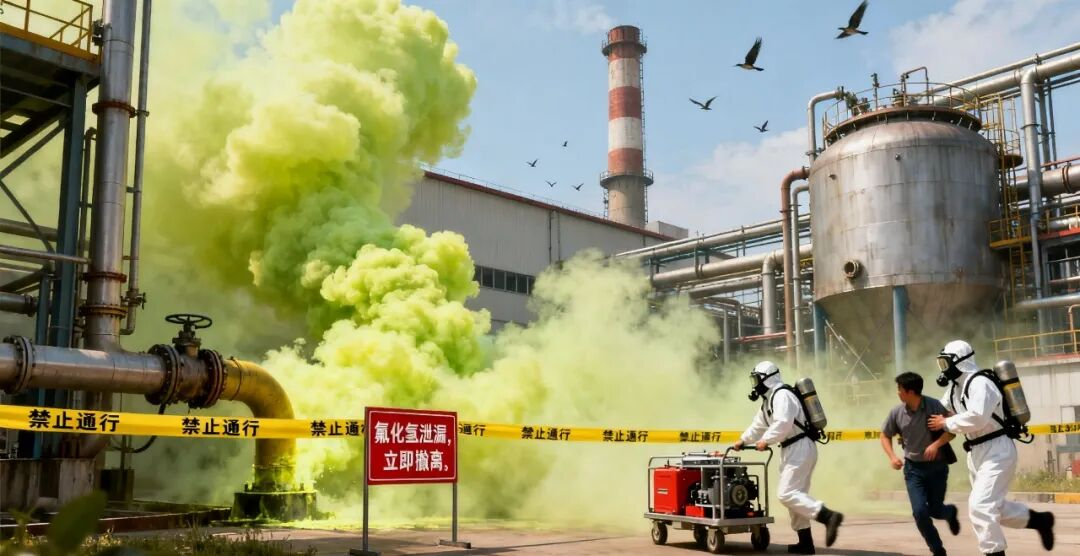
Hydrofluoric acid (HF), as an aqueous solution of hydrogen fluoride gas, is widely used in the industrial sector. It is indispensable in processes such as etching in semiconductor chip manufacturing, surface treatment in the glass processing industry, and the production of chemical products like fluorides and fluororesins. However, behind this "extensive use" lies enormous risks. Hydrofluoric acid is highly permeable and toxic. Even at low concentrations, it can quickly penetrate the stratum corneum of the skin and penetrate into subcutaneous tissues. Obvious symptoms may not appear until hours or even 12 hours later, with initial manifestations only as erythema and paleness, which are easily overlooked. As fluoride ions diffuse, severe injuries such as intense pain, blisters, and tissue darkening and necrosis follow. If the contact area exceeds the size of a palm, it may lead to life-threatening hypocalcemia and hypomagnesemia, endangering lives.
In the production processes of industries such as chemical engineering and semiconductors, hydrofluoric acid is used in numerous links, and there is also a risk of leakage during storage and transportation. Once a leak occurs, the consequences will be unimaginable if it cannot be detected and handled in a timely manner. In past cases, poisoning incidents caused by hydrofluoric acid leaks have not only resulted in casualties but also brought serious losses such as environmental pollution and production shutdowns, imposing a heavy burden on enterprises and society.
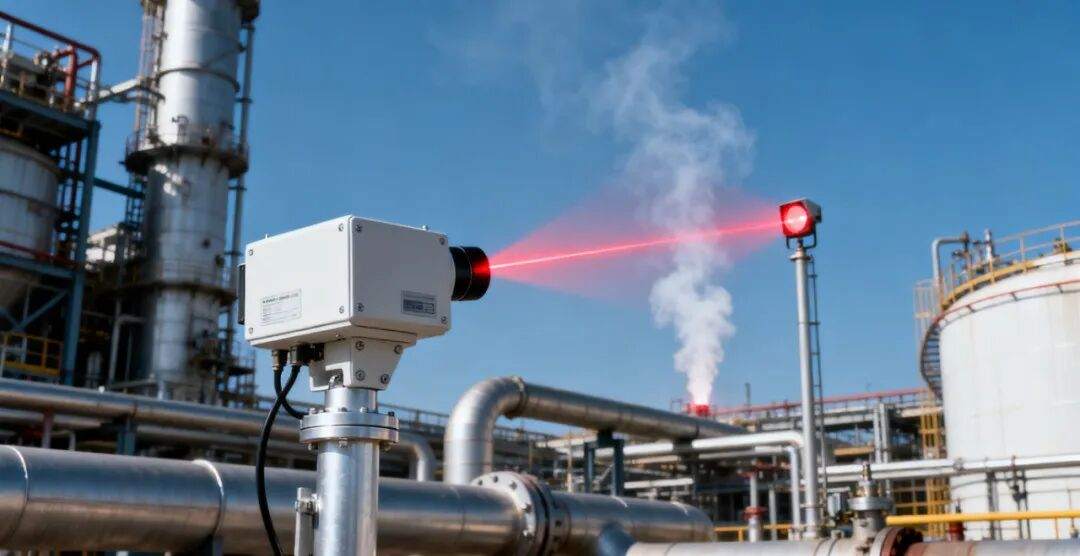
Faced with the potential threats of hydrofluoric acid, accurate monitoring is the crucial first step in preventing accidents. Relying on its profound accumulation in the field of laser technology, Hanhai Optoelectronics has a series of advanced products and technologies capable of detecting trace hydrogen fluoride, providing solid guarantees for safe production and environmental monitoring.
Hanhai Optoelectronics adopts advanced laser spectroscopy technology—tunable diode laser absorption spectroscopy (TDLAS). Its principle is to utilize the high monochromaticity and high energy density of lasers to produce specific absorption effects with trace hydrogen fluoride gas molecules. By detecting changes in laser intensity after absorption, the gas concentration can be accurately measured. This technology boasts extremely high sensitivity and selectivity, enabling precise identification of hydrogen fluoride concentration changes at the ppm or even ppb level, ensuring that even the most minute leaks cannot escape detection.
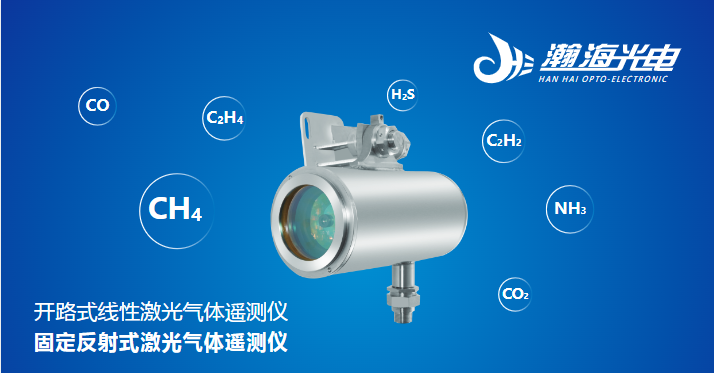
Taking Hanhai Optoelectronics' fixed reflective laser gas telemetry instrument as an example, this device can conduct real-time online monitoring of various gases including hydrogen fluoride. It consists of a transmitting and receiving unit and a purely optical reflective unit. The transmitting and receiving unit is responsible for laser control and spectral signal analysis, while the reflective unit requires no power supply and is easy to install. The detection laser is emitted from the transmitting and receiving unit to the reflective unit, and the returned spectral signal is received. The concentration monitoring result is obtained through analysis, with a maximum monitoring range of 1 kilometer. It is particularly suitable for overall monitoring of large-scale spaces, such as chemical parks and semiconductor factory campuses.
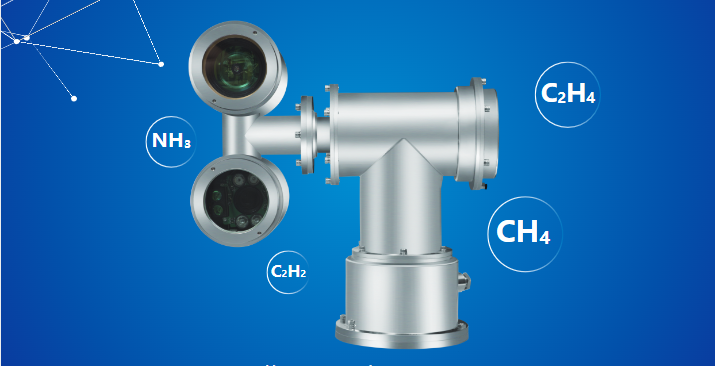
In addition, the fixed scanning laser gas telemetry instrument can perform 360-degree rotating scanning within a radius of 300 meters. Combined with high-definition video, it achieves remote online visual intelligent monitoring. It not only can monitor hydrogen fluoride concentration in real time but also accurately locate the leak position. It is suitable for operating areas with complex process layouts and high risk levels, providing key information for timely emergency response measures.
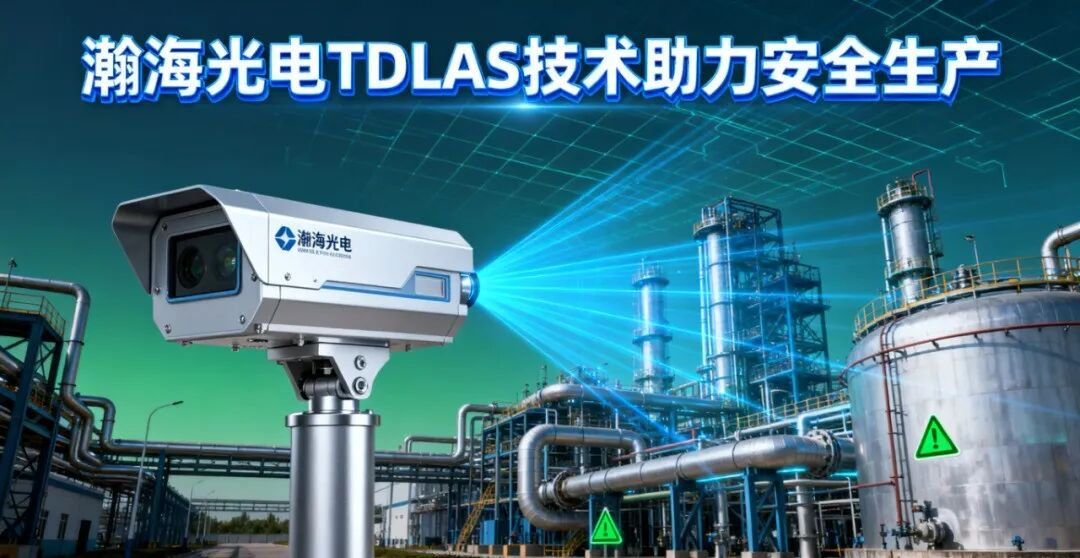
The Hangzhou abandoned hydrofluoric acid poisoning incident has sounded the alarm for us. There must be no slack in the monitoring and management of hazardous chemicals. Hanhai Optoelectronics' laser monitoring technology provides a reliable and accurate solution for the monitoring of hydrogen fluoride and other hazardous gases, playing an important role in ensuring personnel safety, stable production, and environmental protection.
We call on more industries to attach importance to the safety monitoring of hazardous chemicals, actively introduce advanced technologies, and strengthen the construction of safety management systems. Hanhai Optoelectronics will also continue to deepen its efforts in the field of laser technology, continuously innovate products and services, and work hand in hand with all parties to jointly build a solid defense line for safe production and environmental safety, avoid the recurrence of similar tragedies, and protect our lives and homes.
TEL:400-055-1239 (9:00~17:00)
MAIL:lisghanhai@gkhhlaser.com
ADDR:302 Floor, Building 5, No. 18, Kechuang 13th Street, Beijing Economic and Technological Development Zone