
ABOUT
Hanhai Opto-electronic is a major scientific research achievement transformation institution of the Hefei Institute of Physical Science, Chinese Academy of Sciences.


Hanhai Opto-electronic is a major scientific research achievement transformation institution of the Hefei Institute of Physical Science, Chinese Academy of Sciences.

Hanhai Optoelectronics centers on laser absorption spectroscopy-based gas detection (TDLAS)technology, developing and manufacturing a full range of products to deliver comprehensive gas detection solutions for cross-field and multi-industry customers.

Hanhai Optoelectronics' laser gas detection products focus on the monitoring of flammable, explosive, toxic and harmful gases as well as greenhouse gases. Leveraging mature technical solutions and flexible product adaptability, these products can be widel

With over a decade of technical accumulation and recognition from nearly a hundred customers, Hanhai Optoelectronics' laser gas detection products have delivered successful cases covering core scenarios across petrochemicals, urban gas, environmental moni

The company's core technology has been jointly recommended by the Ministry of Emergency Management, the Ministry of Science and Technology, and the Ministry of Industry and Information Technology.
When it comes to gas leak detection, many people might take it for granted that installing a detector is all it takes to be safe. But in reality, different types of detectors can perform drastically differently when it matters most. Today, we’ll compare two types of flammable gas detectors—telemetry and point detectors—to see which offers higher detection efficiency and truly deserves the title of "eagle eye" for safety.
Simply put, the biggest difference between these two detectors lies in their completely different "working methods":
Telemetry detectors: Act like a "scanner," measuring the concentration of the entire gas cloud formed by a leak. As long as a gas cloud from a leak is within their "line of sight" (e.g., within 100 meters), they can detect it quickly.
Point detectors: Function more like a "stationary sentinel," only measuring the gas concentration at the single point where they are installed. They will only trigger an alarm if the leaking gas happens to drift to their location and reaches a certain concentration.
This difference in working methods directly leads to a huge gap in their detection efficiency.
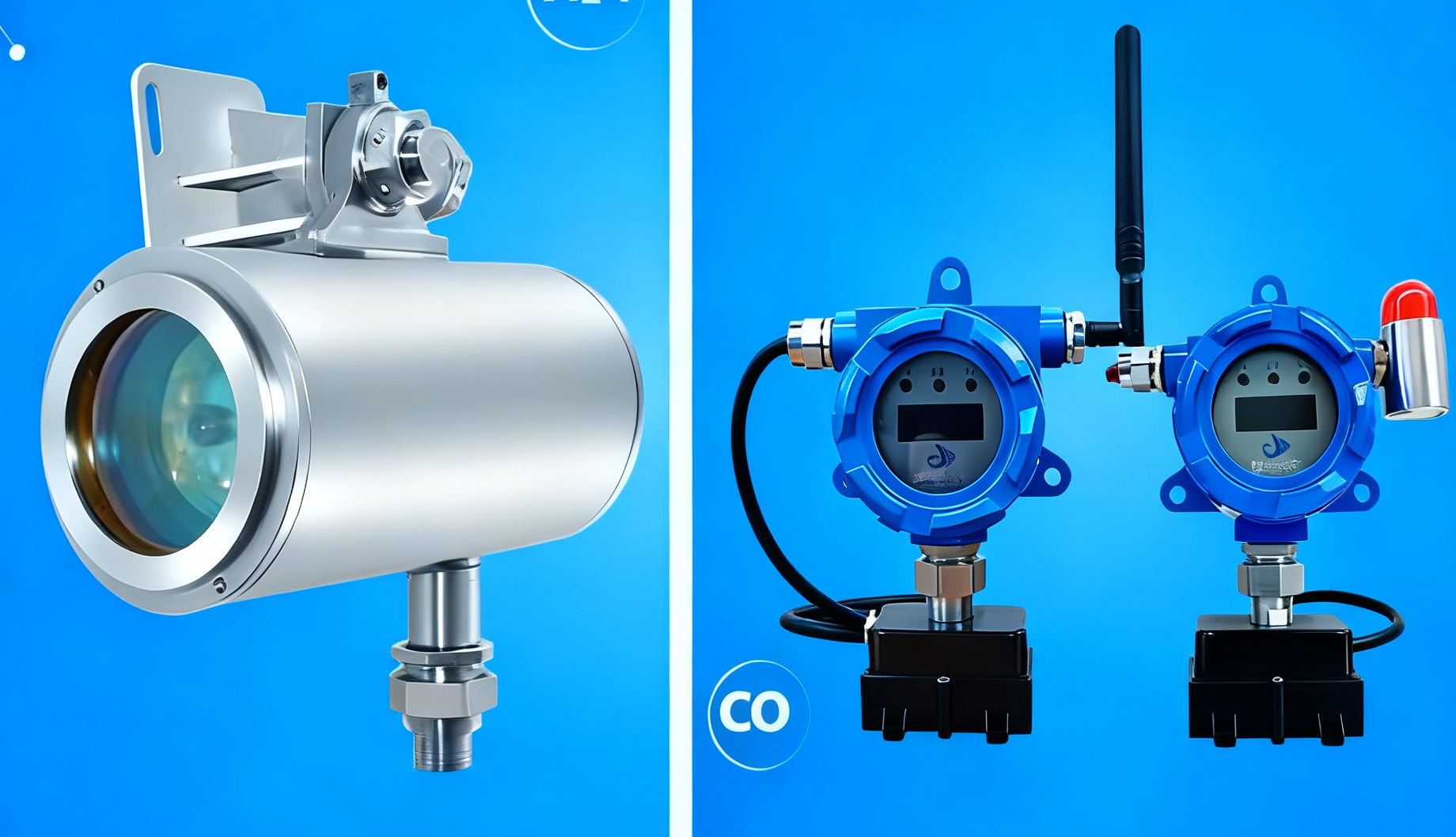
Telemetry detectors have a much longer detection range than point detectors. As long as the leaking gas cloud is within their effective range, it can be detected regardless of distance. In contrast, point detectors have an extremely limited detection range and may "turn a blind eye" to leaks even slightly farther away.
Telemetry detectors respond immediately once they "see" a gas cloud, unaffected by gas diffusion speed. Point detectors, however, need to wait for the leaking gas to slowly drift to their location—a process influenced by wind direction, air flow, and other factors, with an entirely uncontrollable timeline.
Telemetry detectors read the total concentration of the entire gas cloud, resulting in relatively stable values. Point detector readings, on the other hand, are highly prone to fluctuations—even minor air flow changes can cause them to return to zero, making it difficult to trigger a stable alarm.

Experimental results vividly demonstrate the gap between the two:
At a leak rate of 1 liter per minute and the same detection height, the telemetry detector detected the gas in just 14 seconds from over 4 meters away from the leak source. The point detector, however, took 55 seconds even at the leak location, and failed to detect it for more than 10 minutes at greater distances.
Regarding concentration stability, point detector readings fluctuated repeatedly between 0 and 0.56 due to external interference, sometimes even returning to zero. Telemetry detector readings, by contrast, remained highly stable.
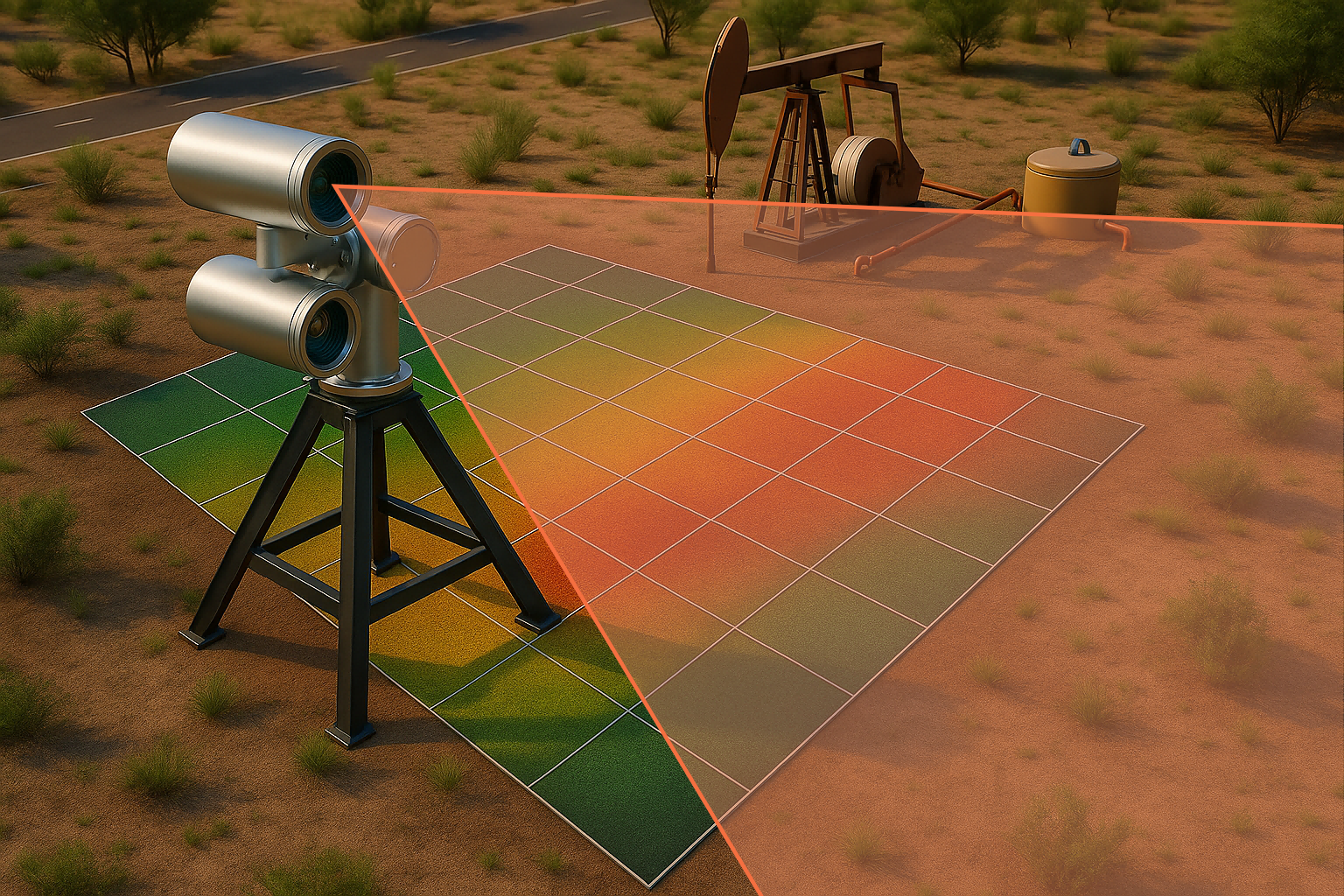
Overall, both detectors have their own strengths and are suited for different scenarios:
Telemetry detectors: Ideal as a large-scale "early warning system," especially for outdoor, open, or complex environments. They can quickly detect distant leaks with high sensitivity, truly living up to the name of "eagle eye."
Point detectors: Better suited for close-range, fixed-point monitoring of known risk points in confined spaces. Multiple units need to be installed near key equipment to form an effective protection network.
There is no absolute "better" or "worse"—only what’s appropriate. Choosing the right detector based on specific usage scenarios is the key to truly preventing accidents before they happen.
TEL:400-055-1239 (9:00~17:00)
MAIL:lisghanhai@gkhhlaser.com
ADDR:302 Floor, Building 5, No. 18, Kechuang 13th Street, Beijing Economic and Technological Development Zone