
ABOUT
Hanhai Opto-electronic is a major scientific research achievement transformation institution of the Hefei Institute of Physical Science, Chinese Academy of Sciences.


Hanhai Opto-electronic is a major scientific research achievement transformation institution of the Hefei Institute of Physical Science, Chinese Academy of Sciences.

Hanhai Optoelectronics centers on laser absorption spectroscopy-based gas detection (TDLAS)technology, developing and manufacturing a full range of products to deliver comprehensive gas detection solutions for cross-field and multi-industry customers.

Hanhai Optoelectronics' laser gas detection products focus on the monitoring of flammable, explosive, toxic and harmful gases as well as greenhouse gases. Leveraging mature technical solutions and flexible product adaptability, these products can be widel

With over a decade of technical accumulation and recognition from nearly a hundred customers, Hanhai Optoelectronics' laser gas detection products have delivered successful cases covering core scenarios across petrochemicals, urban gas, environmental moni

The company's core technology has been jointly recommended by the Ministry of Emergency Management, the Ministry of Science and Technology, and the Ministry of Industry and Information Technology.
On August 25, 2025, Xinhua News Agency released the "Opinions on Promoting Green and Low-Carbon Transition and Strengthening the Construction of a National Carbon Market" (hereinafter referred to as the "Opinions") jointly issued by the General Office of the Communist Party of China Central Committee and the General Office of the State Council on May 24. The document clearly proposes to build a more effective, dynamic, and internationally influential national carbon market, providing core support for the "dual carbon" goals and the construction of a Beautiful China.
Among its requirements, "strengthening data management" and "improving emission reporting systems" directly address the core pain point of carbon market construction—without accurate and reliable carbon emission data, carbon quota allocation, voluntary emission reduction transactions, and carbon pricing mechanisms will all be castles in the air. With over a decade of experience in laser monitoring technology, Guoke Hanhai has taken the TDLAS laser gas telemetry system as its core and innovatively launched in-situ penetrating laser gas detection equipment, constructing carbon monitoring solutions covering multiple industries. It not only safeguards the quality of carbon data in the petrochemical and energy sectors but also opens up new scenarios in the power industry, laying a solid foundation for front-end perception in green and low-carbon transition.
The Opinions repeatedly emphasize the importance of "data quality," explicitly requiring "revising accounting guidelines and exploring automatic monitoring and accounting" and "strict verification and whole-process data supervision to crack down on fraud." In the industrial sector, the accurate measurement of enterprise carbon emission data is not only crucial for the fair allocation of carbon quotas but also affects the credibility and effectiveness of the carbon market. However, traditional carbon emission monitoring methods have shortcomings such as "crude accounting, heavy manual intervention, and poor real-time performance"—for example, the power industry relies on fuel consumption accounts to estimate carbon emissions, which is prone to data lag or human error; point sensors are easily interfered with in high-temperature and high-humidity flue gas environments, making it difficult to capture subtle emission changes in desulfurization and denitrification processes.
Guoke Hanhai's laser monitoring technology fundamentally solves the data quality problem in carbon monitoring. Based on TDLAS (Tunable Diode Laser Absorption Spectroscopy) technology, the company's fixed reflection and fixed scanning laser gas telemeters can achieve real-time monitoring of greenhouse gases such as carbon dioxide and methane with "ppm-level accuracy and millisecond-level response"; the in-situ penetrating laser gas detector, with its innovative design of "direct insertion and real-time online," breaks through the limitations of traditional sampling detection, and can operate stably in flue gas pipelines with high temperature, high humidity, and high dust content, accurately capturing changes in gas concentration.
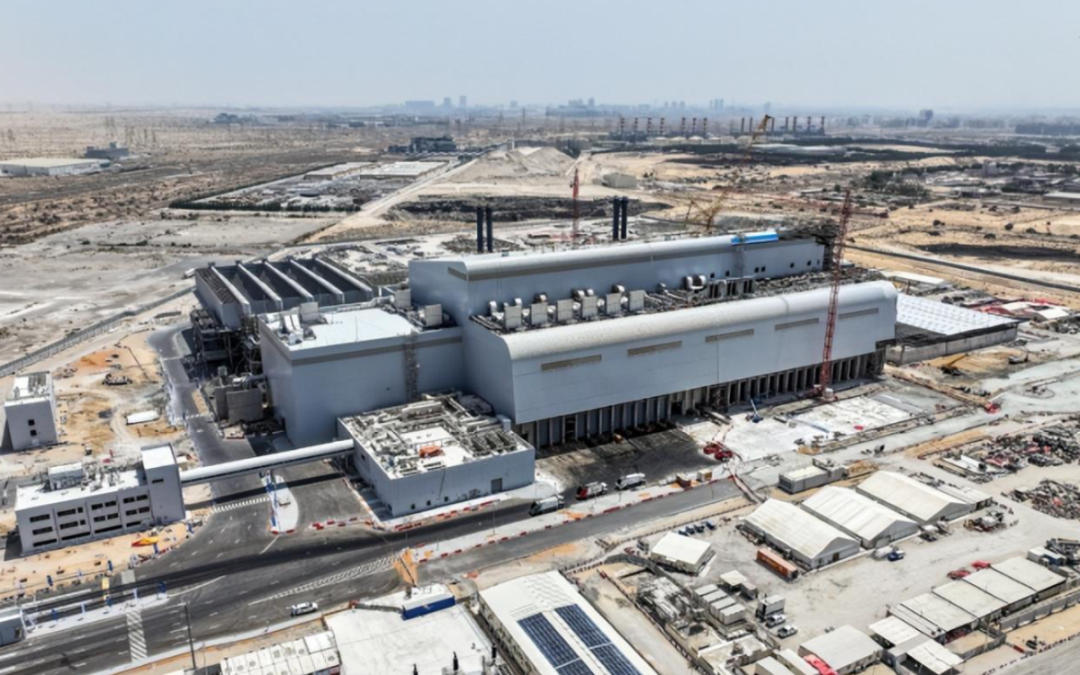
In the power industry, the practice of Henan Jiaozuo Waste Incineration Power Plant is highly representative. Guoke Hanhai deployed 2 sets of in-situ penetrating laser gas detectors for the project, which are directly embedded in the flue gas pipelines of the desulfurization and denitrification system. On the one hand, they real-time monitor ammonia slip concentration—avoiding secondary pollution and energy waste caused by excessive ammonia; on the other hand, they simultaneously capture emission data of carbon monoxide and carbon dioxide. Compared with the traditional method of "sampling analysis + account estimation," the laser equipment does not require manual sampling, and the data is real-time transmitted to the enterprise's carbon management platform. The error rate of carbon emission accounting is reduced to less than 5%, completely eliminating the trouble of "data distortion" and providing true and traceable "hard data" support for enterprises to participate in carbon market transactions.

The Opinions clearly propose that "by 2027, the national carbon emission rights trading market will basically cover major emission industries in the industrial sector," gradually extending from the current power generation, petrochemical and other industries to more energy-intensive fields such as iron and steel, cement, and chemical industry. Carbon emission sources vary greatly across different industries—the power industry focuses on flue gas emissions from coal-fired power generation and waste incineration, the petrochemical industry pays attention to process emissions and flare combustion emissions, and the iron and steel industry focuses on sintering, blast furnace and other links. This places extremely high requirements on the "scenario adaptability" of monitoring technology.
With the technical advantages of "multi-equipment collaboration and full-scenario coverage," Guoke Hanhai has formed carbon monitoring solutions adapted to different industrial scenarios:
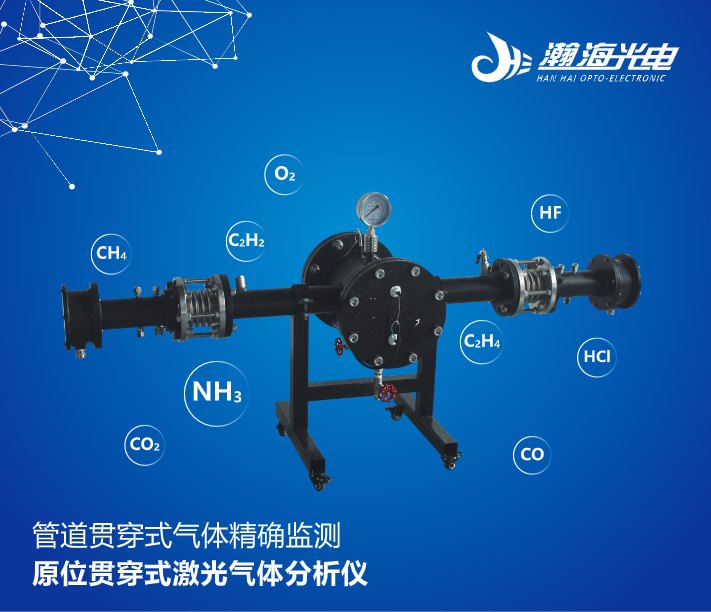
In-situ penetrating laser gas detector: Designed specifically for flue gas monitoring in industries such as power and waste incineration, it can be directly embedded in high-temperature flue gas pipelines (withstand temperatures up to 200℃) without a preprocessing system, and real-time monitor multiple components such as carbon dioxide, carbon monoxide, and ammonia. For example, in the Henan Jiaozuo project, the equipment operates stably in the desulfurization and denitrification links with a data accuracy rate of over 99%;
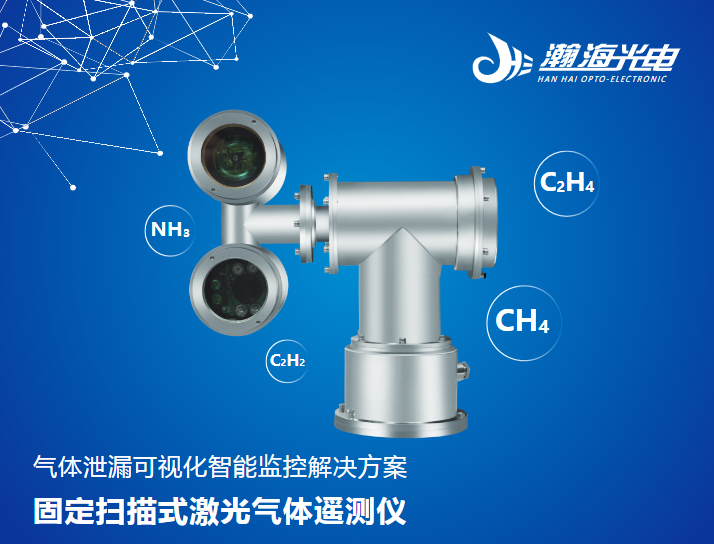
Fixed scanning laser telemeter: Suitable for planar monitoring of large tank farms and device areas. For example, 4 sets of equipment deployed in the Yanshan Petrochemical ethylene tank farm can scan carbon dioxide and methane emissions 360 degrees without dead ends, covering a radius of more than 50 meters, and real-time capture fugitive emissions from tank breathing valves and flange joints;
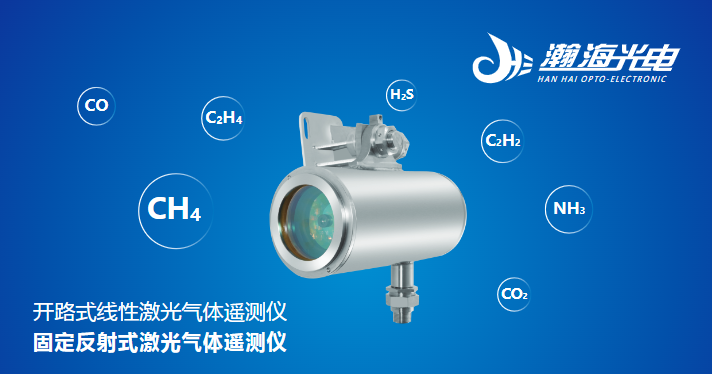
Fixed reflection laser telemeter: Targeting long-distance and linear emission sources, such as the 1000-meter pipeline corridor monitoring in Jinan Refining & Chemical Co., Ltd. The laser beam spans over the pipeline, enabling real-time monitoring of methane leakage during transportation and providing data for carbon emission accounting in the pipeline transportation link;
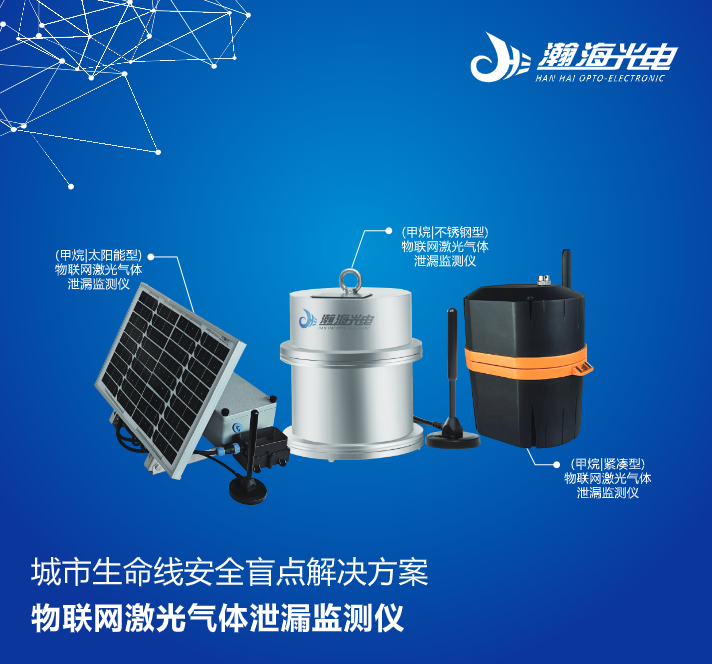
IoT laser monitor (solar-powered type): Solves the monitoring problem in outdoor areas without power supply. For example, the equipment on the SCV platform of Tianjin LNG Terminal relies on solar power to continuously monitor carbon dioxide emissions after flare combustion, eliminating the need for manual inspections and real-time uploading of data to the carbon management platform.
The collaborative application of these equipment can achieve full-dimensional carbon monitoring of "points (emission outlets), lines (transportation pipelines), and surfaces (device areas)," perfectly adapting to the demand of the carbon market to cover more industries, and providing "tailor-made" monitoring solutions for enterprises in different industries.
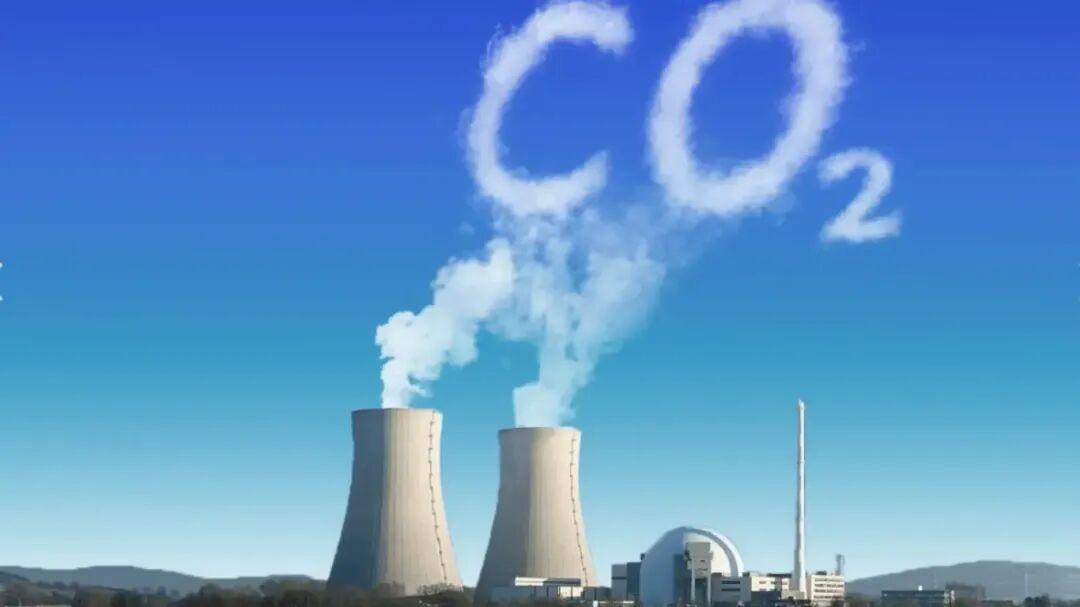
The Opinions propose to "accelerate the construction of a national greenhouse gas voluntary emission reduction trading market" and promote Party and government organs and enterprises to use Certified Emission Reductions (CCER) to offset carbon emissions. The core of CCER projects lies in the accurate measurement of emission reductions—whether it is "emission reduction substitution" for forestry carbon sinks, photovoltaic and wind power, or "energy conservation and carbon reduction transformation" in the industrial sector, reliable monitoring data is needed to prove the emission reduction effect.
Guoke Hanhai's laser technology plays a key role in industrial voluntary emission reduction projects. Taking the power industry as an example, a coal-fired power plant implemented an "ultra-low emission transformation" project to reduce carbon emissions by optimizing the desulfurization and denitrification system. Guoke Hanhai's in-situ penetrating laser gas detector real-time monitored changes in carbon dioxide concentration in flue gas before and after the transformation, and accurately calculated the project's emission reductions by combining data such as power generation and standard coal consumption, providing indisputable "hard data" for CCER certification; in the "methane recovery and utilization" project of a natural gas purification plant, laser equipment monitored methane leakage before and after recovery, quantified the emission reduction benefits of the recovery project, and ensured that the emission reductions meet the accounting standards of the voluntary emission reduction market.
In addition, the Opinions require "improving the international recognition of voluntary emission reductions," which means that monitoring data must comply with internationally accepted methodologies and standards. Guoke Hanhai's laser monitoring system has passed national metrological certification, and its data accuracy and stability meet the requirements of international standards such as ISO and IPCC. It can provide "internationally recognized" data support for enterprises' voluntary emission reduction projects, helping China's CCER projects enter the international market.
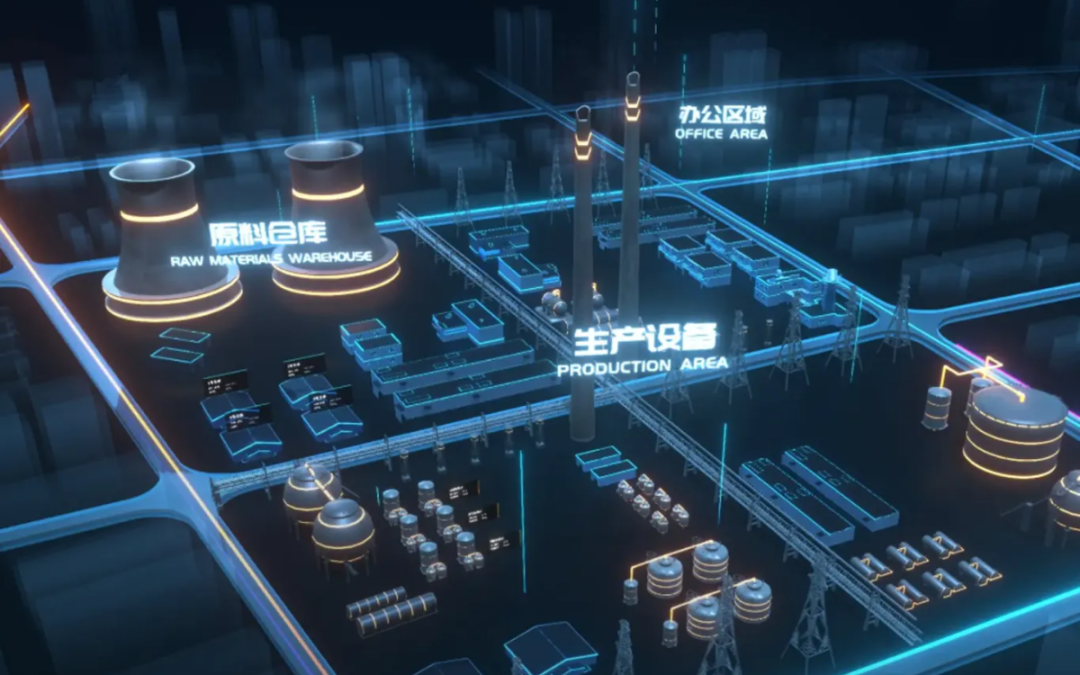
The Opinions emphasize the need to "build a digital and intelligent carbon market management, registration, and transaction system" to promote the whole-chain management of carbon data. Guoke Hanhai's laser monitoring system is not an isolated "data collection tool" but a "front-end perception node" that can seamlessly connect with enterprise carbon management platforms and the national carbon market registration system:
Real-time data transmission: Laser equipment transmits monitoring data such as carbon dioxide and methane to the enterprise's carbon management platform in real-time through optical fiber or wireless communication. For example, the in-situ penetrating equipment of Henan Jiaozuo Waste Incineration Power Plant updates data every 10 seconds, avoiding errors caused by "secondary data entry";
Automatic accounting and analysis: Combined with enterprise production data (such as power generation and fuel consumption), laser monitoring data can automatically calculate carbon emissions per unit product and generate emission reports that meet the requirements of the carbon market without manual statistics;
Whole-process evidence preservation: Blockchain technology is used for evidence preservation during data upload to ensure data immutability, meeting the requirement of the Opinions for "strict verification and whole-process data supervision," and providing a traceable data chain for carbon market regulatory authorities.
Taking the "group-level carbon management platform" solution customized by Hanhai for a central enterprise as an example, laser monitoring equipment has been deployed for more than 10 of its affiliated enterprises (covering power, petrochemical, and chemical industries), among which the power sector all adopts in-situ penetrating laser detectors. The carbon emission data of all enterprises is real-time aggregated to the group platform. The platform can automatically compare the carbon quota usage of each enterprise, warn of over-emission risks, and provide unified data support for the group to participate in carbon market transactions and declare voluntary emission reduction projects, greatly improving carbon management efficiency.

The release of the "Opinions on Promoting Green and Low-Carbon Transition and Strengthening the Construction of a National Carbon Market" marks the transition of China's carbon market from "initial establishment" to "high-quality development," and data quality is the core cornerstone of high-quality development. Guoke Hanhai has always believed that the vitality of the carbon market comes from the credibility of data, and laser monitoring technology is the "first line of defense" to safeguard this credibility—whether it is in-situ penetrating detection in the power industry or telemetry monitoring in the petrochemical field, each piece of equipment is capturing subtle changes in carbon emissions with "optical precision," making every piece of data stand up to verification and inspection.
In the future, Guoke Hanhai will continue to deepen the integration and innovation of laser technology and carbon monitoring. On the one hand, it will upgrade the "simultaneous multi-gas monitoring" capability of in-situ penetrating equipment, which can simultaneously detect various greenhouse gases such as carbon dioxide, methane, and nitrogen oxides; on the other hand, it will promote the combination of laser data and AI algorithms to realize carbon emission trend prediction, providing enterprises with full-process services of "monitoring - accounting - emission reduction suggestions." Guided by the "dual carbon" goals, Guoke Hanhai is willing to take laser technology as a pen and precise data as ink to help China build a more internationally influential carbon market and contribute "Hanhai strength" to green and low-carbon transition!
TEL:400-055-1239 (9:00~17:00)
MAIL:lisghanhai@gkhhlaser.com
ADDR:302 Floor, Building 5, No. 18, Kechuang 13th Street, Beijing Economic and Technological Development Zone