
ABOUT
Hanhai Opto-electronic is a major scientific research achievement transformation institution of the Hefei Institute of Physical Science, Chinese Academy of Sciences.


Hanhai Opto-electronic is a major scientific research achievement transformation institution of the Hefei Institute of Physical Science, Chinese Academy of Sciences.

Hanhai Optoelectronics centers on laser absorption spectroscopy-based gas detection (TDLAS)technology, developing and manufacturing a full range of products to deliver comprehensive gas detection solutions for cross-field and multi-industry customers.

Hanhai Optoelectronics' laser gas detection products focus on the monitoring of flammable, explosive, toxic and harmful gases as well as greenhouse gases. Leveraging mature technical solutions and flexible product adaptability, these products can be widel

With over a decade of technical accumulation and recognition from nearly a hundred customers, Hanhai Optoelectronics' laser gas detection products have delivered successful cases covering core scenarios across petrochemicals, urban gas, environmental moni

The company's core technology has been jointly recommended by the Ministry of Emergency Management, the Ministry of Science and Technology, and the Ministry of Industry and Information Technology.
Guoke Hanhai News: Laser as "Eyes", AI as "Light"
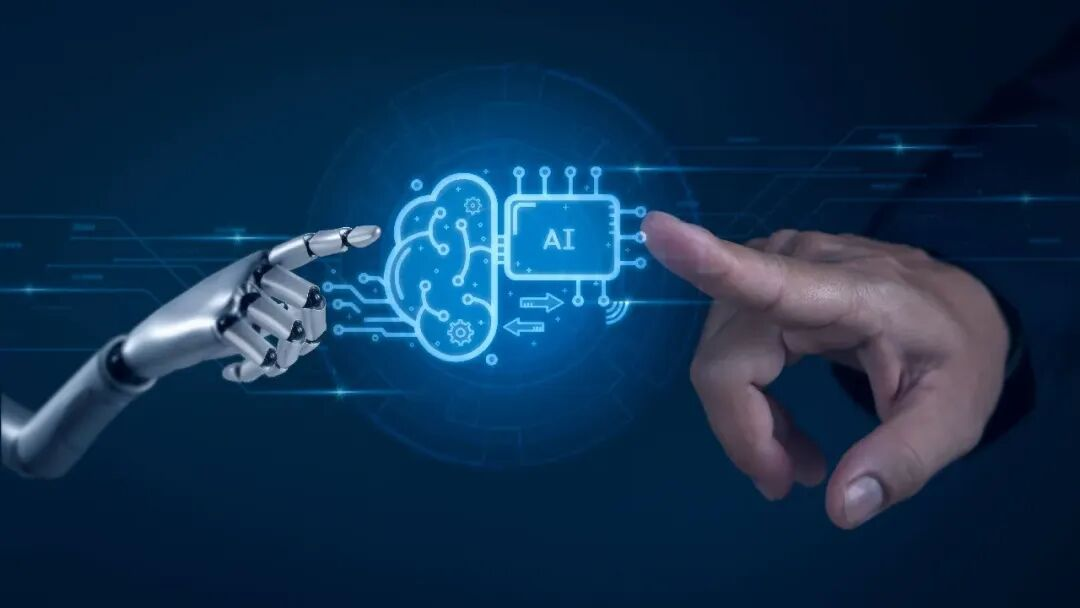
On July 31, the Executive Meeting of the State Council reviewed and adopted the "Opinions on Further Implementing the 'AI+' Action", marking China's AI development entering a full-scale implementation phase from strategic layout. While the industry focuses on the sophistication of AI algorithms and the power of models, a key prerequisite cannot be ignored: without accurate, sensitive, and reliable front-end data, even the most advanced artificial intelligence is just "cooking without rice". With more than a decade of dedication to laser technology, Guoke Hanhai's front-end perception devices centered on laser monitoring equipment are precisely the infrastructure that injects "vital data blood" into AI, serving as the "first pair of eyes" for the implementation of intelligent decisions.
The core value of artificial intelligence lies in "learning from data and optimizing in decision-making". However, in critical scenarios such as industrial safety, energy monitoring, and environmental governance, AI requires not vague "approximate data" but high-fidelity data with "millisecond-level response, ppm-level accuracy, and full-scenario coverage" — data that can only be captured by Guoke Hanhai's laser technology.
Imagine: At Sinopec Yanshan Petrochemical's ethylene tank farm, without laser telemeters real-time capturing ethylene concentration data within the explosive limit of 2.7%~36%, no matter how complex AI's risk prediction model is, it cannot predict explosion hazards caused by leaks; in high-sulfur gas wells in Southwest Oil & Gas Field, without laser equipment's ppm-level detection of 50% concentration hydrogen sulfide, AI cannot obtain key information that "trace leaks are fatal", let alone generate emergency response plans; at the boundary of Jinan Refinery, without the 1000-meter pipeline corridor monitoring optical path built by lasers, AI cannot grasp the dynamic diffusion data of hydrogen sulfide and methane, making it impossible to link road warning systems to ensure public safety.
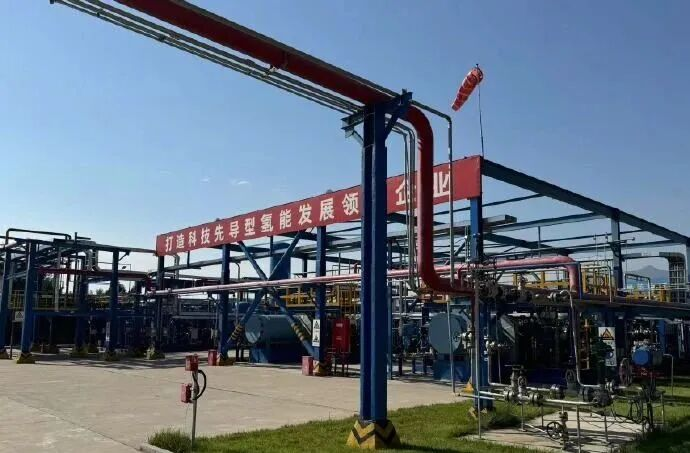
These scenarios confirm a core logic: The "intelligent decision-making" of industrial AI must be based on the front-end perception layer's ability to "see clearly, measure accurately, and transmit quickly". Guoke Hanhai's laser technology, through core capabilities such as TDLAS spectral "fingerprint recognition", 1-second response, and 1000-meter long-distance monitoring, builds a "data granary" for AI, ensuring the "brain" has a reliable "information source".
Guoke Hanhai's laser monitoring equipment is designed from the outset to "provide high-quality data for AI", building a "moat" for front-end perception through three core advantages: accuracy, sensitivity, and reliability.
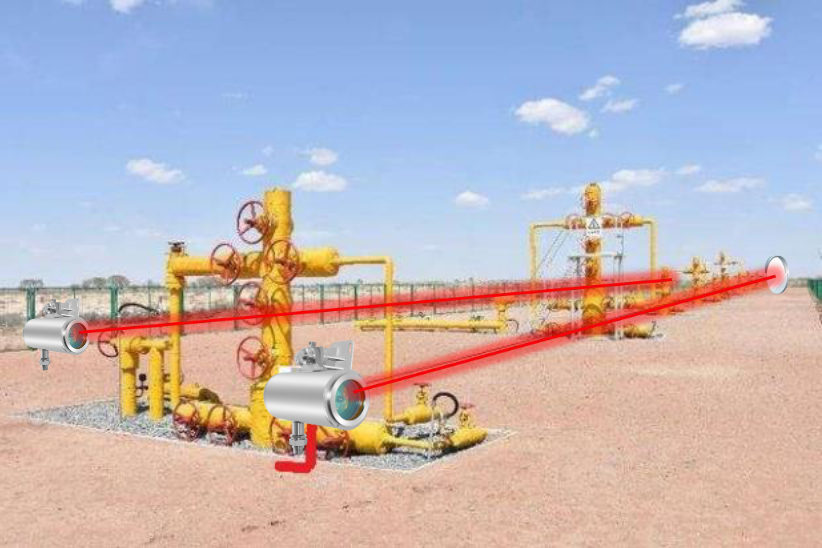
The accuracy of AI decisions starts with data precision. Guoke Hanhai's fixed reflective laser telemeters can achieve ppm-level precise identification of hydrogen sulfide; scanning equipment can quantify ethylene leak concentration values — this "ppm-level or even ppb-level" accuracy ensures the data obtained by AI is sufficiently reliable, avoiding decision deviations caused by data errors. For example, at Tianjin LNG Terminal, laser equipment detected a trace leak of 382 ppm at flange joints, enabling AI to accurately judge the leak trend instead of giving "false alarms" or "missed alarms" due to vague data.
The handling of industrial safety accidents often depends on "millisecond-level early warning windows". The 1-second alarm response speed of Guoke Hanhai's laser equipment can transmit leak data to the AI system in the first place — more than 10 times faster than traditional point sensors, giving AI ample time to analyze leak diffusion paths, calculate risk levels, and then link to emergency systems. For instance, in the Jingmen Petrochemical project, after laser equipment captured a trace hydrogen sulfide leak in the desulfurization pump area, AI generated a disposal plan within 2 seconds, increasing efficiency by 90% compared to manual inspection.
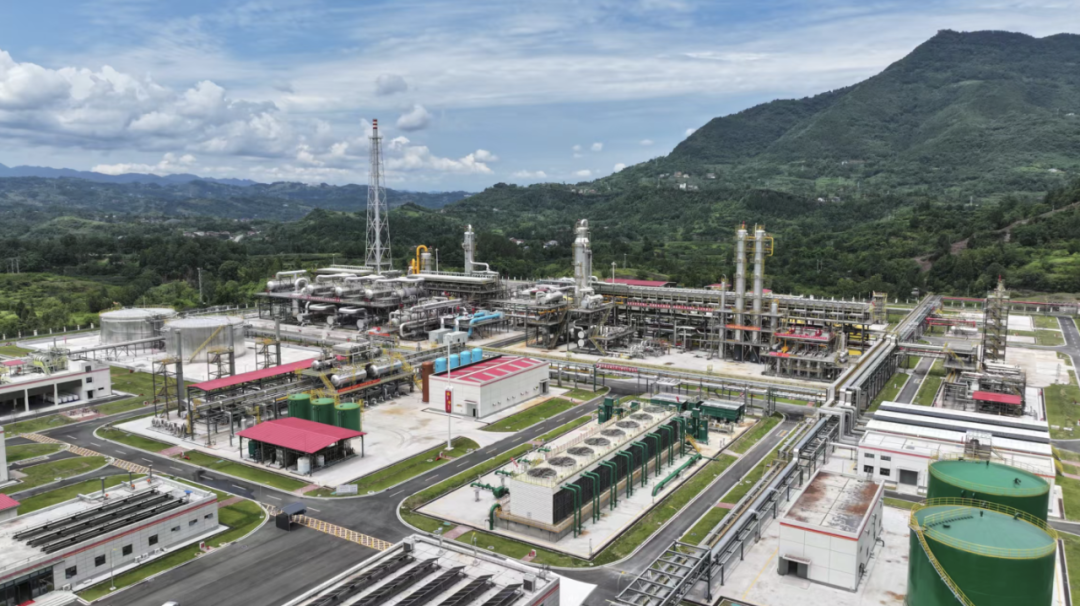
To achieve "full-scenario risk prediction", AI requires front-end perception to cover the entire "point, line, surface" dimensions. Through a combination of "scanning + reflective + solar-powered" laser equipment, Guoke Hanhai can not only achieve 360-degree non-dead-angle scanning (such as at Yanshan Petrochemical's ethylene tank farm) but also form 1000-meter long-distance monitoring lines (such as Jinan Refinery's pipeline corridors) and cover outdoor areas without power supply (such as the SCV platform in Southwest Oil & Gas Field). This "all-round, non-blind-spot" data collection ensures AI obtains not "fragmented information" but complete gas diffusion field data, leading to more holistic decisions.
Guoke Hanhai's laser technology is not just a "data transporter" but forms a complete closed loop of "perception-analysis-decision-disposal" with AI, allowing data to truly generate value.

Data Layer "Quality Improvement": Laser equipment transmits high-fidelity data in real time through optical fibers, providing "massive real-scenario samples" for AI model training — the leak early warning system at Yanshan Petrochemical, based on 6 months of ethylene concentration data from laser equipment, increased the early warning accuracy to 98%.
Application Layer "Efficiency Improvement": AI optimizes monitoring strategies based on laser data — the AI system at Hefei Chaohu LNG Filling Station automatically adjusts equipment scanning frequency by analyzing methane concentration changes monitored by lasers, increasing monitoring density during high-risk periods and reducing useless data redundancy.
Emergency Layer "Linkage": Laser data triggers automatic AI disposal — in the Jinan Refinery project, after laser detected hydrogen sulfide leakage, AI immediately closed pipeline corridor valves and activated ventilation systems simultaneously, achieving "perception equals disposal" intelligent response.
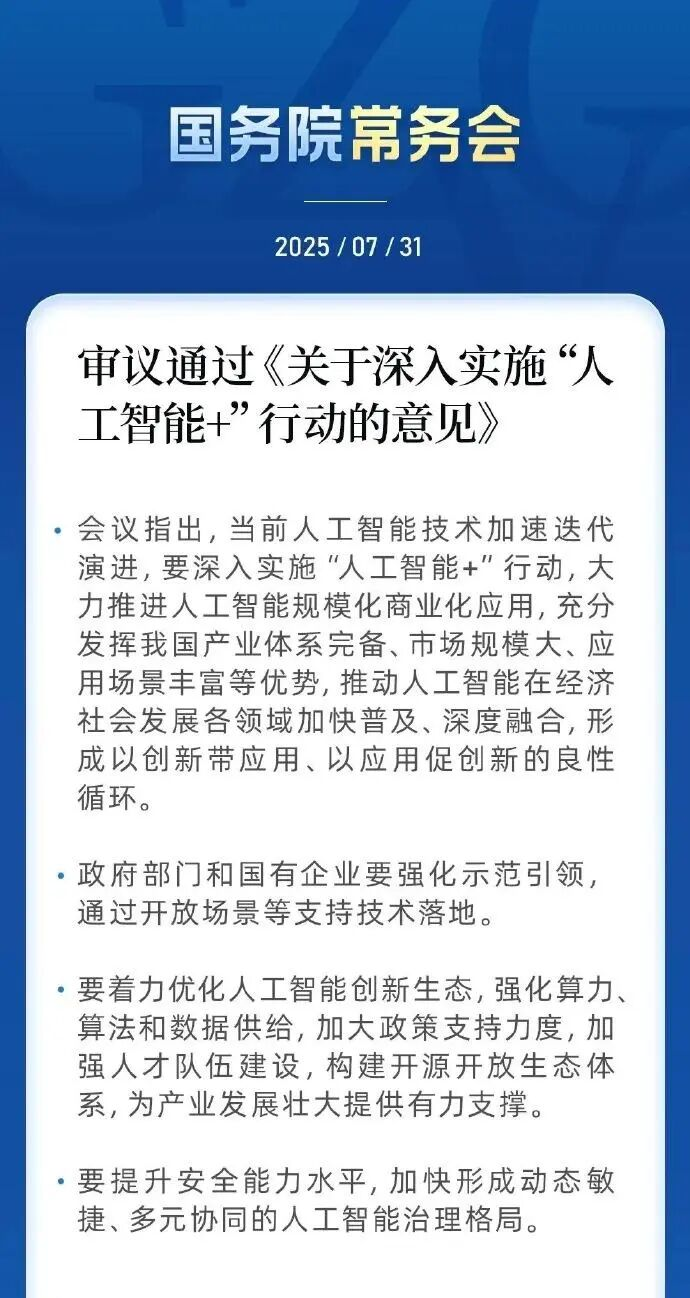
The "Opinions on Further Implementing the 'AI+' Action" clearly states the need to "strengthen the supply of computing power, algorithms, and data" — among these, the core of "data supply" is the hard power of the front-end perception layer. Guoke Hanhai firmly believes that the value realization of artificial intelligence is inseparable from the "data foundation" of laser perception. Without the "first-hand accurate data" captured by laser monitoring, no matter how powerful AI algorithms are, they are just "empty talk on paper"; only when lasers "see clearly and measure accurately" can AI "think correctly and act effectively".
In the future, Guoke Hanhai will continue to deepen the integration of laser technology and AI: on one hand, upgrading the "edge computing" capability of laser equipment to complete data preprocessing at the front end and reduce the burden on AI; on the other hand, promoting in-depth adaptation between laser data and AI models to achieve more efficient collaboration between the perception layer and the decision-making layer. In the era of full implementation of "AI+", Guoke Hanhai is willing to take laser as "eyes", inject "data vitality" into AI, jointly safeguard industrial safety, energy stability, and environmental cleanliness, and lay a solid foundation for perception in the construction of an intelligent China.
The universe is boundless, and exploration never ends!
Every new height is a new starting point.
Every inquiry is the beginning of the next exploration.
A more magnificent cause awaits ahead.
Our journey is to the stars and the sea!
TEL:400-055-1239 (9:00~17:00)
MAIL:lisghanhai@gkhhlaser.com
ADDR:302 Floor, Building 5, No. 18, Kechuang 13th Street, Beijing Economic and Technological Development Zone