
ABOUT
Hanhai Opto-electronic is a major scientific research achievement transformation institution of the Hefei Institute of Physical Science, Chinese Academy of Sciences.


Hanhai Opto-electronic is a major scientific research achievement transformation institution of the Hefei Institute of Physical Science, Chinese Academy of Sciences.

Hanhai Optoelectronics centers on laser absorption spectroscopy-based gas detection (TDLAS)technology, developing and manufacturing a full range of products to deliver comprehensive gas detection solutions for cross-field and multi-industry customers.

Hanhai Optoelectronics' laser gas detection products focus on the monitoring of flammable, explosive, toxic and harmful gases as well as greenhouse gases. Leveraging mature technical solutions and flexible product adaptability, these products can be widel

With over a decade of technical accumulation and recognition from nearly a hundred customers, Hanhai Optoelectronics' laser gas detection products have delivered successful cases covering core scenarios across petrochemicals, urban gas, environmental moni

The company's core technology has been jointly recommended by the Ministry of Emergency Management, the Ministry of Science and Technology, and the Ministry of Industry and Information Technology.
Looking Back at Tianjin Port After a Decade
Replacing Humans with "Machines", Building an Impenetrable Wall for Hazardous Chemical Monitoring Through Technology
Emergency Safety: Everyone's Responsibility
Ten years ago today, on August 12, 2015, an extraordinarily serious fire and explosion accident occurred at the dangerous goods warehouse of Ruihai Company in Tianjin Port. The two loud blasts tore through the night like a nightmare, instantly reducing the peaceful port to ruins. It caused 165 deaths, 8 missing persons, and 798 injuries, with direct economic losses reaching 6.866 billion yuan. This accident was a pain for the city and a sorrow for the country, sounding the alarm for safe production and safety monitoring.
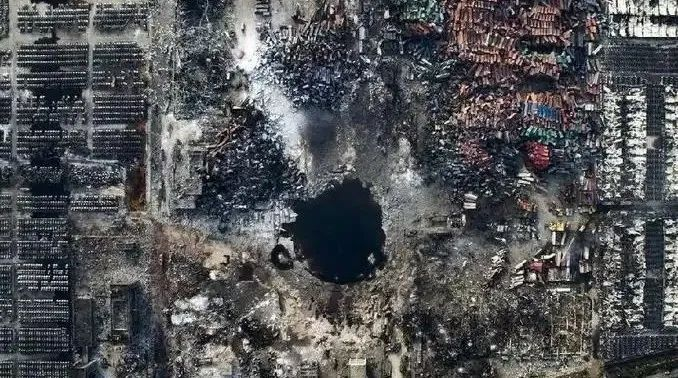
The cause of the accident was that the nitrocellulose in the containers south of the arrival area of Ruihai Company's dangerous goods warehouse spontaneously ignited due to thermal decomposition and heat release, igniting surrounding chemicals. However, the staff failed to inform that there were large quantities of ammonium nitrate and other explosives on site, leading to the fire commander's misjudgment of the fire situation and ultimately triggering two violent explosions. This not only exposed serious loopholes in the enterprise's management of hazardous chemicals but also highlighted the importance of safety monitoring and early warning technologies.
Over the past decade, Guoke Hanhai has always taken this accident as a mirror. Combining laser spectroscopy technology with intelligent equipment, it has developed the "line of life defense" that can penetrate deep into dangerous core areas — the Hanhai Gas Detection Robot, making technology an "impenetrable wall" to safeguard safety.
From "Human Eye Observation" to "Machine Detection": The "Intelligent Sentry" at Dangerous Scenes
In the Tianjin Port accident, firefighters entered the scene without knowing the type and concentration of dangerous goods, and the tragedy escalated due to information asymmetry. This made us realize that in flammable, explosive, toxic, and harmful hazardous chemical scenarios, direct human involvement often means high risks. The birth of the Hanhai Gas Detection Robot is precisely to solve this problem.
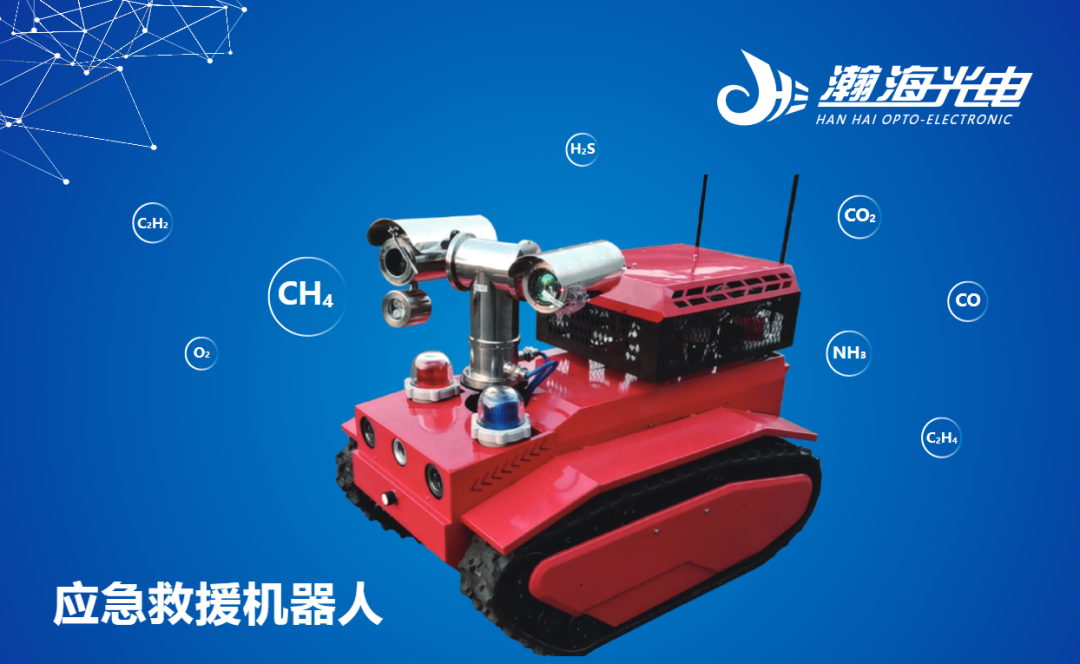
Equipped with Guoke Hanhai's core TDLAS (Tunable Diode Laser Absorption Spectroscopy) technology, this robot is equivalent to having an "ultra-sensitive electronic nose": it can be remotely controlled from 1 kilometer away, real-time monitoring more than 16 types of flammable and explosive gases on site, such as methane, ethylene, ammonia, hydrogen sulfide, and carbon monoxide, with a detection accuracy of 0.1 ppm (equivalent to accurately identifying a gas trace the size of a coin in a standard football field). Even in environments filled with thick smoke and high-temperature baking, it can cross obstacles through its tracked chassis, transmitting real-time data such as gas concentration and temperature to the command center, allowing decision-makers to "know the danger without seeing the scene".
Ten Years of Technological Precipitation: Making Robots "Reliable Comrades-in-Arms"
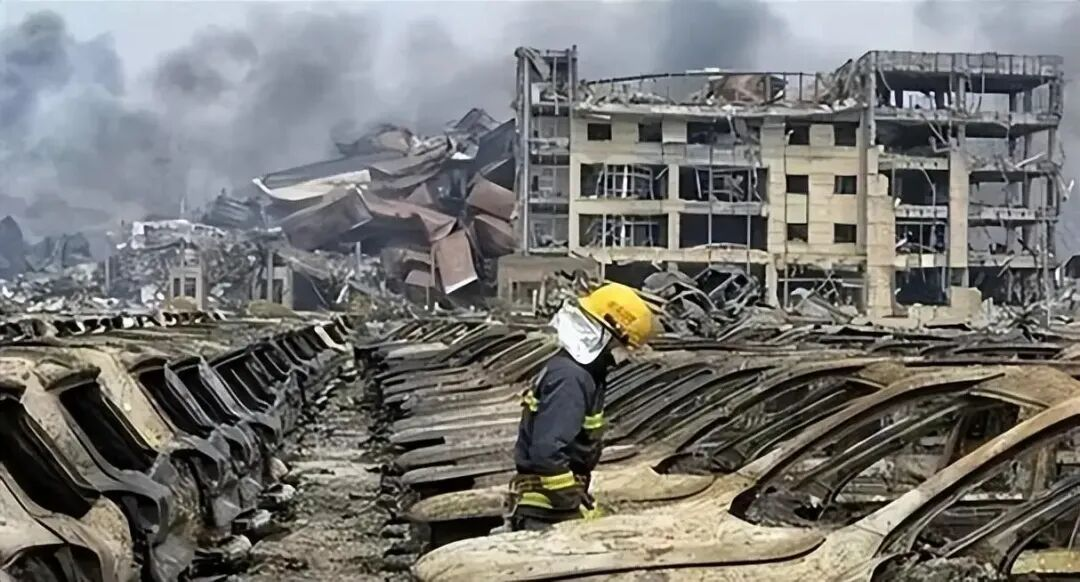
During the early R&D stage, the team found that traditional detection equipment was easily interfered with under complex working conditions, so they introduced an AI spectral decoupling algorithm to enable the robot to "accurately target" in environments with mixed gases. To adapt to the narrow passages of hazardous chemical warehouses, engineers compressed the body width to 0.8 meters while retaining 360-degree all-round monitoring capabilities. In response to possible signal interruptions at explosion sites, a dual-mode of "offline caching + satellite transmission" was developed to ensure no data loss.
Today, this robot has been put into use in hazardous chemical parks, oil depots, and ports in many provinces and cities across the country. In a leak drill at a chemical park, it locked onto a trace ammonia leak at a pipeline interface in just 15 seconds — 15 minutes faster than traditional manual inspections. Those 15 minutes could be the difference between an accident and safety.
Learning from History, Marching Towards Danger: Technology Guards Not Only Safety but Also Lives
Ten years have passed, and a safer operation system has long been rebuilt on the ruins of Tianjin Port, but the warning of "8·12" has never faded. It reminds us that there is no "zero risk" in hazardous chemical safety, but "zero accident" prevention can be achieved through technology.
Guoke Hanhai has always believed that real safety technology should be like an "invisible guardian", building a solid line of defense in invisible places. From gas detection robots to a full-scenario TDLAS monitoring network, we have spent ten years proving that when the precision of lasers, the tenacity of machines, and the wisdom of humans are combined, "preventing accidents before they occur" can be transformed from a slogan into reality.
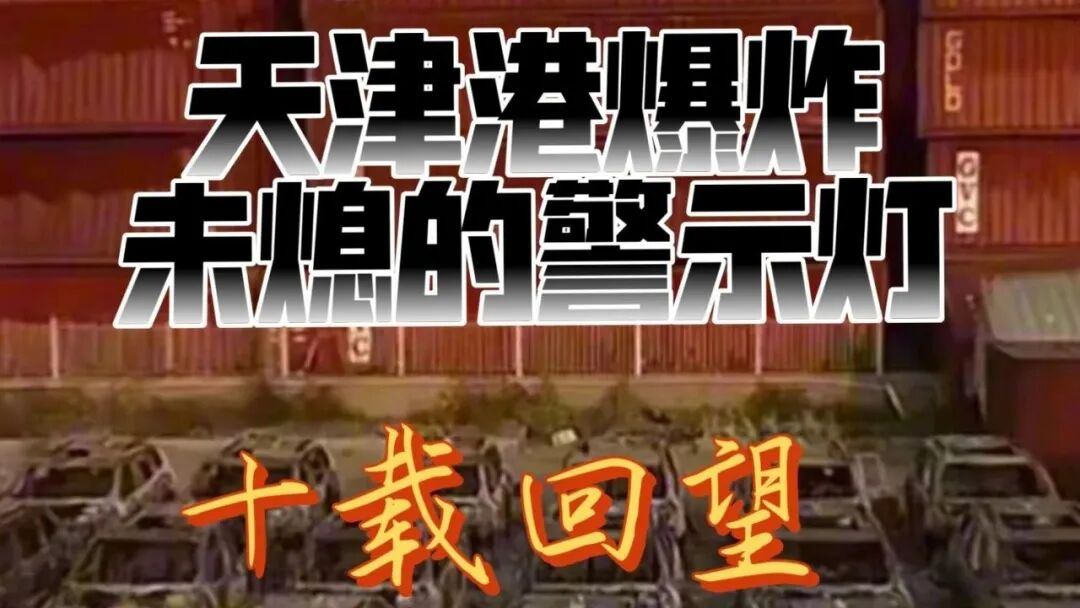
Today, we look back on the past to never repeat it. May the "eyes" of every detection robot be brighter, and every monitoring be more accurate — because what we guard is never just equipment and parks, but the reunion of countless families, and the simplest yet most precious expectation of "safety and peace".
Every step forward in technology pushes danger one step back. This is the best way to remember history and the deepest respect for life.
TEL:400-055-1239 (9:00~17:00)
MAIL:lisghanhai@gkhhlaser.com
ADDR:302 Floor, Building 5, No. 18, Kechuang 13th Street, Beijing Economic and Technological Development Zone