
ABOUT
Hanhai Opto-electronic is a major scientific research achievement transformation institution of the Hefei Institute of Physical Science, Chinese Academy of Sciences.


Hanhai Opto-electronic is a major scientific research achievement transformation institution of the Hefei Institute of Physical Science, Chinese Academy of Sciences.

Hanhai Optoelectronics centers on laser absorption spectroscopy-based gas detection (TDLAS)technology, developing and manufacturing a full range of products to deliver comprehensive gas detection solutions for cross-field and multi-industry customers.

Hanhai Optoelectronics' laser gas detection products focus on the monitoring of flammable, explosive, toxic and harmful gases as well as greenhouse gases. Leveraging mature technical solutions and flexible product adaptability, these products can be widel

With over a decade of technical accumulation and recognition from nearly a hundred customers, Hanhai Optoelectronics' laser gas detection products have delivered successful cases covering core scenarios across petrochemicals, urban gas, environmental moni

The company's core technology has been jointly recommended by the Ministry of Emergency Management, the Ministry of Science and Technology, and the Ministry of Industry and Information Technology.
I. Project Background
With the accelerating urbanization in China, urban gas, as a core component of clean energy, has been widely applied in industrial production, commercial operations, residential life and other fields, and the gas pipeline network has become increasingly large and complex. Meanwhile, safety accidents such as explosions and poisoning caused by gas leakage occur frequently, posing a serious threat to people's lives and property, and also putting forward severe challenges to urban public safety management.
The current urban gas monitoring field faces several pain points: traditional detection technologies (e.g., catalytic combustion, electrochemistry) feature low precision and poor anti-interference ability, making it difficult to meet the demand for accurate monitoring in complex environments; monitoring scenarios are fragmented, with key areas such as gate stations, pressure regulating facilities, valve wells, catering establishments and high-rise buildings lacking a unified monitoring system, resulting in a serious data silo phenomenon; manual inspection is inefficient and has limited coverage, failing to achieve 24/7 uninterrupted monitoring and detect and handle leakage hazards in a timely manner.
Laser gas detection technology, with its advantages of high sensitivity, high selectivity, strong anti-interference ability and fast response speed, has become the core technical direction for gas safety monitoring.
II. Project Objectives
1. Accurate Monitoring and Hidden Hazard Early Warning
Based on laser gas detection technology, realize accurate monitoring of gas leakage across all urban gas scenarios with a monitoring precision reaching the PPM level. Effectively identify minor leakage hazards and issue early warning signals in advance to nip potential accidents in the bud.
2. Full-Scenario Coverage and No-Dead-Corner Protection
Construct a monitoring network covering all scenarios including gate stations, pressure regulating boxes, pressure regulating cabinets, gas valve wells, daily inspection, densely populated high-consequence areas, catering establishments, urban high-rise buildings and utility tunnels. Eliminate monitoring blind spots and achieve comprehensive protection for gas safety.
III. Monitoring Areas and Scenario-Adaptive Solutions
1. Gate Stations
Scenario Features: High-pressure and large-flow gas transmission, concentrated equipment, high leakage risk, and complex environment (presence of dust, water vapor and electromagnetic interference).
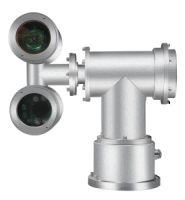
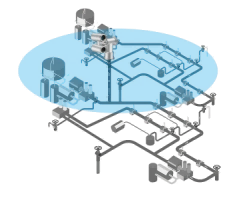
Adaptive Solution: Deploy fixed scanning laser gas telemetry instruments (explosion-proof type) at key areas of the gate station such as air inlets, air outlets, pressure regulating devices and valve groups, covering the entire gate station area. The telemetry instruments have high-range detection capability to meet the concentration monitoring demand of high-pressure gas leakage, and are equipped with electromagnetic interference resistance, dustproof and waterproof functions.
2. Pressure Regulating Boxes/Cabinets
Scenario Features: Wide distribution, large quantity, narrow space, some located in outdoor open-air environments, and highly affected by temperature and humidity changes.
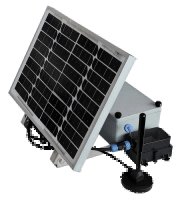
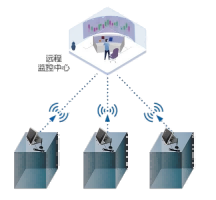
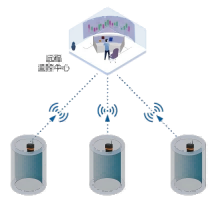
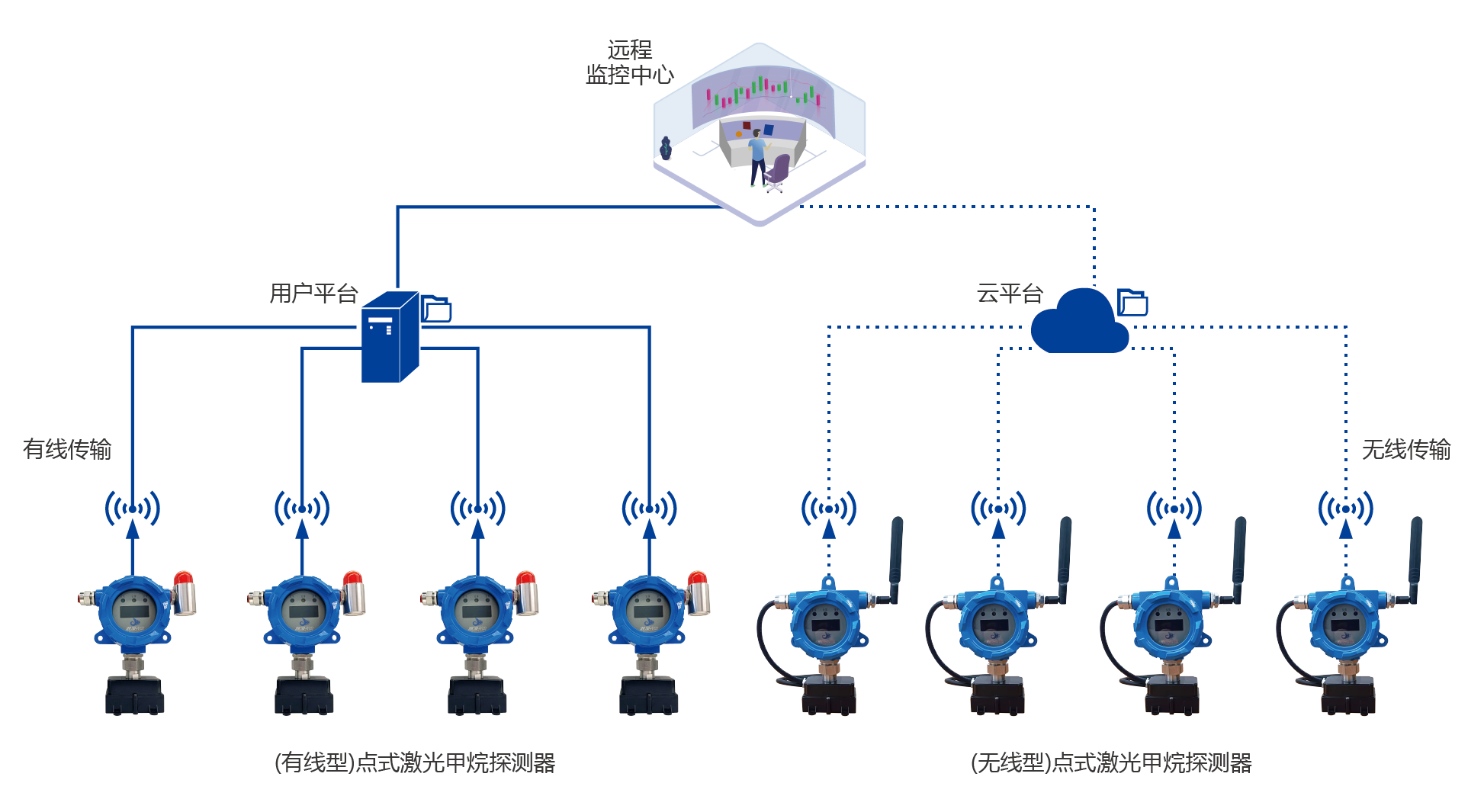
Adaptive Solution: Install miniaturized solar-powered laser gas leakage monitors inside each pressure regulating box/cabinet, with detection probes facing leakage-prone parts such as pressure regulating valves and interfaces. The equipment is capable of low-temperature startup and high-temperature resistance, and adopts wireless communication methods (NB-IoT/LoRa) for data transmission to avoid complicated wiring problems. When a leakage is detected, the alarm information will be uploaded to the monitoring platform.
3. Gas Valve Wells
Scenario Features: Confined space with poor ventilation, prone to gas accumulation; may also contain oxygen-deficient air and toxic gases (e.g., hydrogen sulfide), leading to dangerous operating conditions and high difficulty in manual inspection.
Adaptive Solution: Install compact laser gas leakage monitors in valve wells to detect gas concentration. The equipment is waterproof and flood-resistant, and powered by batteries to ensure long-term stable operation. Data is uploaded to the platform via wireless communication.

4. Daily Inspection
Scenario Features: High mobility, requiring coverage of scattered areas such as pipeline network routes, outdoor pipelines and user-side interfaces; the detection equipment is required to be portable and flexible.
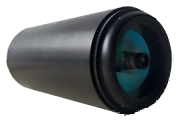
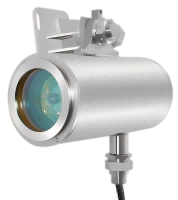
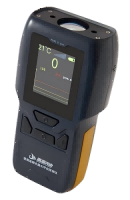
Adaptive Solution: Equip inspectors with portable telemetry laser gas detectors featuring small size, light weight and long battery life. With high-sensitivity detection function, the detectors can quickly identify minor leaks, support real-time data upload to inspection terminals (mobile phones/tablets), and realize full-process traceability of inspection tracks and detection data.

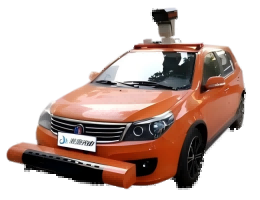
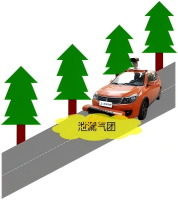
Natural gas buried pipelines on main roads: Adopt four-wheel vehicle-mounted laser inspection systems for automatic daily cruising at a speed of 50 km/h, with a single-day inspection mileage of up to 200 kilometers. The detection efficiency is more than 10 times higher than that of manual inspection, and leakage points can be accurately located and transmitted back to the background in real time.
Buried pipelines in urban residential communities: Use two-wheel electric vehicle-mounted laser inspection systems to flexibly navigate through community roads, focusing on pipeline network inspectionaround buildings and filling the blind spots of main road inspection.

Pipeline network routes and elevated utility tunnels: Deploy telemetry UAVs for automatic route inspection to cover areas inaccessible to manual work such as river crossings and mountainous road sections.

5. Densely Populated High-Consequence Areas
Scenario Features: Dense population (e.g., surrounding areas of residential districts, schools, hospitals and shopping malls), shallowly buried pipelines; leakage may trigger large-scale safety accidents with wide-ranging impacts.
Adaptive Solution: Adopt a combined "fixed + mobile" monitoring mode to achieve comprehensive coverage. Meanwhile, arrange inspectors to carry portable detectors for regular inspection. The monitoring platform sets a key early warning level for these areas; once a leakage occurs, the warning level will be immediately upgraded, and alarm information will be quickly pushed to relevant management departments and emergency teams.
6. Catering Establishments
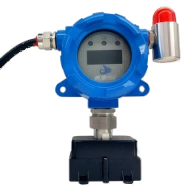
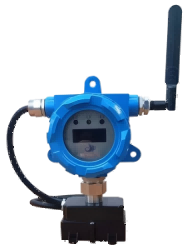
Scenario Features: High frequency of gas use, complex environment (presence of oil fume, water vapor and high temperature), large personnel flow, and multiple leakage risk points (e.g., gas stoves, gas pipeline interfaces, pressure reducing valves).
Adaptive Solution: Install miniaturized indoor laser gas detectors in catering kitchens at locations prone to gas accumulation such as above gas stoves, near gas pipeline interfaces and at wall corners. The equipment has strong resistance to oil fume and water vapor interference, with high detection precision. It is also linked with gas emergency shut-off valves; once a leakage is detected, it will immediately issue sound and light alarms and automatically close the main gas valve to prevent the escalation of accidents. The equipment has networking functions and can push alarm information to business owners and the gas company management platform.
7. Utility Tunnels
Scenario Features: Closed and humid internal environment, crisscrossing pipelines (e.g., gas pipelines, power pipelines, water supply and drainage pipelines), presence of electromagnetic interference and corrosion problems, high maintenance difficulty; leakage may trigger chain accidents.
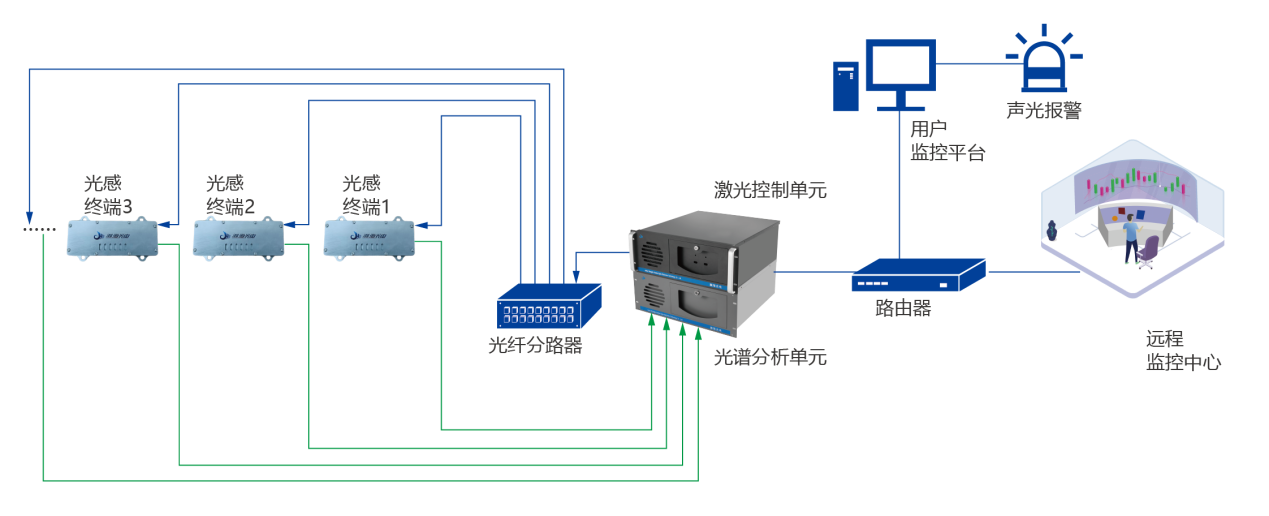
Adaptive Solution: Deploy a set of passive laser online monitoring systems in the gas pipeline sections of utility tunnels, with a probe installed every 100–200 meters, facing key parts such as gas pipeline interfaces and valves. The equipment is resistant to electromagnetic interference, corrosion, water and moisture, and adopts optical fiber communication for stable data transmission. It is also linked with the ventilation system and emergency lighting system in the tunnel; once a leakage occurs, the ventilation equipment will be activated immediately and emergency lighting will be turned on to provide conditions for emergency disposal. The monitoring platform can display real-time gas concentration data in the tunnel and achieve accurate positioning of leakage points.
TEL:400-055-1239 (9:00~17:00)
MAIL:lisghanhai@gkhhlaser.com
ADDR:302 Floor, Building 5, No. 18, Kechuang 13th Street, Beijing Economic and Technological Development Zone