
ABOUT
Hanhai Opto-electronic is a major scientific research achievement transformation institution of the Hefei Institute of Physical Science, Chinese Academy of Sciences.


Hanhai Opto-electronic is a major scientific research achievement transformation institution of the Hefei Institute of Physical Science, Chinese Academy of Sciences.

Hanhai Optoelectronics centers on laser absorption spectroscopy-based gas detection (TDLAS)technology, developing and manufacturing a full range of products to deliver comprehensive gas detection solutions for cross-field and multi-industry customers.

Hanhai Optoelectronics' laser gas detection products focus on the monitoring of flammable, explosive, toxic and harmful gases as well as greenhouse gases. Leveraging mature technical solutions and flexible product adaptability, these products can be widel

With over a decade of technical accumulation and recognition from nearly a hundred customers, Hanhai Optoelectronics' laser gas detection products have delivered successful cases covering core scenarios across petrochemicals, urban gas, environmental moni

The company's core technology has been jointly recommended by the Ministry of Emergency Management, the Ministry of Science and Technology, and the Ministry of Industry and Information Technology.
I. Project Background Overview
Against the backdrop of accelerated advancement in transportation infrastructure construction, tunnel projects serve as key carriers for connecting complex terrains and breaking traffic bottlenecks, with their construction scale and difficulty escalating continuously. However, tunnel construction has long been plagued by inherent challenges including underground confinement, limited ventilation, and complex, variable geological conditions, resulting in mounting pressure on safety risk prevention and control. Among these risks, safety accidents triggered by hazardous gas leaks stand as the "number one killer" in tunnel construction. Excavation activities are highly prone to disturbing rock formations and altering geological structures, which can easily trigger the release of toxic, harmful, flammable, and explosive gases such as methane, carbon monoxide, and hydrogen sulfide. These gases tend to accumulate rapidly in confined spaces, and once their concentrations exceed safe thresholds, they will directly lead to catastrophic incidents like explosions, poisoning, and suffocation. Such accidents not only cause heavy casualties but also result in project suspensions for rectification, significant construction delays, and substantial economic losses. According to industry statistics, over the past five years, accidents caused by hazardous gas leaks have accounted for more than 35% of all tunnel construction safety incidents in China, with even higher occurrence rates in tunnels with complex geological conditions such as coal-bearing strata and areas adjacent to goafs.
Current conventional hazardous gas monitoring methods face prevalent technical bottlenecks and are unable to meet the safety management and control requirements of complex tunnel construction:
Limited coverage of fixed monitoring devices: Most fixed devices are installed at specific locations and cannot dynamically adjust their monitoring range as excavation faces advance, leaving behind monitoring blind spots.
Low efficiency of manual handheld detection: Constrained by working hours and personnel capacity, this method fails to achieve 24/7 uninterrupted monitoring. Furthermore, inspectors are required to work in close proximity within high-risk areas, exposing themselves to extremely high safety hazards.
Poor anti-interference capability of traditional equipment: The harsh tunnel environment characterized by high dust concentration and fluctuating temperature and humidity often leads to distorted monitoring data and significant response delays. As a result, these devices frequently fail to capture sudden changes in gas concentrations in a timely manner, missing the golden window for emergency response.
With the in-depth application of intelligent technologies in engineering construction, the limitations of traditional monitoring models have become increasingly prominent, creating an urgent need for innovative technical means to address monitoring challenges. Against this background, this solution leverages core technologies of laser gas detection robots to build a comprehensive, full-coverage, and round-the-clock intelligent hazardous gas monitoring system. It achieves precise risk prevention and control over the entire tunnel construction process, safeguarding the safe and efficient progress of tunnel projects.
II. Core Solution
1. Full-Scenario Monitoring Coverage
Hazardous gas laser detection robots can be flexibly deployed in key tunnel areas such as excavation faces, operation zones, personnel stations, and ventilation dead corners, supporting seamless switching between two operational modes: autonomous mobile patrol and fixed-point monitoring. Tailored to the dynamic nature of excavation work, robots can move forward in real time alongside construction progress through preset path planning or remote control, ensuring that the monitoring range expands in sync with the operation area. Based on core laser spectroscopy technology, these robots can rapidly and accurately identify the concentrations of multiple hazardous gases including methane, carbon monoxide, and hydrogen sulfide, achieving ppm-level detection accuracy. Unaffected by environmental factors such as dust, temperature, and humidity fluctuations in tunnels, they realize full-coverage, blind-spot-free monitoring of operation areas.
2. Real-Time Data Transmission and Early Warning
Equipped with industrial-grade wireless transmission modules, the robots synchronously upload real-time monitoring data (gas type, concentration value, monitoring location, timestamp, etc.) to both cloud management platforms and on-site monitoring terminals. Managers can remotely access gas concentration curves and real-time video feeds via computers, mobile phones, and other devices, enabling visual management and control of monitoring data. The system incorporates a multi-level early warning mechanism, allowing users to preset warning thresholds based on safety standards for different gases. When gas concentrations reach the warning level, the system automatically triggers multiple alerts including on-site audible and visual alarms, SMS notifications to managers, and platform pop-up reminders. These alerts guide on-site personnel to take immediate emergency measures such as enhanced ventilation, emergency evacuation, and area cordoning, eliminating the escalation of potential safety hazards at the source.
3. Intelligent Operation and Maintenance Management
The system is built with an intelligent data analysis algorithm that automatically identifies the variation patterns of gas concentrations across different tunnel areas and time periods. It uncovers the correlation between gas leaks and construction processes as well as geological changes, generating daily, weekly, and monthly periodic monitoring reports. These reports provide accurate data support for construction parties to optimize ventilation schemes, adjust construction schedules, and formulate targeted risk prevention and control measures. Meanwhile, the robots are equipped with autonomous charging, fault self-diagnosis, and remote diagnosis capabilities. When battery levels are low, robots automatically return to charging stations for recharging. In the event of a malfunction, they promptly transmit fault type and location information to the platform, significantly reducing manual operation and maintenance costs while ensuring 24/7 stable operation of the monitoring system.
III. Solution Advantages
High Precision: Adopting laser spectroscopy detection technology with strong anti-interference capability, the solution effectively eliminates the impact of dust, temperature, and humidity changes in tunnels on monitoring data. Its monitoring accuracy is improved by over 60% compared to traditional electrochemical sensor devices, enabling it to accurately detect minor gas leaks and issue early warnings of potential risks.
Enhanced Safety: Replacing manual close-range detection with robots completely eliminates the safety risks faced by inspectors working in high-risk areas. Additionally, it enables 24/7 uninterrupted monitoring, eliminating the time blind spots associated with manual inspections and significantly enhancing the overall construction safety level.
Exceptional Flexibility: Supporting both autonomous mobile patrol and fixed-point monitoring modes, the solution can flexibly adjust deployment strategies according to the monitoring requirements of different tunnel construction phases (excavation, support, lining), making it suitable for tunnel projects of varying lengths and geological conditions.
High Level of Intelligence: Integrating data collection, transmission, analysis, early warning, and operation and maintenance into a unified system, it achieves end-to-end intelligent management and control of the entire monitoring process, reducing manual intervention and improving the timeliness and precision of risk prevention and control.
IV. Application Value and Case Studies
(I) Core Application Value
The deployment of the hazardous gas laser detection robot monitoring system enables full-process management and control of hazardous gases in tunnel construction, covering "early warning, real-time monitoring, and intelligent disposal". Its core value is reflected in three key dimensions:
Safety Benefits: Significantly reduce the probability of safety accidents such as explosions, poisoning, and suffocation caused by gas leaks, prevent casualties, and safeguard the lives of construction personnel. Through early warning and precise prevention and control, avoid secondary disasters such as project collapses and equipment damage triggered by accidents, building a solid safety defense line for tunnel construction. Meanwhile, replacing manual inspections with robots reduces the number of personnel assigned to high-risk positions, lowers the probability of personnel exposure to safety risks, and helps construction units establish standardized work safety management systems.
Economic Benefits: Reduce losses caused by construction delays and project suspensions due to safety accidents, ensuring projects progress as scheduled. Lower costs associated with manual inspections and traditional equipment operation and maintenance. According to practical application data, the solution can reduce the number of dedicated inspection personnel by over 60%, achieving labor cost savings. Optimize ventilation schemes through data analysis, reduce energy consumption of ventilation equipment, and realize energy conservation and consumption reduction.
Management Benefits: Drive the transformation of tunnel construction safety management from "passive response" to "active prevention", aligning with the industry's development requirements of "information-based management, mechanized operation, intelligent equipment, and standardized processes". Improve the standardization and refinement level of safety management through standardized monitoring data and reports, providing strong support for project safety acceptance and excellence evaluation.
(II) Typical Case Studies
Case Study 1: Hazardous Gas Monitoring Project for Section CZXZZQ-4 of the New Sichuan-Tibet Railway
In October 2021, China Railway No.11 Engineering Bureau introduced tracked hazardous gas laser detection robots at Work Zone 4 of Section CZXZZQ-4 of the new Sichuan-Tibet Railway, implementing 24/7 real-time online monitoring for tunnel construction. The tunnel section of this project passes through complex geological areas, posing high risks of leaks of multiple hazardous gases including gas and carbon monoxide. Traditional manual inspections were unable to cover the dynamically advancing excavation faces, and the high-altitude environment further reduced manual operation efficiency while increasing safety risks. After the deployment of robots, precise collection of toxic and harmful gas data and video images in the tunnel was achieved, with monitoring data transmitted in real time to the digital management and control center. This successfully addressed the limitations of periodic manual inspections, accurately detected three minor gas leakage points, and facilitated timely warning and disposal.
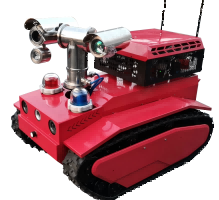
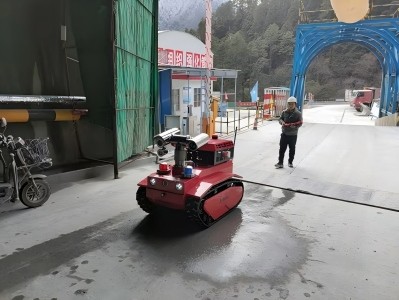
Case Study 2: Hazardous Gas Monitoring Project for the Ya'an-Nyingchi Section of the New Sichuan-Tibet Railway
In January 2022, wheeled hazardous gas laser detection robots were further deployed in the Yigong Zone 6 Tunnel (constructed by China Railway No.2 Engineering Bureau) of the Ya'an-Nyingchi Section of the new Sichuan-Tibet Railway. The stability and precision of the robots were fully validated in this project, helping the project meet the "Four Modernizations" requirements of the parent company, namely "information-based management, mechanized operation, intelligent equipment, and standardized processes".
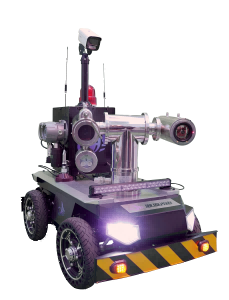
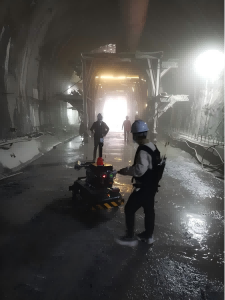
V. Solution Summary
The intelligent hazardous gas monitoring solution for tunnel construction takes laser gas detection robots as the core carrier. Through the full-process design of full-scenario coverage monitoring, real-time data transmission and early warning, and intelligent operation and maintenance management, it accurately addresses the core pain points of traditional monitoring models: "incomplete coverage, delayed response, and high risks". Boasting technical advantages such as high monitoring precision, safety and reliability, and flexible adaptability, the solution has also proven its practical value in complex geological conditions through multiple major engineering applications. It not only effectively prevents safety accidents caused by hazardous gases and protects the lives of construction personnel but also reduces labor and operation and maintenance costs, improves construction efficiency, and drives the transformation of tunnel construction safety management toward informationization and intelligence.
Currently, tunnel engineering construction is trending toward longer lengths, greater depths, and more complex conditions, making hazardous gas prevention and control increasingly critical. Based on advanced technologies and practical experience, this solution provides a standardized and replicable intelligent monitoring scheme for tunnel construction safety, particularly suitable for high-risk engineering scenarios such as high-gas tunnels, tunnels with complex mountainous geology, and long-distance tunnels. In the future, with continuous technological iteration, the system will further integrate cutting-edge technologies such as digital twins and AI prediction, upgrading from "real-time monitoring" to "advance prediction". This will provide stronger support for the safe and efficient advancement of transportation infrastructure construction, helping the industry achieve its development goals of "safety first, quality paramount, and efficient progress".
TEL:400-055-1239 (9:00~17:00)
MAIL:lisghanhai@gkhhlaser.com
ADDR:302 Floor, Building 5, No. 18, Kechuang 13th Street, Beijing Economic and Technological Development Zone